
Why Your Mind Secretly Sabotages Your Bank Balance (And My Personal Wake-Up Call)
Have you ever stared at your banking app days before payday, wondering where all your hard-earned cash vanished? I spent years trapped in that exact cycle of guilt and silent panic. It turns out, you and I are not terrible at math—our brains are just secretly wired to sabotage our savings. Let me show you how I stopped fighting my instincts and finally tricked my mind into keeping my money safe.
But somehow, by the end of the month, my account was almost empty. I would look at my transaction history and feel a deep sense of shame and confusion.
Where did it all go? I was not buying luxury cars or taking expensive vacations. My hard-earned cash was disappearing through tiny, seemingly harmless daily choices that I barely even noticed.
I felt completely out of control, constantly stressed about unexpected bills and terrified of emergencies. The anxiety of living paycheck to paycheck was keeping me awake at night, ruining my mental peace, and making me feel like a total failure.
Then, I stumbled upon a fascinating truth that changed everything for me. I realized that my spending problem was not a math issue, it was a psychological trap built right into human nature.
Quick Action Plan for Your Wallet:
-
Hide Your Cash: Use automatic transfers to send money to a bank you cannot easily see or access.
-
The 72-Hour Rule: Wait exactly three days before buying any non-essential item to kill emotional spending.
-
Price in Hours, Not Dollars: Calculate how many hours you have to work to buy an item before you swipe your card.
-
Stop Lifestyle Creep: When you get a raise, pretend it never happened and save the exact difference.
Breaking the Illusion: The Real Reason We Cannot Stop Spending
The truth is, our minds are literally hardwired for instant gratification. When we see something we want, our brain releases a massive hit of dopamine.
This makes spending money feel incredibly good in the short term. On the flip side, the idea of locking cash away for a future we cannot even see feels boring, painful, and unnatural to our primitive instincts.
Yet, they have absolutely nothing to show for it when the weekend arrives. This constant cycle of earning and immediately losing creates a deep feeling of hopelessness.
It makes people feel like they are running on a never-ending treadmill. A single flat tire or a minor medical bill is enough to throw their entire life into total chaos.
The weight of this financial insecurity damages relationships, destroys self-confidence, and steals the joy out of everyday moments. We are fighting an invisible enemy inside our own heads.

Hacking Your Habits: Reversing the Psychology of Saving
If willpower alone was enough to build wealth, we would all be millionaires by now. To actually keep your cash, you have to outsmart your own basic instincts.
You need to trick your subconscious into believing that holding onto money is far more rewarding than throwing it away. Let us look at exactly how you can rewire your daily thought process to make accumulating cash feel completely effortless.
The Empathy Gap and Your "Future Self"
One of the biggest psychological hurdles we face is called the empathy gap. Our brains struggle to connect with the person we will be ten or twenty years from now.
When you think about the "future you," your brain lights up in the exact same area as when you think about a complete stranger. This is why spending today feels amazing, while saving for tomorrow feels like giving your cash to someone else.
To fix this, you have to make your future self feel incredibly real and present in your daily life. Give that future version of you a face, a lifestyle, and a clear identity.
Pro Tip: I used to struggle heavily with late-night online shopping until I made one small change. I downloaded a face-aging app, created an older version of my face, and set it as my phone lock screen. Now, every time I go to buy something useless, I literally have to look my older self in the eyes, which instantly kills the urge to waste my cash.
When you vividly imagine what your life will look like with financial freedom, the urge to waste cash fades away. Try to visualize the exact feeling of waking up without any debt hanging over your shoulders.
Creating Positive Friction in a Frictionless System
Right now, the world is designed to separate you from your cash as quickly as humanly possible. One-click checkouts, contactless payments, and saved credit card details make spending dangerously easy.
The pain of paying has been completely removed from our modern society. When you do not physically hand over paper bills, your brain does not register the loss of resources.
To combat this, you must intentionally introduce friction into your spending habits. Make it wildly inconvenient to buy non-essential items.
Remove all your saved credit card information from your favorite online stores and delivery apps. Force yourself to get up, find your wallet, and manually type in those sixteen digits every single time you want to buy something.
That tiny window of delay is often all your logical brain needs to step in and stop an emotional purchase.
Watch This Before Your Next Purchase
If you want to understand exactly why our brains fall for marketing tricks and how to build an unbreakable money mindset, you absolutely need to see this breakdown. It completely shifted the way I view my daily transactions.
The Magic of "Out of Sight, Out of Mind"
Your brain is incredibly adaptable, which means it will quickly adjust to whatever reality it is presented with. If you see cash sitting in your checking account, your subconscious immediately views it as available spending money.
You will subconsciously expand your lifestyle to eat up every single penny you see. The most powerful psychological trick to prevent this is hiding your money from yourself.
Set up your banking system so that a specific percentage of your paycheck automatically transfers to a separate account the exact day you get paid. Make sure this secondary account is at a completely different bank.
Do not download the app for this secondary bank on your phone. If you cannot easily see the balance, your brain simply forgets that the cash exists.
You will organically adjust your daily spending to match the smaller amount left in your main account. You will not even feel the pinch because the decision was made for you automatically.
Reframing How You View the Price Tag
We usually judge the cost of an item by its actual price tag. If a jacket costs a hundred bucks, we ask ourselves if we have a hundred bucks in the bank.
But this is a flawed psychological approach that leads straight to an empty bank account. Instead, you need to start calculating the true cost of an item in terms of your life energy.
Figure out exactly how much you earn per hour after taxes. If you make fifteen bucks an hour, that hundred-dollar jacket does not just cost a hundred dollars.
It actually costs nearly seven hours of your precious life. Ask yourself, "Is this jacket really worth giving up an entire day of my life working?"
The "Life Energy" Math (A Quick Example):
When you start pricing items in hours instead of dollars, everything changes. Those spontaneous purchases suddenly seem extremely expensive and not worth the sacrifice.
Breaking Down the Mental Blocks: Myth vs. Reality
Many people hold onto false beliefs that ruin their ability to accumulate cash. Let us clear up some of the most common psychological blocks holding you back.
Myth: You need to make a massive income to actually build real wealth over time.
Reality: Wealth is simply the gap between your ego and your income. Building wealth is entirely about how much you keep, not just how much you earn.
Myth: Budgeting is a restriction that takes away all the fun and freedom in life.
Reality: A proper financial plan actually gives you permission to spend without guilt. It is simply telling your cash exactly where to go instead of wondering where it went.
Myth: I will start putting cash away when things settle down and I have fewer expenses.
Reality: Life will always throw random expenses your way. If you do not build the habit with small amounts now, you will never do it with large amounts later.
The 72-Hour Cooling-Off Rule
Emotional spending is the absolute biggest destroyer of personal wealth. When we are stressed, bored, or sad, our brain craves a quick dopamine spike.
Buying something shiny and new provides that instant temporary high. To break this destructive cycle, you have to separate the emotion from the transaction.
Implement a strict personal policy: whenever you want to buy something that is not a basic need, you must wait exactly 72 hours. Write the item down on a sticky note and put it on your fridge.
During this waiting period, the intense emotional desire will naturally begin to fade away. Your logical brain will slowly take over the steering wheel.
More often than not, when the 72 hours are up, you will realize you do not actually care about the item anymore. You just saved yourself a chunk of cash simply by delaying the decision.

Gamifying Your Financial Growth
Human beings absolutely love to play games, track progress, and win rewards. You can use this psychological trait to your massive advantage.
Instead of viewing saving as a boring chore, turn it into an engaging personal challenge. Create a visual tracking system that triggers a sense of achievement every time you retain your cash.
Draw a simple chart on a piece of paper, representing your cash goal broken down into tiny, manageable steps. Every time you transfer cash to your vault, color in a section of the chart.
Seeing that visual progress releases the exact same dopamine hit that spending used to give you. Your brain starts to associate holding onto money with winning.
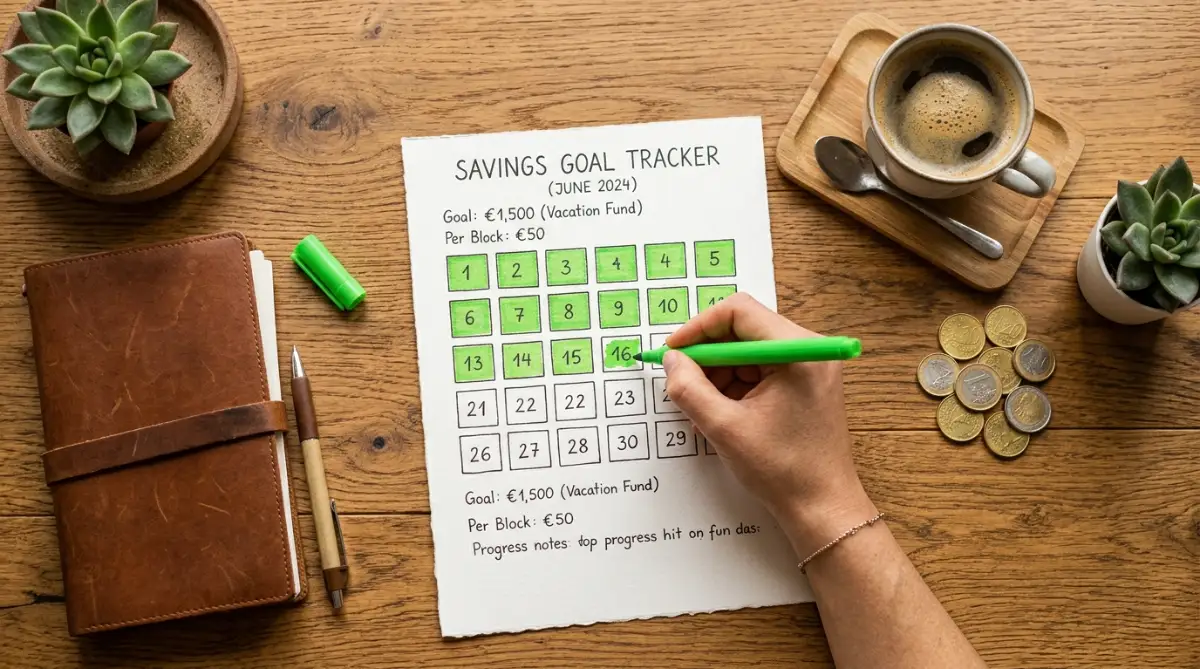
You can also challenge yourself to "no-spend weekends" where your goal is to find free entertainment. When it becomes a fun challenge, the feeling of deprivation completely vanishes.
The Danger of Lifestyle Creep
There is a sneaky psychological phenomenon that attacks almost everyone who gets a raise or a better job. It is known as lifestyle creep, and it is a silent wealth killer.
As soon as your income goes up, your brain starts convincing you that you "deserve" better things. You suddenly want a nicer apartment, a newer car, and fancier dinners.
Before you know it, your new expenses have completely swallowed your new income. You are making more cash than ever, but you are still stuck in the exact same stressful paycheck cycle.
The secret to accumulating massive wealth is creating an artificial ceiling on your lifestyle. When you get a raise, pretend it never even happened.
Take that extra income and route it directly into your untouchable accounts before you ever get used to seeing it. Let your net worth grow quietly in the background while you continue living happily at your current standard.
Re-Evaluating Your Social Circles
We are highly social creatures, and our habits are deeply influenced by the people around us. If your closest friends treat shopping as a hobby and constantly complain about being broke, your brain will normalize that behavior.
You will subconsciously feel pressured to keep up with their spending habits just to fit in. This psychological pressure is incredibly difficult to resist on your own.
You do not have to abandon your friends, but you do need to become self-aware of these triggers. Start suggesting completely free social activities, like hiking, game nights, or cooking dinner at home together.
Surround yourself with content, books, and podcasts made by people who respect money and prioritize financial peace. The more you expose your brain to smart financial behavior, the more natural it will feel for you to adopt those same habits.
Your mind is a highly trainable tool, and once you learn how to steer it, holding onto your cash becomes second nature.
Rewarding the Right Behavior
One reason traditional budgeting fails so often is that it feels purely like punishment. If you try to live on a strict financial diet where you never treat yourself, your brain will eventually rebel.
You will experience a sudden burst of frustration and end up on a massive spending binge. This is the exact same psychology that causes extreme diets to fail.
To trick your brain into long-term success, you must intentionally build small, guilt-free rewards into your system. Allow yourself a tiny, specific amount of cash each week that you can blow on absolutely anything you want.
This small release valve prevents financial pressure from building up in your mind. It gives your brain the fun and freedom it craves, but in a safe, controlled manner that does not destroy your goals.
Understanding the Sunk Cost Fallacy
Sometimes we waste money simply because we have already spent money. This is a mental trap known as the sunk cost fallacy.