
The Silent Stress of Living Without a Financial Safety Net
Have you ever swiped your debit card at the grocery store and silently prayed it would not get declined? We have all felt that sudden, cold panic when an unexpected bill pops up out of nowhere. Living without a financial backup plan feels like walking a tightrope without a safety harness. The good news? You do not need a massive salary to fix this problem, and I am going to show you exactly how to build your safety net starting today.
That deep, suffocating feeling of anxiety is something millions of people wake up with every single morning. When you have no financial backup plan, your mind is constantly on high alert. You worry about your car making a strange noise, or a sudden toothache, because you know a single bad day can ruin your entire month.
Average families are living right on the edge of a financial cliff. They work incredibly hard, yet they feel like they are constantly running on a treadmill just to survive. If a medical emergency happens, or if they lose their job, they immediately have to rely on expensive credit cards.
This creates a terrible cycle of debt that completely destroys any chance of mental peace. You stop enjoying life and start fearing what tomorrow might bring. The constant background stress damages relationships, affects your performance at work, and steals the joy from simple family moments.
But living in constant fear is no way to live at all. The real tragedy is that avoiding this daily nightmare does not require a massive lottery win. It only requires a clear, actionable plan and the determination to take your power back.
🎯 Quick Action Plan (What You Will Learn Today):
-
Find Your Number: How to easily calculate your true bare-bones survival cost.
-
The $1,000 Milestone: Why you must hit this first specific goal before doing anything else.
-
Smart Storage: The exact reason your backup cash should never sit in your daily checking account.
-
Set It and Forget It: How to automate your savings so you build wealth while you sleep.
Your Relationship with Money
When we talk about saving cash for bad days, the biggest barrier is usually in our own minds. Society teaches us to spend whatever we earn immediately. We see advertisements everywhere telling us that buying things will make us happier.
But true happiness actually comes from knowing you are safe. A solid financial buffer gives you the freedom to sleep deeply at night. It gives you the power to say no to a toxic boss or walk away from a bad situation without fear.

Breaking Down the Biggest Money Myth
There is a massive misconception that you need hundreds of extra dollars left over at the end of the month to start saving. This single thought stops so many people from even trying. They look at their budget, see only tiny amounts left, and give up completely.
The truth is much more encouraging. Financial security does not start with a huge deposit. It starts with the absolute commitment to save the very next dollar you get your hands on.
It is about changing your identity from a "spender" to a "saver." Even if you can only put away a few dollars a week, you are actively building a new habit. Habits are the actual foundation of long-term wealth, not the initial size of your bank account.
Why Traditional Advice Often Fails
Many financial gurus yell at people to save six months of living expenses right away. While that is a great final goal, it is a terrible starting point. Hearing that massive number makes beginners feel completely overwhelmed and defeated.
If your total living costs are $3,000 a month, saving $18,000 feels like climbing a massive mountain with no shoes. You look at your current bank balance of $50 and think the goal is impossible.
Step 1: Finding Your Exact "Bare Bones" Survival Number
Before you can build a shield, you need to know exactly how wide that shield needs to be. You do not need to replace your entire income; you only need to cover your basic survival costs. We call this your "Bare Bones" budget.
This is the absolute minimum amount of money you need to stay alive and keep a roof over your head. It removes everything that is not absolutely necessary for your physical survival and basic work obligations.
What Goes Into the Survival Budget?
First, calculate your essential housing costs. This includes your rent or mortgage payment, and basic utilities like water, electricity, and trash collection. Do not include premium cable packages or expensive smart home subscriptions here.

Next, figure out your basic food requirements. This means buying groceries to cook simple meals at home. It definitely does not include restaurant visits, fast food deliveries, or daily coffee shop trips.
Finally, add your basic transportation and essential medical costs. You need enough gas to drive to work or money for a monthly bus pass. Add any required medications you must take daily to stay healthy.
Myth vs. Reality: The Survival Budget
-
The Myth: You need to save enough to cover your weekend movie trips, dining out, and your Netflix subscription.
-
The Reality: A true bare-bones budget only covers four basic walls: food, utilities, shelter, and basic transportation. Cut everything else out until your first $1,000 is safely in the bank.
Pro Tip: I used to include my streaming services and gym memberships in my "essential" budget because I felt I could not live without them. I finally realized that in a true emergency, those things are completely useless; cancel them temporarily if you must build your fund fast.
Setting Your First Milestone Target
Once you add up housing, basic food, transport, and medicine, you have your monthly survival number. For many people, this number is surprisingly lower than their actual monthly income.
Your very first goal is not to save three months of expenses. Your first goal is to save exactly $1,000 (or the equivalent of one full month's survival number, whichever is lower).
This initial amount acts as a shock absorber for the potholes of life. It is enough to cover a blown tire, a broken refrigerator, or a minor medical bill. Hitting this first target is a massive psychological victory that will change your entire mindset.
Are you struggling to find that first $1,000? Watch this quick breakdown on how to instantly free up cash from your current lifestyle without feeling deprived.
Step 2: The Micro-Saving Action Plan
Now that you have a specific target, you need a realistic way to reach it when your budget is already tight. You cannot just magically invent more money. You have to either decrease your spending or temporarily increase your income.
Most people try to make massive lifestyle changes all at once. They promise to never eat out again and to stop buying new clothes forever. This extreme approach almost always fails because it feels like a punishment.
Implementing the 24-Hour Rule
Instead of extreme deprivation, introduce small friction points into your daily spending. The most effective method is the 24-hour pause rule.
Whenever you want to buy something that is not a basic need, force yourself to wait exactly 24 hours. Put the item back on the shelf, or leave it in your online shopping cart.
During that day of waiting, the emotional excitement of buying the item usually completely fades away. You will realize you did not actually need it, and you can transfer that exact amount of money directly into your savings account.
Turning Clutter Into Immediate Cash
Almost everyone has hidden money sitting right inside their homes. Take a slow walk through your closets, garage, and storage boxes. Look for items you have not touched or used in the past year.
Old electronics, video games, designer clothes that no longer fit, and unused kitchen appliances are all highly sellable. You can list these items on local online marketplaces or host a simple weekend yard sale.
Do not focus on how much you paid for the item originally. The goal is simply to convert unused plastic and metal back into liquid cash to fund your safety net. Selling just a few dusty items can easily generate your first few hundred dollars.
Step 3: Isolating the Money for Maximum Protection
Where you physically keep your emergency money is incredibly important. If you leave it in your regular checking account, it will slowly disappear. You will accidentally spend it on groceries or treat yourself to a nice dinner, thinking you can just replace it later.
Your emergency savings must be completely separated from your daily spending money. It needs to be slightly difficult to access so you cannot use it for impulse purchases. However, it still needs to be available within a day or two if a true disaster happens.
The High-Yield Solution
The absolute best place to store your safety net is in a High-Yield Savings Account (HYSA). These accounts are usually offered by online-only banks. They do not have physical branches, which means they have lower costs and can pay you much more interest.
Regular traditional banks usually pay a tiny fraction of a percent in interest. It is almost completely worthless. An online high-yield account pays significantly more, allowing your money to slowly grow just by sitting there.
📊 Quick Math: Why Your Bank Choice Matters
Let us pretend you finally saved $5,000. If you leave it in a regular local bank earning 0.01%, you will make about $0.50 in a year. But if you move that exact same money to an online high-yield account earning 4.5%, you will earn over $225 in a year for doing absolutely nothing. The choice is yours!
Comparing Your Storage Options
To clearly understand why separation is necessary, let us look at a simple comparison between everyday accounts and proper storage.
By keeping the money in a separate online bank, you remove the visual temptation. When you open your regular banking app to check your balance, you will not see your emergency cash staring back at you. Out of sight means out of mind.
Step 4: Automating the Financial Shield
Willpower is a highly limited resource. If you rely on your own memory and discipline to manually transfer money every month, you will eventually fail. Life gets busy, you get tired, and saving money drops to the bottom of your priority list.
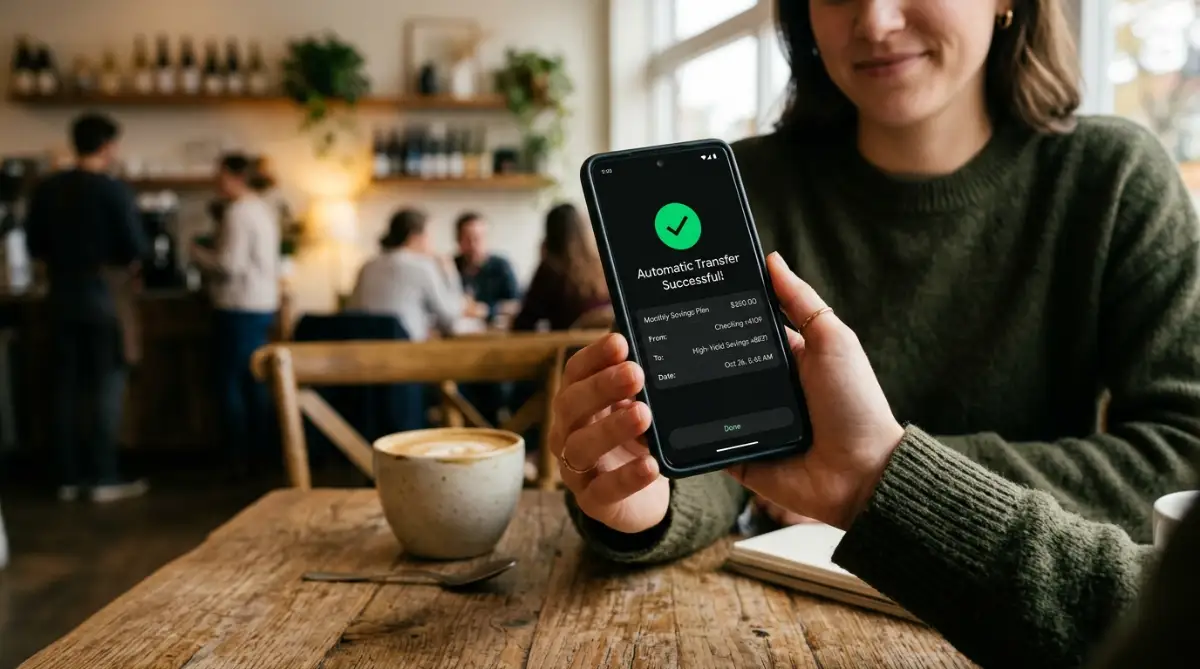
The secret weapon of successful savers is complete automation. You must set up a system where the saving happens before you even have a chance to touch the money.
Paying Yourself First
Contact your company's payroll department and ask if they can split your paycheck. Have them send a small, specific percentage directly to your new high-yield savings account. The rest can go to your normal checking account as usual.
If your employer cannot do this, set up an automatic transfer with your bank. Schedule it to happen the exact morning after your paycheck normally arrives.
When you do this, the money disappears into your safety net before you even wake up. You learn to live entirely on the remaining amount. You will be amazed at how quickly you adapt to a slightly smaller daily budget when the saving process is invisible.
Handling Unexpected Windfalls
Throughout the year, you might receive money you were not planning on. This could be a tax refund, a bonus at work, or a cash gift for your birthday.
Most people use these sudden windfalls to treat themselves to a vacation or a new television. But if your emergency shield is not fully built yet, this money is your golden ticket.
Make a firm rule right now that 80% of any unexpected money goes straight into your safety net. You can use the remaining 20% to celebrate and reward yourself. This single habit can shave months off your savings timeline.
Step 5: Defining a True Financial Emergency
Once you finally build up a healthy pile of cash, a new problem emerges. You will suddenly start finding creative excuses to use it. You will try to convince yourself that a non-essential purchase is actually an emergency.
You must create highly strict rules about what qualifies as a valid reason to break the glass. Without these rules, your hard work will slowly drain away on things that do not truly matter.
The Three-Question Test
Before you touch your secure funds, you must ask yourself three highly specific questions. If the answer to any of these is "No," you are not allowed to use the money.
First, ask yourself: "Is this completely unexpected?" Annual events like Christmas, back-to-school shopping, or regular c