
The Day a Simple Signature Turned Into a Financial Nightmare
I still remember the exact moment my stomach dropped while reading a certified letter from my former landlord. I was just a regular guy who wanted a quiet place to live, but my signature on that massive long-term lease became a heavy burden. My hands were shaking as I realized I owed thousands of dollars for a plumbing issue I never actually caused. I tried to argue with the management office, but they simply pointed to a tiny paragraph hidden on page fourteen of my contract. That single overlooked mistake cost me my entire savings and brought me months of absolute misery. I genuinely do not want anyone else to go through the emotional and financial pain I experienced.
The sad reality is that an unfair property agreement does not just drain your bank account. It slowly steals your daily peace of mind and ruins the comfort of your own home. You find yourself going to sleep worrying about sudden surprise bills. You wake up dreading every single email or phone call from the management office.
Thousands of everyday people face these exact same struggles when renting a new property. Families are forced to cut back on essential groceries just to pay for unfair, unexpected maintenance fees. Regular hardworking people find themselves trapped in toxic living spaces with mold or broken appliances because breaking the contract costs way too much money.
This creates a constant state of deep anxiety that affects your performance at work. It even damages your personal relationships because you are always stressed about your living situation. You feel completely stuck, powerless, and angry at yourself for not reading the fine print carefully.
Are you currently feeling pressured by a real estate agent to sign a document quickly just to secure a nice house? Do you secretly wonder if those complicated legal words are actually working against your best interests? These are the absolute most common fears almost every renter faces when staring at a huge stack of paperwork.
The honest truth is that many property managers know exactly how to use confusing language to their own advantage. They rely on your exhaustion and excitement to slip in rules that leave you with zero leverage. Fortunately, you do not need an expensive law degree to spot these hidden dangers and take back your control.
Spotting the Maintenance and Repair Cost Shifting
One of the biggest financial dangers in a long-term property contract revolves around who pays for repairs. Landlords often use clever wording to make tenants responsible for major structural issues. You might see a sentence saying the tenant is responsible for "all routine upkeep and appliance maintenance."
To an average person, this sounds like you just need to change the lightbulbs and keep the floors clean. However, in legal terms, this could mean you are on the hook if the twenty-year-old refrigerator suddenly breaks down entirely. You could be forced to buy a brand new appliance for a house you do not even own.
Always look for a clear distinction between routine maintenance and capital repairs. The document must state that the landlord is strictly responsible for fixing the roof, plumbing, electrical systems, and major appliances. If the text says you must maintain the property "as is," you should immediately ask for a written amendment.
You should also check for a maximum repair cap in the document. A fair agreement will say the tenant is only responsible for minor fixes under fifty dollars. Anything above that specific amount should legally fall on the property owner's shoulders.
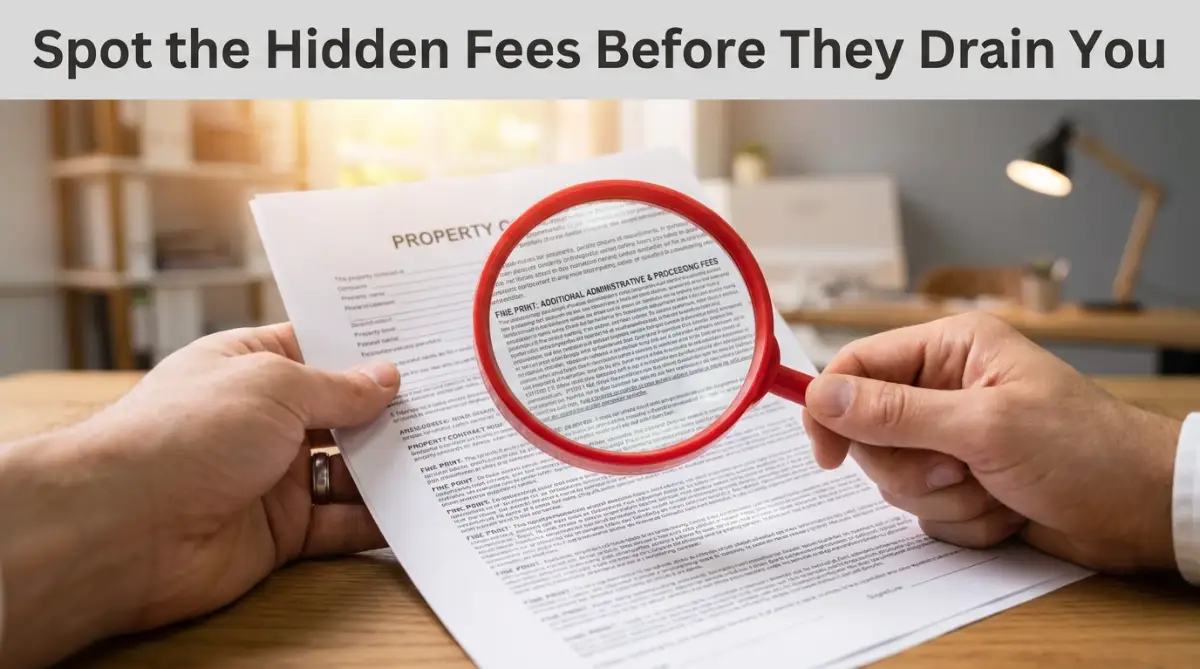
Uncovering the Sneaky World of Hidden Admin Fees
Another massive trap is the inclusion of small, recurring administrative fees that slowly drain your budget. Property companies love to advertise a low base rent to get your attention online. Once you sit down to sign, you suddenly notice charges for trash valet, pest control, package delivery lockers, and common area upkeep.
These fees might look small individually, maybe just ten or twenty dollars a month. But when you add them all up over a three-year contract, you are losing thousands of dollars. Always calculate the total cost of the lease including every single mandatory extra charge.
Want to know exactly how to handle pushy landlords when these fees pop up? Watch this short, incredibly helpful video below to learn the best negotiation tactics used by legal experts!
I once completely ignored a small "monthly processing fee" in my own contract because it sounded harmless and official. Over two years, that tiny little fee added up to hundreds of dollars totally wasted on nothing. My realization was painful, but it taught me to always grab a calculator and multiply every small charge by the total months of my stay before signing anything.
You must ask the landlord to either remove these junk fees or roll them directly into the base rent. This prevents them from legally raising the side fees randomly in the middle of your contract. If they refuse to explain what a specific fee covers, that is a massive red flag.
The Automatic Renewal Trap and Notice Periods
Many renters get completely caught off guard by automatic renewal clauses buried near the very end of the document. This trap states that if you do not give a written notice within a specific timeframe, your contract automatically extends for another full term. Sometimes, the required notice period is extremely early, like ninety or even one hundred and twenty days before your move-out date.
Imagine deciding to buy your own house, only to realize you are legally locked into your apartment for another whole year. The penalties for breaking an automatically renewed contract are often aggressively expensive. You might lose your entire security deposit and be forced to pay two months of extra rent.
To protect yourself, grab a bright highlighter and mark the exact section discussing lease termination. Set multiple reminders on your phone calendar right now for the exact day you need to give notice. You can also actively ask the landlord to change the clause to an automatic month-to-month extension instead of a full yearly lock-in.
Decoding the Default and Eviction Terms
No one ever plans to miss a monthly payment or break a property rule. Life is highly unpredictable, and sudden medical emergencies or job losses happen to the best of us. This is why you must understand exactly what the contract defines as an "event of default."
Some extreme documents state that being just one day late on your payment is grounds for immediate eviction. Others might say that receiving a single noise complaint allows the landlord to terminate the agreement instantly. These terms are dangerously unbalanced and leave you with zero security in your own living space.
A fair agreement should always include a cure period or a grace period. This means if you make a mistake or pay a few days late, you have a legally protected window of time to fix the issue. Never sign a document that gives the landlord the power to lock you out without proper legal warning and a chance to correct the problem.
The Dangers of Joint and Several Liability
If you are renting a house with roommates, friends, or even a romantic partner, pay very close attention to liability clauses. Almost all group agreements include a term called "joint and several liability." This complicated legal phrase simply means that everyone on the paper is fully responsible for the entire rent.
If your roommate suddenly loses their job and moves out in the middle of the night, the landlord will not just ask you for your half. The landlord has the full legal right to demand the entire rent payment directly from you. If you cannot pay the full amount, your personal credit score will be severely damaged.
While this clause is very hard to remove, you must protect yourself by understanding the risk before moving in. Always draft a separate, signed internal agreement between you and your roommates outlining how sudden departures will be financially handled. This simple extra step can save you from bankruptcy if your living situation suddenly falls apart.
Restrictive Guest Policies and Subleasing Rules
You might think that because you are paying thousands of dollars, you can invite anyone over to your home. However, many agreements contain incredibly strict rules about how many days a guest can stay with you. Some contracts state that anyone staying more than three consecutive nights must be officially added to the property paperwork and undergo a background check.
This can completely ruin your plans if you have family members who like to visit for extended holidays. If you break this rule, the property manager can hit you with massive unauthorized occupant fines. Read the guest policy carefully and ask for written exceptions if you know your parents will visit for a month next summer.
Similarly, look very closely at the rules regarding subleasing or assigning your space to someone else. If your company suddenly transfers you to another city, subleasing is often your only financial escape route. If the contract completely bans subleasing under any circumstances, you are taking on a massive financial risk.
Always negotiate for a clause that says subleasing is allowed "with the landlord's prior written consent, which shall not be unreasonably withheld." This simple sentence forces the property owner to act fairly if you find a highly qualified replacement tenant. It gives you a safe exit strategy if your life plans change unexpectedly.
By taking the time to carefully read every single line, you instantly protect yourself from these hidden dangers. You become a smart, empowered renter who cannot be easily intimidated by property managers. Knowledge is your greatest defense, and you now have the exact tools needed to secure a truly safe living environment.
Next-Level Negotiation Secrets for Smart Renters
You already know how to spot the hidden traps in a basic property document. Now, it is time to shift your mindset completely and take total control of the conversation. Most people walk into a leasing office feeling like they are asking for a favor. You need to remember that you are the customer bringing thousands of dollars to their business.
Property managers highly value quiet, responsible tenants who pay on time and respect the space. If you have a solid credit score and a steady job, you hold a massive amount of hidden power. You can use this exact leverage to rewrite unfair terms before you ever pick up a pen.
Instead of just accepting a high monthly rate, try asking for a customized concession. If they refuse to lower the base rent, ask them to waive the upfront admin fees or throw in a free parking spot. You can also politely request a free month of rent prorated across your entire stay. Treat this exact process just like launching your business without failing, where every single detail is open for a fair trade.
The Power of the Move-In Video Audit
One of the greatest secrets to getting your full security deposit back starts on the very first day. Do not just fill out the simple paper checklist the landlord gives you when handing over the keys. That tiny piece of paper will never be enough to protect you if a massive dispute happens later.
You need to create an undeniable digital paper trail the moment you unlock the front door. Take out your smartphone and record a slow, highly detailed video of every single room in the house. Open every cabinet, run the water in every sink, and zoom in on any existing scratches on the floors.
Once you finish recording, upload this video to a secure cloud drive and email the link directly to the property manager. State clearly in the email that this video documents the exact condition of the property upon your arrival. This single email creates a legally time-stamped record that makes it incredibly hard for them to blame you for old damages. Understanding your rights through the U.S. Department of Housing and Urban Development (HUD) guidelines on tenant protections will show you exactly why this documentation is so powerful.
Protecting Your Digital Identity on Leasing Portals
Today, almost nobody signs a physical stack of papers with a blue pen anymore. You will likely be asked to review your agreement and pay your deposits through a third-party online portal. While this is highly convenient, it completely opens you up to modern digital vulnerabilities.
You are handing over your bank routing numbers, your social security number, and your full employment history. Before you create an account on their specific leasing website, take a few minutes to verify the platform's safety. Look closely at how they handle personal data and check if they have a history of data breaches. Just as you would worry about software security risks when using new technology, you must guard your financial identity online.
If the portal looks outdated or suspicious, you have the right to request a physical copy of the agreement instead. Tell the landlord you prefer to hand them a certified bank check for the initial deposit to ensure total safety. A good property manager will always accommodate a reasonable request regarding your personal privacy.
Mastering the Implied Warranty of Habitability
Many renters mistakenly think they just have to suffer if the heater breaks down in the middle of winter. You actually have a powerful legal concept on your side called the implied warranty of habitability. This basically means the landlord is legally forced to keep the property safe and livable, regardless of what the contract says.
If there is a severe mold outbreak or a completely broken plumbing system, they cannot just ignore your calls. According to the Legal Information Institute at Cornell Law School, property owners must provide basic necessities like running water and heat. If they fail to fix major health hazards quickly, you often have the right to withhold your monthly payment or break the agreement without penalty.
However, you must follow your local laws exactly before you stop paying rent. Always communicate the repair request in writing and give them a reasonable amount of time to fix the issue. If you need help navigating the legal system safely during a dispute, consulting a local housing authority is your best next step.

The Most Dangerous Leasing Blunders You Must Escape
Even the smartest people can make terrible decisions when they are stressed about finding a place to live. Moving is an incredibly emotional process, and that pressure easily causes us to drop our guard. When you are desperately trying to secure a nice home, you might ignore massive red flags staring right at you. Let us break down the exact pitfalls that cause the most pain for everyday renters.
The "Verbal Promise" Disaster
This is arguably the most common and painful mistake anyone can make during a property negotiation. Imagine walking through an apartment and noticing a terrible smell or a huge stain on the living room carpet. The leasing agent smiles warmly and promises you that a professional cleaning crew will fix it before you move in.
You feel relieved, you trust their friendly smile, and you sign the document without getting that promise in writing. Moving day arrives, and the carpet is still stained, but the agent you spoke to suddenly no longer works there. The new manager simply looks at your signed paper and says they have no record of that conversation.
If it is not explicitly written in the physical contract, it simply does not exist. I learned this the hard way when a landlord promised to install a new security door but completely ignored me after I moved in. You must demand that every single repair, upgrade, or special condition is added as an official addendum before you sign.
Falling for the "Model Unit" Bait and Switch
Large property management companies love to show you a completely flawless model apartment during your tour. These model units have beautiful lighting, brand-new appliances, and smell like fresh vanilla. The agent tells you that your actual unit is currently occupied, but it looks "exactly like this one."
This is a massive trap that leaves countless renters completely heartbroken on moving day. You might show up to find your actual unit has outdated cabinets, scratched floors, and faces a noisy highway. By then, your signature is already on the paper, and backing out will cost you a fortune.
Never sign an agreement until you have physically walked through the exact unit you will be living in. If they refuse to show you the real space, simply walk away from the deal entirely. You should approach this inspection with the exact same seriousness as if you were trying to master your property purchase for the very first time.
Ignoring the Neighborhood and Zoning Realities
You might find the most beautiful, perfectly priced house with a flawless contract that heavily favors you. However, you completely forget to check what is happening right outside your future bedroom window. Signing a twelve-month commitment without understanding the surrounding environment is a massive gamble.
What if the empty dirt lot next door is zoned for a massive commercial construction project starting next month? You will be waking up to loud bulldozers and heavy machinery shaking your walls at six in the morning every single day. Your contract will not protect you from outside noise, and breaking the lease early will still trigger severe financial penalties.
Always visit the property at different times of the day before making your final decision. Drive by on a busy Friday night to check the noise levels, and visit on a Monday morning to see the traffic. Checking local public records for upcoming construction can save you from a year of total misery.
Draining Your Savings for Surprise Deposits
Many people budget perfectly for their monthly rent but get totally blindsided by hidden move-in costs. The listing might say the deposit is only one month of rent, which sounds perfectly manageable at first. Then, you sit down to sign and discover extra deposits for pets, keys, and special amenities.
Suddenly, your expected move-in cost doubles, leaving your bank account completely drained on day one. This financial shock can push you into terrible credit card debt just to buy basic groceries during your first week. According to the Consumer Financial Protection Bureau (CFPB) guidelines on renting, surprise financial burdens are a leading cause of early tenant default.
To avoid this nightmare, you must ask for a complete, itemized list of all move-in costs before you ever apply. Take time to focus on building a cash buffer specifically for your moving expenses months in advance. Having extra emergency funds gives you the absolute freedom to reject a bad deal and keep looking for a fair landlord.
Skipping the Renter's Insurance Policy
A shockingly high number of tenants believe that the landlord's property insurance will cover their personal belongings. This is a very dangerous myth that has left thousands of people completely bankrupt after a disaster. If a pipe bursts and ruins your expensive laptop and furniture, the landlord owes you absolutely nothing.
The property owner's insurance only covers the physical building structure itself, not the items inside it. If you do not have your own active renter's insurance policy, you will have to replace everything out of your own pocket. Even worse, if you accidentally start a small kitchen fire, the landlord's insurance company can actually sue you for the massive repair costs.
A solid policy usually costs less than fifteen dollars a month and provides thousands of dollars in protection. It covers your personal items, pays for temporary hotel stays, and provides massive liability coverage if someone gets hurt in your home. Getting this coverage is the cheapest and smartest way to guarantee your long-term peace of mind.
Your Blueprint for a Stress-Free Living Experience
Taking the time to read those heavy, boring legal pages is not just a chore. It is the ultimate act of protecting your hard-earned money and your daily happiness. You now know exactly how to push back against unfair fees, demand better conditions, and secure a place you truly love.
Always remember that you have the absolute right to ask questions and request changes to any document. If a landlord tries to rush you or makes you feel stupid for reading carefully, that is your signal to leave. A respectful property owner will always appreciate a tenant who takes their commitments seriously.
I genuinely hope my own past struggles help you avoid the terrible stress of a bad property deal. You completely deserve a home where you feel entirely safe, secure, and respected by management. Take a deep breath, grab your highlighter, and confidently negotiate the amazing living space you truly deserve!
Frequent Questions from Smart Renters
Can my landlord change the rules in the middle of my stay?
No, a landlord generally cannot change major rules or increase the rent before your current term officially ends. Any changes to the agreement must be agreed upon by both parties and signed in a written amendment. However, if you are on a month-to-month plan, they can easily change terms with a short thirty-day notice.
What actually happens if I need to move out early?
Breaking an agreement early almost always comes with a heavy financial penalty outlined in your specific document. You usually have to pay an early termination fee or continue paying rent until a new tenant is found. Always talk to your landlord honestly, as some might let you find a sublease to completely avoid these massive fees.
Is a pet deposit refundable when I finally move out?
This completely depends on the specific wording used in your signed paperwork. A pet "deposit" is generally refundable if there is absolutely no damage, but a pet "fee" is usually non-refundable. Make sure you clearly ask the property manager to explain the exact difference before bringing your furry friend home.
How do I prove my landlord is keeping my security deposit unfairly?
You must keep a copy of your initial move-in video and all written emails requesting maintenance throughout your stay. If they charge you for existing damage, you simply show them your time-stamped video from day one. If they still refuse to return your money, you can confidently take those exact digital records to a small claims court.
Disclaimer: The information provided in this blog post is for educational and informational purposes only and does not constitute professional legal or financial advice. Always consult with a qualified attorney or local housing authority regarding your specific lease agreement and local tenant laws before making any binding decisions.