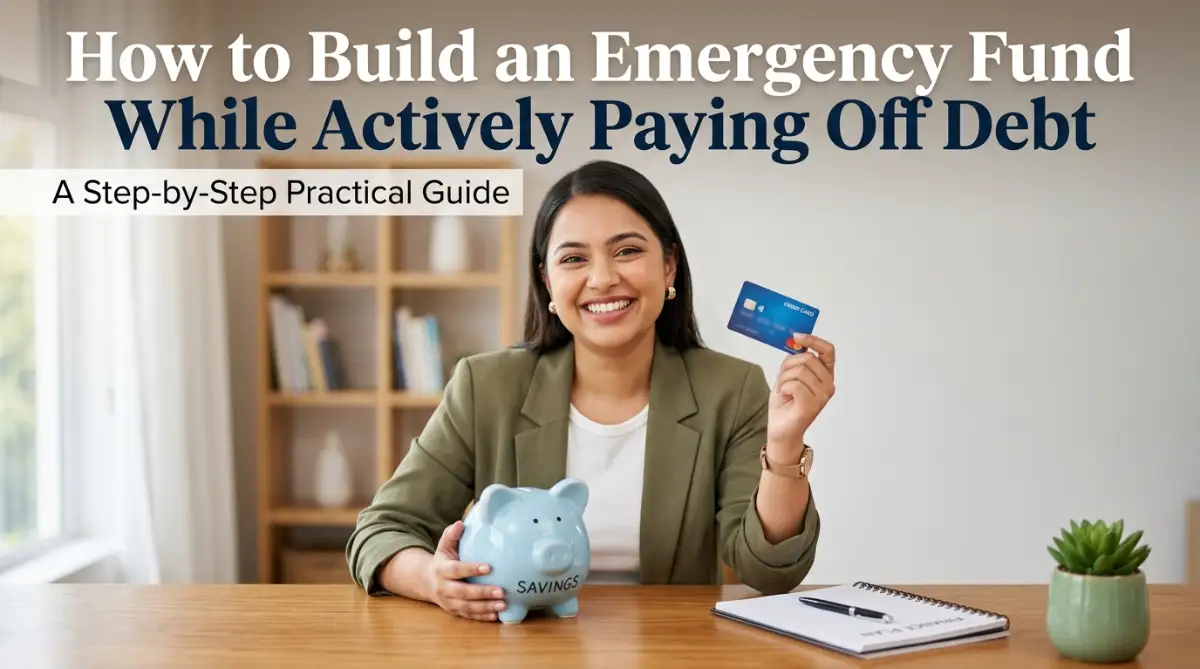
The Silent Battle of Choice: Savings Versus Debt
I remember sitting on my living room floor, crying over a mountain of credit card bills while holding a heavy quote for new car brakes. I was trying so hard to pay off my debt that my bank account was completely empty, leaving me totally helpless when real life happened. That was the painful moment I realized my perfectly planned math was actually destroying my peace of mind.
Imagine lying awake at midnight, staring at your ceiling while your mind runs through numbers. You have a small amount of extra cash sitting in your checking account this month. Part of you wants to throw that cash directly at your credit card bill to lower your balance.
Another part of you is terrified of what might happen if your car breaks down tomorrow morning. If you spend every spare dollar on your bills, you are left with absolutely nothing for emergencies. This constant worry makes you feel like you are walking a tightrope without a safety net below.
Many people find themselves trapped in this endless loop of stress and fear.
- The biggest issue is that mainstream advice often tells you to put every single penny toward your loans first.
- Most personal finance guides do not account for the unpredictable nature of real life.
- You might try to follow a strict budget only to get hit with an unexpected medical bill a week later.
- This leaves you feeling defeated, forcing you to use your credit cards again and repeating the cycle.
This constant worry does deep damage to your mental peace and your overall confidence.
- You start to feel like you are failing even when you are working as hard as you can.
- The fear of a sudden expense makes you look at your phone with dread every time an unknown number calls.
- It ruins your focus at work and strains your relationships with the people you love.
- Slowly, you begin to believe that financial stability is something only other people can achieve.
This painful cycle happens because we are taught to look at money as a math problem instead of a human problem. On paper, paying off high-interest debt as fast as possible makes the most sense.
However, real life does not care about perfect math or spreadsheet formulas. If you do not have a cash cushion, any minor emergency will push you back into borrowing. This is why having an emergency fund [1] is the most powerful tool you can use to break the cycle of debt forever.
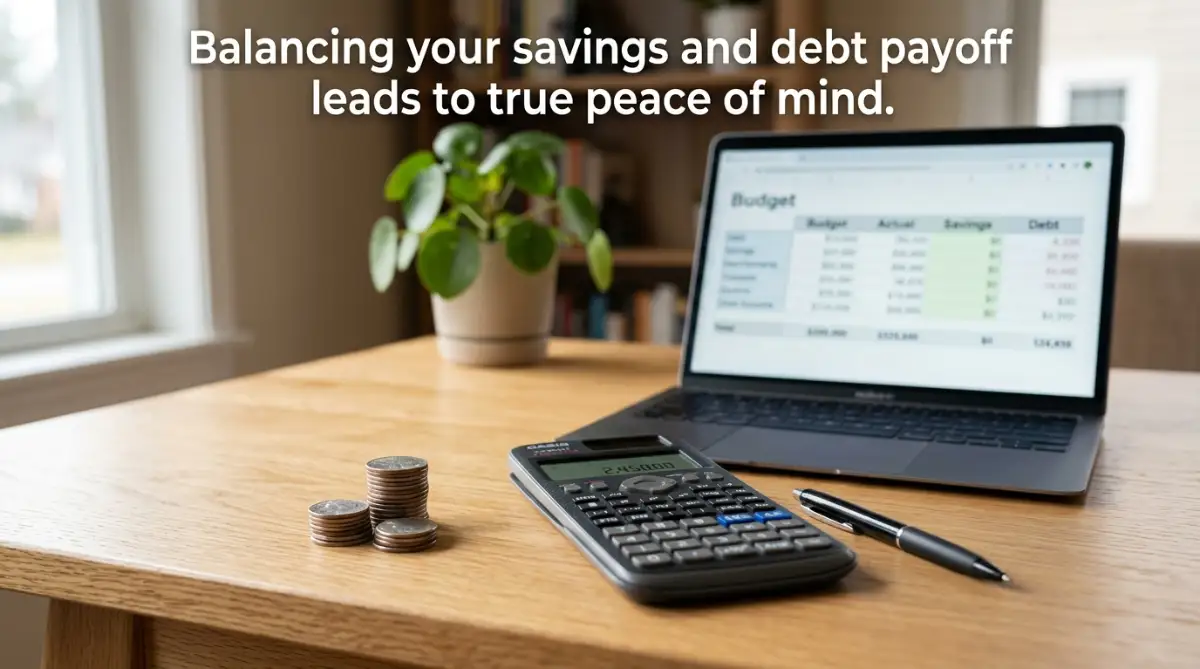
A Simple Strategy to Save Cash While Paying Your Bills
To escape this trap, you need a plan that protects your present while clearing your past. You do not have to choose between saving and paying off what you owe. You can actually do both at the same time if you follow a structured approach.
Your first goal is to build a small cash wall between you and the unexpected events of life. Do not worry about saving three to six months of living expenses right now. That big number can feel too heavy and keep you from starting at all.
Instead, My biggest mistake early on was trying to save three months of expenses all at once, which made me feel so overwhelmed that I almost gave up. I finally learned that saving just a tiny bit of cash each week builds a safety net fast without pausing my debt payments. Start with whatever small amount you can today, because even a fifty-dollar buffer feels like a huge weight lifted off your shoulders.focus entirely on saving a small starter amount of one thousand dollars. This amount is large enough to cover most common emergencies, like a basic car repair or a sudden dentist visit.
Think of this starter fund as an insurance policy for your debt payoff journey. When you have this cash ready, a flat tire is just an inconvenience instead of a financial disaster. You can pay for the repair with your cash, keep your peace of mind, and avoid touching your credit cards.
If you ever need to use this money, stop your extra debt payments temporarily. Focus on rebuilding this small cash buffer back to its full amount before you continue. This simple habit keeps your foundation strong and prevents you from slipping backward.
You cannot build a path forward if you do not know exactly where you are starting from. Take a piece of paper or open a simple spreadsheet to list your cash flow. Write down your total take-home pay for the month at the very top.
Next, list all of your fixed costs, such as your rent, utilities, and minimum loan payments. After that, look at your variable spending, like groceries, gas, and occasional dining out.
To make this step easy, look at your bank statements from the last two months. You might be surprised to find small subscriptions you forgot you were paying for.
By finding these small leaks, you can quickly free up extra cash to fund your safety net. If you need temporary help with short-term cash flow, you might look into unsecured bank loans as a tool, but only if you have a clear plan to manage them safely.
Once you know how much extra money you have left each month, it is time to split it. Instead of sending all of your extra cash to your creditors, divide it into two parts.
For example, you can use a simple fifty-fifty split for your extra funds. If you have two hundred dollars of extra money this month, put one hundred dollars into your savings account.
Send the other one hundred dollars to your smallest loan balance to speed up your progress. This method gives you the best of both worlds because you see your savings grow while your bills shrink.
If you want to speed up your debt payoff, you can use the classic debt snowball method [3] alongside your savings plan. This method focuses on paying off your smallest balances first to build quick mental wins.
These small wins keep you excited and motivated to continue your journey. If you need to consolidate your high-interest balances without risking your home, you can learn how to borrow money without collateral to simplify your monthly payments.
When you only pay down debt, your savings account stays at zero for a very long time. This can make you feel highly vulnerable because you are always one bad break away from trouble.
By building a safety net, you change how you feel about your money. You start to feel a sense of control and pride as you watch your savings balance rise.
This positive feeling is key to staying on track for the long haul. It changes your mindset from a place of fear to a place of strength
Before you read about these common money mistakes, watch this quick video to see exactly how I avoided the biggest debt trap of all. It will completely change how you view your savings, and the tips below the video will show you exactly how to protect your hard-earned cash!
Advanced Strategies to Speed Up Your Financial Progress
Once you have your basic plan in place, you can look for ways to make it run faster. You do not have to settle for slow progress if you are willing to make a few smart adjustments. These steps will help you build your savings cushion and wipe out your debt much faster.
The easiest way to save money is to make the decision once and then forget about it. When you rely on willpower alone, it is very easy to spend your extra cash before you can save it.
Set up an automatic transfer with your bank to move a small amount of money on every payday. Have this money go directly from your checking account into a separate savings account.
Do the same thing for your minimum debt payments to make sure you never miss a due date. By automating these tasks, you remove the daily stress of deciding where your money goes.
You will quickly adapt to living on the remaining balance without even thinking about it. This simple shift turns saving into a natural habit that happens in the background of your life.
If your current budget is very tight, the best solution is to bring in some extra cash. You do not need a complex plan or a lot of free time to make this happen.
Start by looking around your home for items you no longer use or need. You can sell old electronics, clothes, or furniture on local online marketplaces for quick cash.
Use every single dollar from these sales to build your starter safety net. You can also look for simple freelance gigs or short-term projects in your community.
Using helpful resources, such as free AI tools to handle basic tasks, can save you hours of work when setting up a side business. This extra income can go directly toward your savings goals without affecting your primary household budget.
Staying motivated during a long financial journey can be difficult. It is important to realize that progress is rarely a straight line.
You will have months where everything goes perfectly and other months where unexpected costs set you back. When these setbacks happen, do not get discouraged or give up on your plans.
Celebrate your small milestones, like reaching your first five hundred dollars in savings or paying off a single credit card. These small celebrations keep your energy high and remind you of how far you have come.
Keep your focus on your long-term vision of a life completely free from financial stress. With time and patience, these small daily choices will add up to massive changes in your life.

Five Dangerous Traps That Can Ruin Your Progress
When you are trying to balance saving and paying off debt, it is easy to make simple mistakes. Being aware of these common traps can save you years of frustration and thousands of dollars.
It is natural to feel excited and want to build a huge savings account right away. However, if you keep too much cash in a low-interest savings account, you might ignore high-interest loans.
This mistake keeps you in debt longer and costs you a lot of money in interest fees over time. Keep your starter savings small and focus your main energy on clearing your expensive balances.
An emergency fund is strictly for unexpected, urgent, and necessary events. It is not a fund for holiday gifts, weekend trips, or shopping deals.
If you use this money for non-emergencies, you will not have it when a real crisis strikes. Keep this account at a completely separate bank to make it harder to access on a daily basis.
Your budget should be a living tool that changes as your life changes. If you get a pay raise, change jobs, or experience a drop in income, you must update your plan.
Failing to adjust your budget can lead to accidental overspending or missed savings opportunities. Take fifteen minutes at the end of every month to review and update your numbers.
When an unexpected bill exceeds your starter savings, you might feel tempted to take out expensive loans. Returning to high-cost credit cards or predatory lenders will quickly destroy all of your hard work.
If you need extra help during a difficult period, look for safer, regulated options instead. You can research structured loans without pledges to handle emergencies without risking your personal property.
Trying to fix your finances in complete secret can make the journey feel lonely and incredibly difficult. You do not have to share your exact numbers with the world to get support.
Talk to a trusted friend, family member, or a professional who understands your goals. Having someone to encourage you during tough times can make a massive difference in your success.
Your Path to Lasting Financial Peace Starts Today
Taking control of your money is one of the most rewarding steps you can take in life. It is not about reaching a perfect mathematical formula or living a life of extreme sacrifice.
It is about creating options, protecting your family, and building a calm, peaceful future. By saving a small buffer while paying down your debts, you are taking a balanced and realistic path.
You do not have to wait until you are completely debt-free to feel secure and happy. You can start building your safety net today, even if it is with just five or ten dollars a week.
I used to think I would be stuck paying off loans forever, but taking that first scary step completely changed my life for the better. You have the absolute power to break this cycle right now, so please do not wait for the perfect time to start. Take one small action today to build your safety net, and I promise you will thank yourself tomorrow.
Every small step you take brings you closer to a life of true freedom and confidence. Trust the process, stay consistent with your plan, and watch your financial life transform.