The Heavy Burden of Multiple Monthly Bills
I remember sitting at my kitchen table, completely overwhelmed by a giant stack of credit card bills. I felt like I was drowning because my whole paycheck went to minimum payments, leaving me with nothing at the end of the month. Let me tell you, I know exactly how scary it feels to ignore unknown phone numbers because you fear another debt collector is calling.
Living with debt is not just a financial problem; it is an emotional weight that you carry every single day. The constant worry about missing a payment deadline can make it hard to sleep at night. You might find yourself avoiding phone calls from unknown numbers because you fear another collections agent is on the line.
Over time, this stress can begin to affect your work, your health, and even your relationships with loved ones. It feels like you are running on a treadmill that never stops, working hard but never actually getting ahead.
Why Finding the Right Financial Path is So Hard
Many people try their best to pay off what they owe but find themselves stuck in the same place. Here are the main reasons why finding a clear path out of debt is so difficult:
- Confusing Interest Rates: It is hard to calculate how much you are actually paying when different cards have different interest rates.
- The Minimum Payment Trap: Paying only the minimum amount on credit cards barely lowers the actual balance you owe.
- Bad Financial Advice: There are many companies that promise quick fixes but end up charging high hidden fees.
- Unexpected Fees: Missed payment penalties and late fees can quickly pile up, making the total amount you owe grow even faster.
How Debt Impacts Your Daily Peace of Mind
The constant pressure of owing money does more than just empty your wallet. It slowly chips away at your self-confidence and your belief in a secure future.
- Constant Worry: You may feel a deep sense of anxiety every time you open your mailbox or check your email inbox.
- Loss of Choice: When most of your income goes to payments, you cannot save for things that truly matter to you.
- Feeling Stuck: Many people feel embarrassed about their financial situation, which stops them from asking for help.
- Strained Relationships: Arguments about money are one of the leading causes of stress between partners and family members.
This constant worry can make you feel like you have no control over your own life. However, understanding the tools available to you can help you break free from this cycle and start fresh.
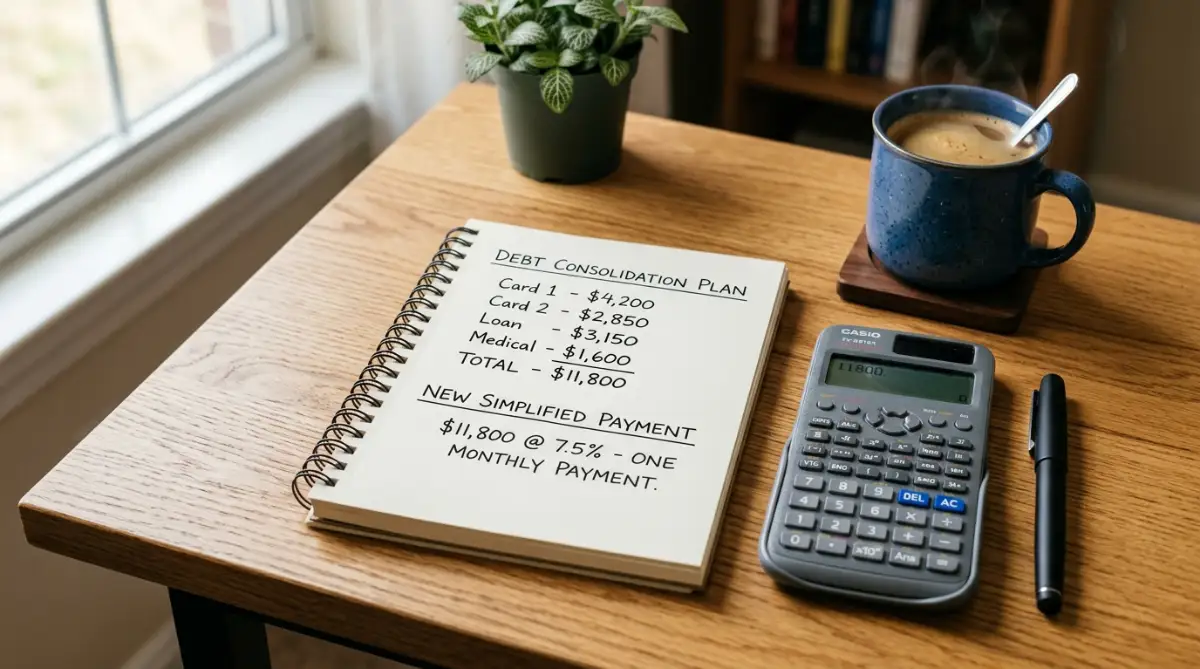
A Step-by-Step Plan to Simplify Your Monthly Payments
To fix your finances, you need a clear and structured plan that you can start using today. Let us look at the first three main steps to combine your debts and lower your payments.
Step 1: Gather and Understand All Your Debts
The first step is to get a complete and honest picture of your current financial situation. You cannot solve a problem if you do not know the exact details of what you are dealing with.
Create a Simple List of Everything You Owe
Grab a piece of paper or open a simple spreadsheet on your computer. Write down every single balance you owe, along with the interest rate and the minimum monthly payment for each.
When I first tried to fix my money problems, my biggest mistake was guessing my balances instead of looking at my real bank statements. Once I finally sat down and wrote out every single dollar I owed, I realized that facing the ugly truth was the only way I could actually move forward.
Think of this step like cleaning out a messy closet in your home. It might look worse before it looks better, but seeing everything in one place is the only way to clean it up.
Find the Total Amount and the Average Rate
Once you have listed everything, add up all the balances to find your total debt. Next, look at the interest rates to see which accounts are costing you the most money each month.
This number is your starting point, and knowing it will help you choose the best strategy to move forward.
Step 2: Compare and Select the Best Option
Once you know exactly what you owe, you can choose the best tool to bring those balances together. There are a few different paths you can take depending on your credit score and financial goals.
Using a Personal Consolidation Loan
One of the most common ways to group your bills is to take out a personal loan. You use the money from this new loan to pay off all your smaller, high-interest credit cards.
If you want to read more about how this works without putting your assets at risk, you can read our guide on unsecured bank loans. This option allows you to focus on just one payment with a fixed interest rate.
Finding Loans Without Giving Up Security
Many people worry that they need to offer their home or car as a guarantee to get a loan. However, there are ways to get approved without risking your personal property.
You can explore our expert strategy on how to borrow money without collateral to protect your assets. This approach helps you maintain your peace of mind while simplifying your monthly payments.
Exploring Premium Banking Options
If you have a strong relationship with your bank, you might qualify for special financial offers. Some institutions offer special access to borrowing programs that do not require any assets.
For more details on how to qualify, check out our guide on loans without pledges to see if this is the right match for you.
Step 3: Put Your Plan into Action and Stay Consistent
Once you choose the right tool, it is time to apply and set your plan in motion. This step requires focus and a commitment to changing how you handle your money.
Apply for Your Chosen Option
Submit your application with all the required paperwork, such as proof of income and tax forms. Make sure you read the terms carefully and check for any hidden fees before signing the agreement.
Pay Off Your High-Interest Accounts Instantly
As soon as you receive the funds from your new loan, use them to pay off your old balances immediately. Do not leave any small balances on your cards, as they can quickly grow again if you are not careful.
Keep Your Eye on the Main Goal
Now that you only have one monthly payment to worry about, make sure you pay it on time every month. Consolidating your bills is a great first step, but staying consistent is what will lead you to financial freedom.
Before you jump into the steps below, watch this short video to see exactly how combining multiple bills works in real life. It will give you a clear picture of what to do next and make the rest of this guide much easier to follow!
Smart Strategies for Long-Term Financial Success
Grouping your payments is an excellent start, but keeping your finances healthy over time requires a few advanced strategies. Let us look at two more steps that can help you secure your financial future.
Step 4: Talk to Your Creditors Directly
Many people do not realize that they have the power to negotiate with the companies they owe money to. Creditors often prefer to get paid a lower amount rather than risk not getting paid at all.
How to Prepare for the Conversation
Before you call your creditors, make sure you know exactly what you can afford to pay them. Be polite, explain your situation honestly, and ask if they can lower your interest rate or wave late fees.
What to Ask For During the Call
Ask if they have a hardship program that can temporarily reduce your monthly payments while you get back on track. Getting even a small reduction in your interest rate can save you hundreds of dollars over the life of your loan.
Step 5: Put Your Budget and Payments on Autopilot
One of the easiest ways to avoid late fees and protect your credit score is to automate your financial life. When you do not have to think about making payments, you remove the chance of forgetting them.
Set Up Automatic Bill Payments
Log into your bank account and set up automatic transfers for your monthly loan payment. Make sure the money leaves your account a day or two after you get paid so you are never short on cash.
Use Digital Tools to Track Your Spending
You can also use smart software to keep an eye on where your money goes each month. For example, using some of the top free AI tools can help you organize your budget and track your expenses without spending hours on spreadsheets.
Keeping Your Financial Health Safe for the Long Term
Once you have simplified your payments, your next goal is to make sure you never fall back into the same situation. This requires building a safety net that protects you from life's unexpected events.
Build an Emergency Cash Fund
Start small by saving just a little bit of money from each paycheck into a separate savings account. Having even a small emergency fund can keep you from using credit cards when your car breaks down or you face a medical bill.
Track Your Financial Progress Regularly
Check your credit score and your total net worth at least once a month to see how your hard work is paying off. Watching your total debt decrease and your savings grow is a fantastic way to stay motivated on your financial journey.

Common Pitfalls You Must Stay Away From
While combining your debts can be incredibly helpful, there are a few common mistakes that can ruin your progress. Being aware of these traps will help you navigate your financial recovery safely.
Mistake 1: Keeping Your Credit Cards Open and Spending Again
The biggest mistake people make after getting a consolidation loan is using their old credit cards again. This can quickly double the amount of money you owe, leaving you in a much worse position than before.
Mistake 2: Missing Hidden Fees in Your New Loan
Some consolidation loans come with high fees that are hidden in the fine print of the contract. Always ask about origination fees, application costs, and prepayment penalties before you agree to any loan.
Mistake 3: Focusing Only on the Monthly Payment Instead of the Total Cost
A lower monthly payment might look great, but if the loan term is very long, you might end up paying more in interest over time. Always calculate the total amount you will pay over the entire life of the loan.
Mistake 4: Not Addressing the Root Cause of Your Debt
Consolidation is a tool to manage your debt, but it does not fix the spending habits that caused the problem. Take some time to look at why you fell into debt and make changes to your daily lifestyle.
Mistake 5: Trusting Scammers Who Promise Instant Solutions
Be very careful of companies that guarantee they can erase your debt instantly for a large upfront fee. Stick to trusted financial institutions, banks, or reputable non-profit credit counseling agencies.
Your Path to True Financial Control
Taking charge of your finances is one of the most rewarding things you can do for yourself and your family. By grouping your debts into one simple payment, you can lower your stress and start keeping more of your hard-earned money.
Remember that this journey is a marathon, not a sprint, and every small step you take counts. Do not let past mistakes stop you from building a secure and peaceful future.
Looking back, deciding to face my debt head-on was the best choice I ever made for my family and my own happiness. You do not have to live with this heavy stress forever, and taking just one small step today can completely change your life. I promise you that the peace of mind on the other side is worth all the hard work.
Disclaimer: Start by listing your debts today, compare your options, and take that very first step toward a simpler financial life. You have the power to change your financial story, and the best time to start is right now.