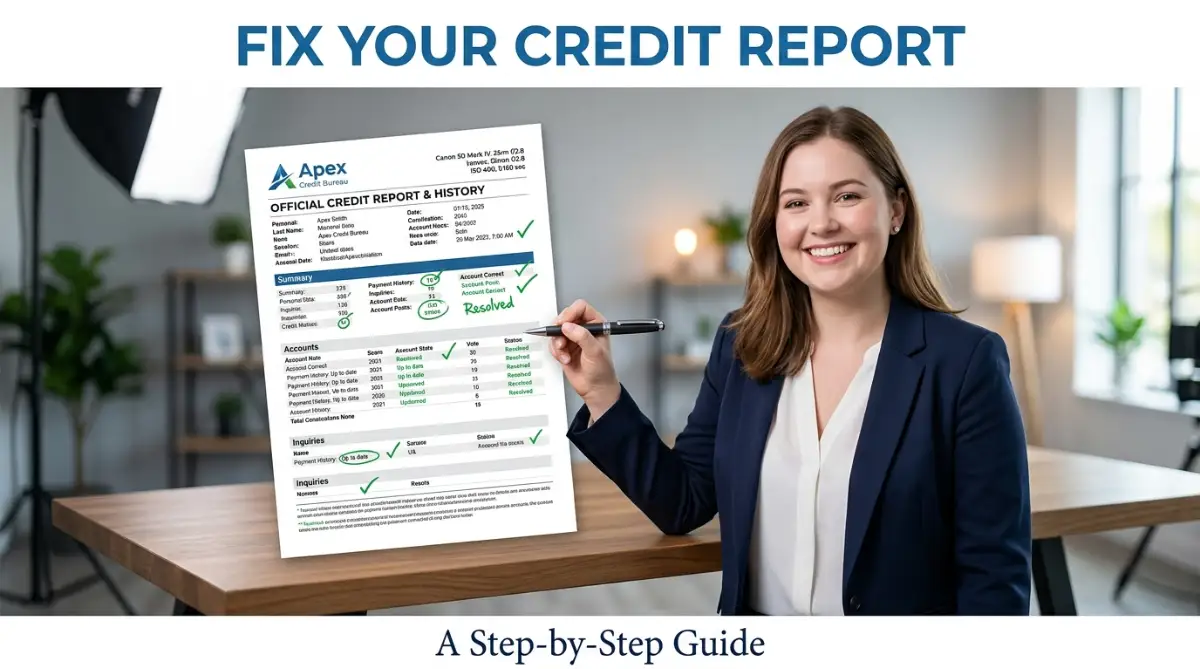
The Hidden Pain of Credit Report Mistakes
Ever checked your credit score and thought, "Wait, that is definitely not right?" You are not alone. A while back, a silly clerical error almost ruined my chances of getting a normal bank loan. It is super frustrating when a bank's typo messes up your life plans. But here is the good news: you can fix these mistakes yourself without paying a dime to those sketchy credit repair agencies. Let me show you exactly how I did it.
Imagine applying for a mortgage on your dream home or trying to buy a reliable family car. You sit across from the lender, feeling confident and excited about your future. Then, the lender looks up, shakes their head, and tells you that your application is rejected.
This painful moment happens to thousands of honest people every single day. Often, the rejection is not because of your actual spending habits. Instead, it is caused by a simple clerical mistake made by a bank or a credit bureau.
Why People Fail to Find the Right Answers
- Many consumers believe that they must pay expensive credit repair companies to clean up their files.
- People often read conflicting advice online that tells them to dispute everything, even the positive history.
- Many individuals do not know about their legal rights under federal laws that protect them from incorrect credit reporting.
- People frequently send incorrect dispute letters that get rejected immediately by automated scanning systems.
The Mental and Emotional Toll of Bad Credit
- Loss of Sleep: The constant worry about financial stability can keep you awake night after night.
- Damaged Confidence: Rejection letters make you feel like you are failing, even when you are doing your best.
- Relationship Stress: Money issues and loan rejections often cause deep tension between spouses and family members.
- Feeling Trapped: You may feel like you are locked in a room with no key, unable to grow your wealth.
Credit Repair: Myth vs. Fact
| What People Think (Myth) | What Actually Happens (Fact) |
| :--- | :--- |
| Checking your own credit hurts your score. | Pulling your own report is a "soft inquiry" and does not lower your score at all. |
| Paying off a collection removes it instantly. | The debt shows as "paid," but the collection mark stays unless you negotiate a "pay-for-delete." |
- | Credit repair agencies have secret legal tricks. | They just mail dispute letters on your behalf. You can send the exact same letters for free. |
By taking charge of your credit file, you can reclaim your financial power and open new doors. Let us look at how you can start fixing these errors on your own without spending a fortune.
What You Will Learn in This Guide (Key Takeaways):
- How to pull all three of your official credit reports without paying a single penny.
- The exact spots on your report where lenders make the most damaging mistakes.
- Why sending physical, certified mail works so much better than using online dispute buttons.
- How to force banks to fix their data if the credit bureaus ignore your first request.
A Clear Step-by-Step Plan to Clean Your Credit File
To start this journey, you must first understand how credit scoring works in general. A solid credit score definition shows us that your score is simply a grade based on your history of borrowing money [1]. If the history has wrong notes, your grade will drop.
When you want to borrow money, having a clean record is the most important step. It helps you qualify for better rates, especially if you plan to apply for unsecured bank loans in the near future.
Let us break down the first three steps you need to take right now.
Before you jump into the steps below, watch this quick video to see exactly how the credit dispute process works in real life. Once you finish watching, keep reading to learn the exact mailing tricks that get faster results.
Step 1: Secure Your Three Credit Reports
Your first move is to get your hands on your official credit records. You have three main credit bureaus that track your financial behavior: Equifax, Experian, and TransUnion.
Each bureau operates independently, which means they might have different information about you. An error could show up on one report but not on the other two.
You can use the official tools from the Consumer Financial Protection Bureau tools to find out how to get these reports safely [2]. Make sure you download all three reports so you can compare them side by side.
Q: Why shouldn't I just use free credit apps to check for errors?
My Honest Answer: Free apps usually only give you a quick summary, not the raw data. When I finally pulled my official PDF report from AnnualCreditReport.com, I found a misspelled address tied to a stranger's bad debt. The free apps completely missed it. Always get the raw files
Do not rely on third-party apps that only show you a summary of your score. You need the full, detailed history to see the actual errors.
You are legally allowed to get free copies of your reports from each bureau. The government-mandated website for this is AnnualCreditReport.com.
Avoid other websites that ask for your credit card details or try to sell you monthly monitoring plans. The official site will let you download your documents securely and for free.
Create a dedicated folder on your computer to save these PDF files. Label them with the date and the name of the specific credit bureau.
Having these files organized will make it much easier to track your progress as you move forward. You will also need to refer back to these original documents later in the dispute process.
Step 2: Spotting the Errors with a Fine-Toothed Comb
Once you have your three reports, it is time to act like a financial detective. Grab a highlighter or use a digital tool to mark anything that looks suspicious.

Do not rush through this process because even a tiny typo can cost you points. You want to look at every single section, starting from your personal information.
Check your name, your past addresses, and your employment history to make sure they are correct. Sometimes, bureaus mix up people with similar names, which can ruin your credit.
- Wrong Account Status: Look for accounts marked as "open" when you know you closed them years ago.
- Incorrect Balances: Check if the report says you owe money on a card that you paid off last month.
- Duplicate Accounts: Sometimes, the same debt is listed multiple times under different collection agency names.
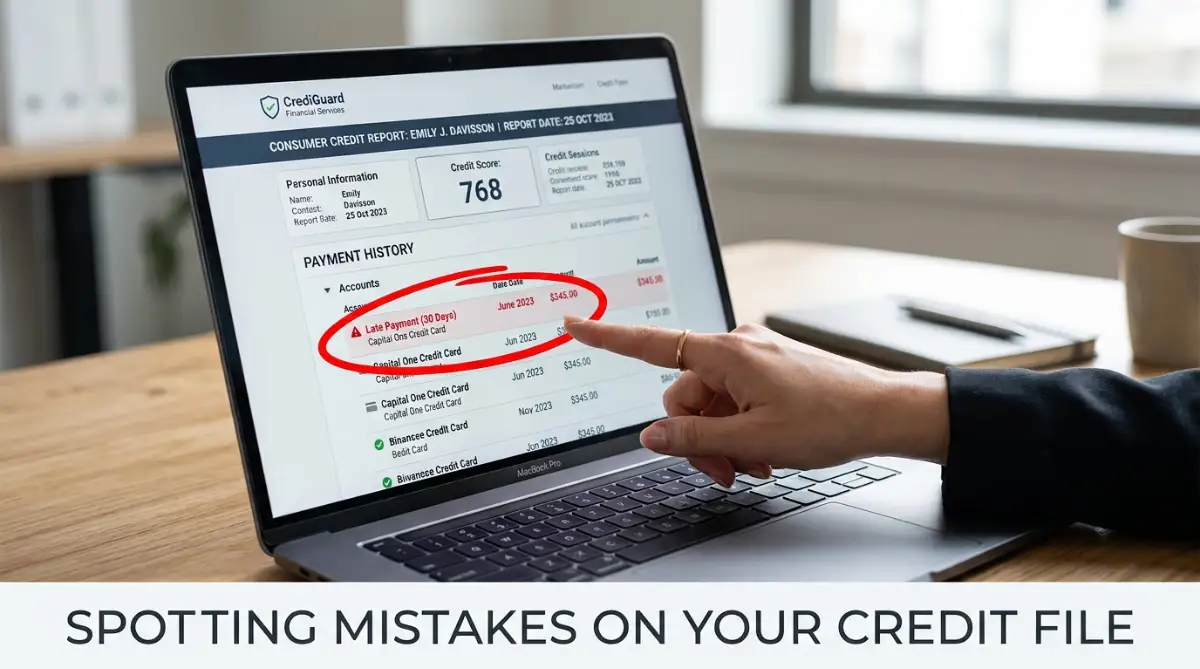
- Inaccurate Payment History: Search for late payment marks on bills that you paid on time.
Compare the three documents to see if there are differences between them. For example, if TransUnion shows a late payment but Experian shows it on time, you have found a clear error.
Write down every single mistake you find on a separate sheet of paper. This list will serve as your blueprint for the dispute phase.
Step 3: Writing Your First Dispute Letter
Now that you have your list of errors, you need to write a dispute letter. You do not need a lawyer to write this letter for you.
Keep your letter simple, clear, and very polite. State your full name, your address, and your account numbers.
For each error, explain exactly why the information is wrong and ask them to remove or correct it. You can use the official Federal Trade Commission guide on disputing credit errors to find templates and mailing addresses [3].
Start by introducing yourself and clearly stating the purpose of your letter. Use bullet points to list each error so the reader can understand it quickly.
Here is a simple example of how to write your point: "Account number 12345 shows a 30-day late payment. I have attached my bank statement proving this payment was made on time."
Never send a dispute letter without solid evidence to back up your claims. If you have bank statements, One big mistake I made early on was sending my disputes online just because it was fast and easy. I quickly realized that mailing physical letters with printed proof forced the bureaus to actually read my case instead of having a computer reject it instantly. Take it from my experience, spending a few extra dollars on certified mail is absolutely worth it.canceled checks, or letters from your lender, include copies of them.
Keep your original documents safe at home and only send copies to the credit bureaus. If you send your only copy, you might lose your proof forever if the mail gets lost.
Always send your dispute letters using certified mail with a return receipt requested. This gives you physical proof of when the credit bureau received your letter.
The bureaus have a set number of days to investigate your claim once they receive it. Having a tracking receipt keeps them honest and holds them accountable to the legal timeline.
Expert Strategies for Hard-to-Fix Mistakes
Disputing errors with the credit bureaus is a great start, but sometimes they will reject your dispute. When this happens, you must step up your strategy and go straight to the source.
Step 4: Contact the Original Lender Directly
If the credit bureau refuses to update your report, you must contact the company that reported the data. This company is called the data furnisher, and they are usually your bank or credit card provider.
Under federal law, these companies must investigate your dispute just like the bureaus do. If you prove to them that they made a mistake, they must update their records and notify all three bureaus.
This is a great option when you are trying to clean your record to apply for how to borrow money without collateral because lenders want to see a spotless history.
Write a letter to the customer service department or the billing dispute department of the lender. Use the same simple, polite tone that you used with the credit bureaus.
Provide your account details and attach copies of your proof, such as payment receipts or account closure letters. Ask them to update their internal systems and send a correction to the bureaus.
If the lender agrees that they made a mistake, ask them to send you a formal letter confirming the error. This letter is gold.
If the bureaus still fail to update your report, you can mail them a copy of this letter. The bureaus cannot easily ignore a direct letter from the creditor stating that the information is wrong.
Step 5: Follow Up and Track the Clock
The law states that credit bureaus generally have 30 days to investigate your dispute once they get your letter. If they do not finish the review in time, they must remove the disputed item from your report.

This is why tracking your mail is so important for your success. Mark the delivery date on your calendar and count the days.
If you do not hear back within 35 to 40 days, send a follow-up letter. Remind them of the date they received your first mail and ask for immediate deletion of the errors.
Sometimes, bureaus will send you a letter saying your dispute is frivolous. This is a common tactic used to slow you down.
Do not get discouraged or give up if you receive this letter. Simply reply with more specific details or additional proof to force them to reopen the investigation.
If a bureau or a lender ignores your rights, you can file an official complaint. The Consumer Financial Protection Bureau (CFPB) accepts online complaints and will contact the companies on your behalf.
Most financial companies take CFPB complaints very seriously and will resolve your issue quickly to avoid government trouble.
Keeping Your Financial Path Clear for the Long Term
Once you successfully remove the errors, your job is not quite finished. You must build habits that keep your credit file clean and accurate.
Checking your credit once a year is not enough anymore. You should check your accounts regularly to make sure no new mistakes pop up.
This is especially helpful if you want to gain bank loans without pledges because your score needs to remain high.
Many modern banks and credit card apps offer free credit monitoring alerts. Turn these alerts on so you get a notification whenever your score changes or a new account is opened.
If you see an alert for an account you did not open, you can stop identity theft before it ruins your hard work.
You do not have to spend hours checking your numbers manually every single week. You can use some of the free AI tools that save hours of work to organize your personal finances.
These tools can help you track your bills, monitor your balances, and alert you to any unusual activity in your bank accounts.

Five Common Pitfalls to Avoid in Your Journey
When people try to fix their credit, they often make simple mistakes that hurt their progress. Knowing what to avoid will save you time, money, and stress.
1. Paying Shady Credit Repair Companies
Many companies promise to erase your bad credit overnight for a large monthly fee. The truth is that these companies cannot do anything that you cannot do for yourself for free.
Many of them use illegal tactics that can get you into trouble, or they simply steal your money and disappear.
2. Disputing Accurate Negative Items
Do not waste your time disputing items that you know are correct and accurate. If you paid a bill late, that mark is allowed to stay on your report for up to seven years.
Disputing valid items will only make the bureaus view your letters as spam, which can hurt your real disputes.
3. Forgetting to Keep Detailed Records
Never send a letter or make a phone call without writing down the details. Keep a log of every person you speak with, the date of the call, and what they told you.
If you have to take legal action later, this log will be your best friend in court.
4. Giving Up After the First Rejection
Many disputes are rejected on the first try because of automated systems. If you stop there, you let the bureaus win.
Be persistent, send follow-up letters, and keep pushing until they look at your physical proof.
5. Ignoring Small Mistakes
You might think a misspelled middle name or an old address does not matter. However, these small errors can link your report to someone else's bad debts.
Always clean up every single mistake, no matter how small or unimportant it seems.
Take the First Step to Reclaim Your Financial Future
Cleaning up your credit report might seem like a giant mountain to climb, but you can do it. By taking it one step at a time, you can remove the errors that are holding you back.
A clean credit file is the key to lower interest rates, better loan options, and peace of mind. You do not need to pay thousands of dollars to a stranger to get the score you deserve.
Fixing my own credit felt impossible at first, but seeing my score jump up after my first successful dispute was the best feeling in the world. You have the exact same power to clean up your file and take back control of your life. Do not wait for tomorrow, because every single letter you mail today brings you one step closer to financial freedom.
Gather your documents, write your letters, and start your journey today. Your future self will thank you for the effort you put in right now.


