
The Heavy Burden and My Temptation to Borrow from the Future
Got an empty bank account but a fat 401(k)? Trust me, I know the urge to dip into your retirement savings when bills stack up. It feels like the perfect quick fix to a massive headache. But before you touch a single dime of your future money, let's talk about the hidden traps that almost nobody mentions out loud. I am going to show you exactly why borrowing from yourself might be the most expensive mistake you can make this year.
But that single, desperate thought almost cost me everything I had worked so hard to build. Everyday people like you and me face this exact same struggle when money gets tight. You feel like you are suffocating under the weight of monthly payments, and your retirement fund looks like a magic rescue boat.
We tell ourselves things like, "It is my money anyway, so why can't I use it when I really need it?" We justify the decision by thinking about the immediate relief it will bring to our families. We want to stop the collection calls, fix the broken roof, or just have one month where we do not have to count every single penny.
However, the relief you feel today is nothing but a dangerous illusion. When you borrow from your future self, you are trading a temporary fix for a permanent financial disaster. The peace of mind you get on Monday will turn into a massive nightmare by the time tax season rolls around. I want to share exactly what happens behind the scenes when you touch that money.
Read This Before You Touch Your 401(k):
- The Double Tax Trap: You pay taxes to pull the money out early, and you pay taxes again when you retire.
- The Instant Bill: If you take a 401(k) loan and lose your job, the entire balance is usually due right away.
- Lost Growth: Pulling out $10k today robs your older self of up to $70k in future stock market growth.
- Better Options: Always negotiate hardship plans with creditors or look into unsecured bank loans first.
Unmasking the True Cost of Your Retirement Funds
Let us break down exactly what happens when you decide to take cash out of your safe nest egg. The system is specifically designed to punish early withdrawals, and they do not make it easy for you to get away with it. You are not just taking your own money out; you are triggering a massive chain reaction of fees and taxes.
The Tax Bomb Waiting to Explode
When you pull cash from a traditional retirement fund, the government immediately steps in to take their cut. You funded that account with pre-tax dollars, meaning you never paid income tax on that money. The IRS never forgets a debt, and they will treat your withdrawal as regular income for the current tax season.
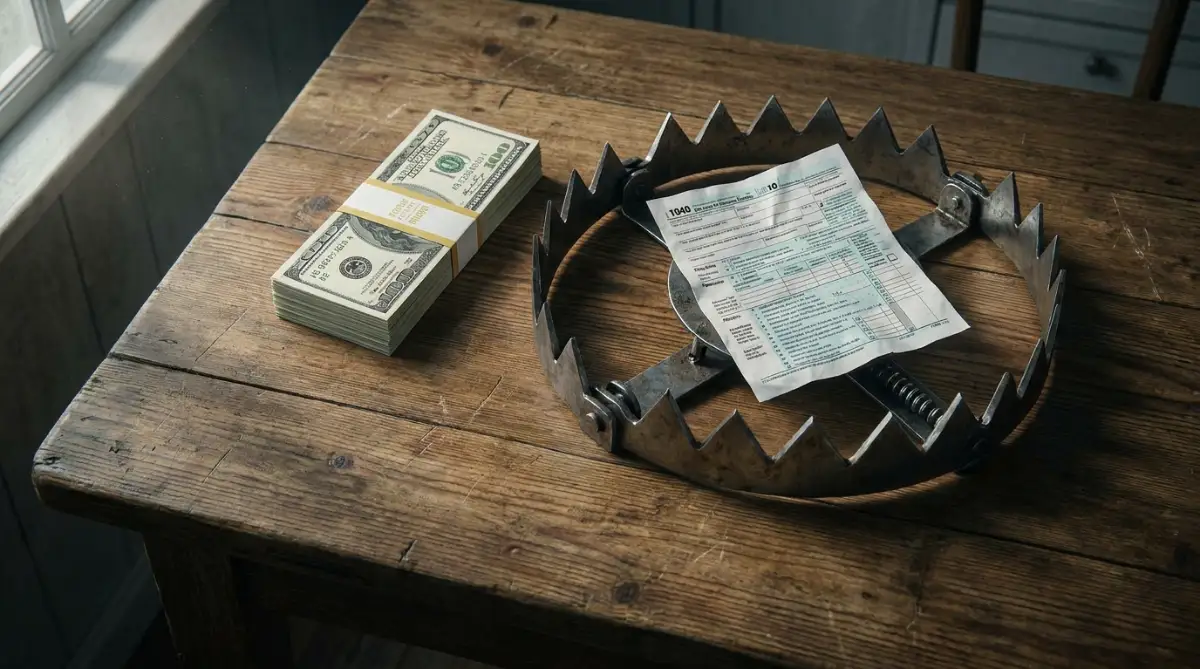
If you take out $20,000 to cover some debts, your yearly income just went up by $20,000 on paper. This sudden bump can easily push you into a completely different, much higher tax bracket. Suddenly, you owe thousands of dollars more in standard income taxes than you originally planned.
The Early Withdrawal Penalty
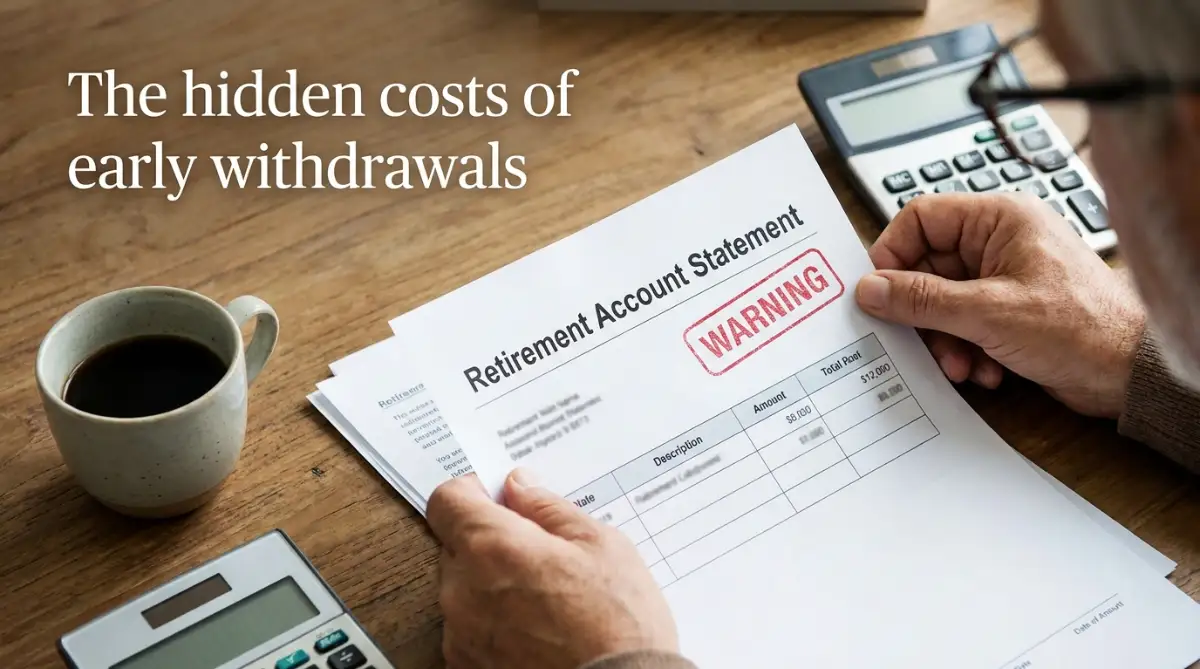
As if the income taxes were not bad enough, there is a strict punishment for touching the money early. If you are under the age of 59½, the IRS slaps a flat 10% penalty on the total amount you withdraw.
There is actually one rare exception to this penalty called the "Rule of 55." If you leave your job (fired, quit, or laid off) during or after the year you turn 55, you can pull money from that specific employer's 401(k) without the 10% penalty. You still have to pay regular income tax, though!
Let us look at a simple, real-life math example to understand this pain. If you withdraw that $20,000, the 10% penalty instantly eats $2,000 right off the top. Add in a conservative 20% for standard state and federal taxes, which is another $4,000 gone into thin air.
You asked for $20,000, but you might only see $14,000 of it actually hit your bank account. You essentially paid $6,000 just for the privilege of accessing your own hard-earned savings. This makes it one of the most expensive ways to get cash on the entire planet.
Quick Look: Where should you get cash in an emergency?
| Money Source | Interest Rate (Estimate) | Hidden Risks | Overall Rating |
| :--- | :--- | :--- | :--- |
| Personal Bank Loan | 8% - 15% | None. Leaves your retirement alone. | ⭐⭐⭐⭐ (Best) |
| 401(k) Loan | 5% - 9% | Due in full if you lose your job. | ⭐⭐ (Risky) |
| 401(k) Early Withdrawal | N/A | 10% penalty + Massive income tax hit. | ⭐ (Avoid at all costs) |
The Silent Killer: Killing Your Compound Interest
Taxes and penalties are brutal, but they are just the immediate cuts. The absolute biggest financial consequence of borrowing money from a retirement account is the silent loss of compound interest. Compound interest is simply your money making more money, even while you sleep.
When you remove funds from the market, those dollars stop working for you entirely. They stop earning dividends, they miss out on stock market growth, and they lose their compounding power.
Think of your retirement account like an apple tree that you planted years ago. If you chop off a massive branch today just to use as firewood, that branch will never grow apples again. You did not just lose the wood; you lost decades of future fruit that would have fed you later.
A Scary Real-Life Scenario
Imagine you take out $10,000 today at age 35 to pay off a car. If you had left that $10,000 alone in an account earning a basic 7% return, it would grow massively over time. By the time you reach age 65, that untouched $10,000 would have turned into more than $76,000.
You did not just borrow $10,000 to fix your car today. You secretly robbed your 65-year-old self of $76,000. This is the opportunity cost that financial advisors warn you about, and it is impossible to recover once the time has passed.
A Quick Tip From My Own Mistakes
I once decided to pause my retirement contributions for an entire year to pay off some minor debts, thinking I would easily catch up later. My biggest realization was that you can never buy back lost time in the stock market. Keep your money invested, even if you have to lower the monthly amount, because the habit of saving is much harder to restart once you stop.
The Hidden Trap of 401(k) Loans
Sometimes, people think taking a loan against their 401(k) is safer than doing a straight withdrawal. You are borrowing from yourself, paying yourself back with interest, so it seems like a genius loophole. Sadly, this is a massive trap disguised as a financial lifeline.
When you take a 401(k) loan, your employer starts deducting the repayment directly from your paycheck. This means your take-home pay immediately shrinks every single week. You took the loan because you were short on cash, but now your regular paychecks are even smaller than before.
This creates a dangerous cycle where people take on even more credit card debt just to survive the shrunken paychecks. You essentially dig a brand new hole just to fill up the old one.
Are You Ready to Hear the Bold Truth Before You Click Play?
Taking a loan from your own savings account might sound completely harmless on paper, but it secretly puts your entire financial foundation at massive risk. Watch this quick breakdown to see exactly how a simple loan can snowball into a disaster.
The Nightmare of Losing Your Job
Here is the most terrifying part about borrowing from your workplace retirement plan. If you quit your job, get fired, or if your company simply goes out of business, the rules change overnight. The loan you promised to pay back over five years suddenly becomes due almost immediately.
In most cases, you only have until tax day of the following year to pay back the entire remaining loan balance. If you cannot come up with the massive lump sum of cash, the IRS steps in with a heavy hand. They will officially categorize the unpaid loan amount as an early withdrawal.
This means you get hit with the taxes and the 10% penalty all at once, right when you are unemployed and completely broke. It is a perfect storm of financial disaster that can push a family straight into bankruptcy.
Double Taxation on Your Repayments
There is another weird rule that most people completely ignore when they borrow from their future. When you pay back a 401(k) loan, you are doing it with after-tax money from your regular paycheck. You already paid income taxes on the money you are using to repay the loan.
Fast forward thirty years to when you finally retire and start pulling money out to live on. You will be taxed again on those exact same dollars because traditional accounts tax you upon withdrawal.
You literally end up paying taxes twice on the exact same money. It is a highly inefficient way to handle your wealth, and it slowly bleeds your overall net worth dry without you even noticing.
Myth vs Reality: What You Need to Know
Myth: I will just pay myself back quickly, so my retirement will not suffer at all.
Reality: Even if you pay it back perfectly, you still miss out on market gains during the time the money was absent. If the stock market goes on a massive run while your money is sitting in your pocket, you lose all that growth permanently.
Myth: The interest I pay on the loan goes back to my own account, so I am actually making money.
Reality: The interest you pay back rarely matches the historical average of a good investment portfolio. Plus, you are paying that interest with money that has already been heavily taxed by the government.
Myth: Borrowing from a 401(k) does not hurt my credit score, so it is the safest option.
Reality: It keeps your credit score safe, but it destroys your liquid cash flow. A good credit score means nothing if you have zero dollars saved for your old age.
The Psychology Behind the Decision
We need to talk about why we make these choices in the first place. When humans feel cornered by debt or emergencies, our brains switch to survival mode. We lose the ability to see ten or twenty years into the future.
All we care about is surviving the next Friday paycheck. This intense tunnel vision makes the retirement account look like a harmless piggy bank. It takes a massive amount of discipline to look at a pile of your own cash and say, "No, I am not going to touch that."
Creating a Better Defense System
Before you ever click the button to request a withdrawal, you have to look for better options. You might feel totally trapped right now, but there is almost always another way out.
First, pick up the phone and call the people you owe money to. Hospitals, credit card companies, and even utility providers are often willing to negotiate hardship programs. If you explain your situation honestly, they might pause your payments, lower your interest rates, or offer a tiny monthly payment plan. They would rather get paid slowly than not get paid at all.
Second, you have to find a way to stop the bleeding in your daily budget. Look at your bank statements and cut everything that does not keep you alive or keep a roof over your head. It will be painful for a few months, but temporary budgeting pain is much better than ruining your financial future.
You can also look into taking a side job or selling things you no longer need. Earning extra income on the weekends might feel exhausting, but it protects your retirement nest egg. It leaves your compound interest alone so it can keep growing into a massive fortune.
Protecting Your Golden Years
Your older self is depending on the decisions you are making right at this very moment. When you turn 65 or 70, you will likely not have the energy to work a physical job anymore. That retirement account will be the only thing standing between you and extreme poverty.
Every time you take a dollar out today, you are forcing your future self to work an extra week, month, or even year. Protect that money like it is the most valuable thing you own, because it genuinely is.
Smart Alternative Strategies to Protect Your Future Wealth
When the bills are stacking up on your kitchen table, panic usually takes over your logical thinking. You might think pulling cash from your retirement fund is your only remaining option to survive the month. However, there are highly effective strategies you can use right now to find cash without destroying your older self's financial security.
Instead of raiding your hard-earned investments, you need to look at your current situation from a completely different angle. Let us walk through some powerful, real-life alternatives that can help you navigate this rough patch safely. These are the exact methods smart money managers use to keep their nest eggs completely intact during a crisis.

Master the Art of Hardship Negotiation
Most people are terrified of calling their creditors, so they hide from the phone calls and let the stress build up. The truth is, the person on the other end of the phone actually wants to help you find a solution. Credit card companies and medical billing departments know that if they push you too hard, you might just declare bankruptcy.
If you are thinking about cashing out your savings because of massive debt, stop and make a few phone calls first. Be completely honest with them about your temporary cash shortage. Ask them directly to place you on a formal hardship program, which can temporarily freeze your interest rates or lower your minimum payments.
For excellent guidelines on how to talk to debt collectors without fear, you can look at the official Consumer Financial Protection Bureau (CFPB) resources on debt collection which explain your legal rights. You will be shocked at how many companies will happily slash your monthly payments just to keep your account active.
Explore Unsecured Lending Options Carefully
If you are facing an absolute emergency, like a broken furnace in the middle of winter, you might just need a short-term cash injection. Borrowing from a local credit union or community bank is almost always mathematically better than touching your 401(k). You want to look into getting a bank loan without collateral so you do not put your personal property at risk.
Yes, a personal loan will come with an interest rate that you have to pay back over time. However, paying a 12% interest rate for two years is much cheaper than paying a 10% IRS penalty plus massive income taxes on a retirement withdrawal. A personal loan keeps your retirement money safely invested in the stock market where it belongs.
Build a Tiny Shield Against Life's Surprises
One of the main reasons we end up eyeing our retirement accounts is because we lack a basic financial safety net. If you have absolutely zero cash in your checking account, every minor inconvenience turns into a massive four-alarm emergency. You have to break this cycle by prioritizing a starter emergency fund immediately.
Even if you are currently drowning in monthly payments, you must focus on building a cash buffer while fighting debt. Think of this tiny savings account as a protective wall that stands between you and your retirement investments. If your car gets a flat tire, you use the cash buffer instead of logging into your investment portal.
Rethink Your Debt Repayment Strategy
Sometimes the pressure of a high monthly mortgage or large personal loan makes you feel completely trapped. Before you do something drastic with your retirement money, you need to understand exactly how your current debts are structured. Many people do not realize they can refinance or restructure their biggest loans to free up immediate cash flow.
Take a hard look at your mortgage amortization schedule explained in simple terms. If you have built up equity in your property, a simple loan modification or a home equity line of credit might solve your cash flow problem safely. This prevents you from triggering those terrifying IRS early withdrawal penalties.
Seek Proper Protection Before Giving Up
If your business has failed or your personal debts are completely unmanageable, draining your retirement is the worst possible move. Retirement accounts actually have special federal protections against lawsuits and debt collectors. If you take that money out to pay a bad debt, you strip away its legal armor and hand it right over to the people suing you.
Instead of burning your future to the ground, you should look into legal protection for you and your company. Consulting with a qualified bankruptcy attorney or financial counselor is a much smarter move. They can show you how to discharge impossible debts while legally keeping your retirement funds 100% safe from the collectors.

The Most Dangerous Financial Traps We Fall Into
When human beings are under intense financial pressure, we tend to make highly emotional and irrational decisions. We convince ourselves that we are just borrowing a little bit of money and that we will easily fix the problem next month. Unfortunately, I have seen thousands of hardworking people fall into the exact same predictable traps.
If you are standing on the edge of making this decision, you need to know exactly what the drop looks like. These are the catastrophic mistakes people make when they try to use their future wealth to solve today's problems. Avoiding these specific pitfalls can literally save you hundreds of thousands of dollars over your lifetime.
The Endless Credit Card Illusion
The most common and devastating mistake is using a retirement loan to pay off a massive credit card balance. On paper, it sounds incredibly smart to wipe out a 25% interest rate credit card with a low-interest 401(k) loan. You log into your bank, pay the card down to zero, and instantly feel like a financial genius.
Here is the heartbreaking reality of what usually happens next. Because you did not actually fix your overspending habits, you now have a shiny credit card with a zero balance just sitting in your wallet. Within six months, you slowly start using that credit card again for groceries, dinners, and small emergencies.
Before you know it, your credit card is completely maxed out again. Now you have a maxed-out credit card AND a monthly 401(k) loan payment eating away at your regular paycheck. You have effectively doubled your financial stress because you tried to treat the symptom instead of curing the actual disease.
Ignoring the Hidden Tax Bracket Shock
People generally assume that if they withdraw $15,000 from their retirement, they just lose a small chunk to taxes and move on. What they fail to realize is how the standard tax system actually calculates that withdrawal. That sudden lump sum of cash is legally treated as a massive bonus added to your regular yearly salary.
Let us say you make a decent middle-class income and you take a large early withdrawal to fix your house. That extra money can easily push your entire household income into a significantly higher tax bracket. You can verify this brutal reality by reading the official IRS guidelines on retirement plan withdrawals.
When April arrives, your accountant is going to hand you a tax bill that will make your stomach drop. You will owe standard income taxes on the withdrawal, the 10% early penalty, and potentially higher taxes on your regular income. This tax shock often forces people to take out a second emergency loan just to pay the IRS.
The Real Estate Saving Trap
Many young families get incredibly frustrated with renting and decide they want to buy a house immediately. They see a massive balance in their retirement account and think it is the perfect place to grab a quick down payment. They convince themselves that a house is also an investment, so they are just moving money from one bucket to another bucket.
This is a terrible misunderstanding of how wealth actually grows over time. While real estate is great, pulling cash from your retirement means you are instantly stopping your compound interest in its tracks. Instead of destroying your retirement, you should learn the proper steps in the first-time homebuyer's handbook to save a down payment naturally.
Pausing the Employer Match
When you take out a loan against your workplace savings plan, your priority shifts to paying that specific loan back. Because your paycheck is now smaller due to the loan repayment, you might decide to pause your regular new contributions. You tell yourself that you will just start contributing again once the loan is fully cleared out.
This is exactly how you throw away thousands of dollars in free money from your employer. If your company offers a 5% match and you stop contributing, you are literally taking a voluntary pay cut. You are rejecting free money that could be supercharging your retirement, and that loss is impossible to ever get back.
The Behavioral Panic Sell
According to behavioral finance studies on investor psychology, humans are wired to panic when they see the stock market drop. Sometimes people take loans or withdrawals from their retirement accounts simply because they are terrified of losing their money in a recession. They think pulling the cash out to pay off a safe asset, like a car, is a smart defensive move.
This is the ultimate form of financial self-sabotage. When you pull money out during a market downturn, you are locking in all of your investment losses permanently. You are selling your investments while they are cheap, and when the market eventually recovers, your account will be sitting completely empty.
Your Personal Roadmap to Secure Financial Freedom
Navigating your way out of tight financial spots requires immense patience, discipline, and a strong long-term vision. We have covered the brutal taxes, the heavy penalties, and the silent destruction of your compound interest. You now have a crystal-clear understanding of why your retirement accounts should be treated like a highly protected fortress.
The temptation to take the easy way out will always be there, especially when life throws unexpected curveballs at your family. However, true financial peace comes from knowing you have the strength to leave your investments alone to grow. Every dollar you leave invested today is a gift of comfort and security to your future self.
When you feel the urge to click that withdrawal button, force yourself to wait at least forty-eight hours. Use that pause to call your creditors, explore local community resources, and draft a strict bare-bones budget. You are much stronger and more resourceful than you think, and you can absolutely survive this temporary storm without selling out your golden years.
A Quick Thought From My Own Journey
I once sat exactly where you are, mouse hovering over the withdrawal button, desperately wanting an easy escape from my bills. My proudest financial achievement was closing that laptop, facing my debts head-on, and letting my investments continue to quietly build my future. You have the power to make that exact same choice today, and I promise you will never regret leaving your retirement savings safely untouched.
Common Questions About Retirement Withdrawals
Can I withdraw from my account for a hardship without paying a penalty?
While the IRS does allow hardship withdrawals for extreme cases like preventing eviction or massive medical bills, you usually still owe standard income taxes. The 10% early withdrawal penalty might be waived in very specific situations, but it is incredibly rare. You should always consult a certified tax professional before assuming you qualify for any special penalty exceptions.
What happens to my workplace loan if I suddenly lose my job?
If you are fired or decide to quit, your retirement loan balance usually becomes due almost immediately. If you cannot repay the entire lump sum by your next tax filing deadline, the government treats the unpaid balance as an early withdrawal. This instantly triggers hefty taxes and early penalties precisely when you have zero income.
Will taking a loan from my workplace plan hurt my credit score?
No, a 401(k) loan will not show up on your standard credit report or impact your FICO score directly. However, it severely reduces your monthly cash flow since the repayments are deducted automatically from your paycheck. This reduced income often causes people to miss other bills, which will absolutely destroy their credit score over time.
Is it mathematically better to get a bank loan or use my retirement funds?
In almost every single scenario, it is mathematically better to take out a standard personal loan from a local bank. A bank loan keeps your investments untouched so they can continue earning compound interest in the background. The growth you miss out on by emptying your retirement account is usually much more expensive than a bank's interest rate.
Do I really end up paying taxes twice if I borrow my own money?
Yes, this is a massive hidden flaw that most people completely ignore when borrowing against their future. You repay the loan using money from your current paycheck, which has already been taxed by the government. When you finally retire and withdraw that same money to live on, the government will tax those exact same dollars all over again.
Disclaimer: The information provided in this article is for educational and informational purposes only and should not be construed as professional financial, legal, or tax advice. Personal finance is highly individualized, and withdrawal rules vary heavily based on specific account types and current tax laws. Always consult with a certified financial planner or tax professional before making any decisions regarding your retirement accounts or personal debts.