
Waking Up to a Broken Bank Account: The Real Post-Grad Crisis
You check your bank app, and your stomach instantly drops. Where did all your money actually go? Nobody warned us that graduating meant handing over half of our paycheck to landlords, taxes, and hidden fees before we even buy our weekly groceries. I spent my first year out of school completely broke and constantly panicked on paydays. Let me show you exactly how I stopped the money leaks and finally kept my cash.
You suddenly face a mountain of bills that you never had to think about before.
Rent, electricity, internet, insurance, and groceries all hit your account at the exact same time. It feels like every single time you get paid, the money is already spoken for before you even have a chance to enjoy it.
This daily financial stress slowly eats away at your mental peace. You start losing sleep wondering how you will ever afford to pay off your student loans while still trying to maintain a normal social life. Your friends might seem like they have it all figured out, but behind closed doors, they are probably panicking just as much as you are. Everyone is secretly living paycheck to paycheck, pretending everything is completely fine.
The constant anxiety of checking your banking app becomes a daily nightmare. You avoid looking at your balance because you are terrified of the number staring back at you. This fear forces you to make terrible financial decisions, like using credit cards to cover basic living expenses just to survive until the next payday.
Your 30-Second Survival Guide (Key Takeaways):
- Ignore your job offer salary: Base every single budget choice on the actual net cash that hits your bank account.
- Automate your savings: Move your money into a separate account the exact minute you get paid so you do not accidentally spend it.
- The 1-Month Rule: Forget standard advice for a minute; your very first goal is to save enough cash to survive one full month of living expenses.
- Treat credit like cash: Never swipe your card unless that exact amount of money is already sitting in your checking account today.
The dream of traveling, buying a car, or even just feeling secure feels completely out of reach.Decoding the Paycheck Illusion
One of the biggest shocks you will experience right out of school is the massive difference between your salary offer and your actual take-home pay. We grow up thinking that a $50,000 salary means we have exactly that amount sitting in our bank account to spend.
The reality is a very different and painful story.
When you get your first real paycheck, you will see a horrifying list of deductions. Income taxes, healthcare premiums, and retirement contributions instantly slash a huge chunk of your hard-earned money. It feels like absolute robbery when you realize that your perceived wealth was just an illusion created by gross income numbers.
To take control of this situation, you have to completely reset your financial expectations. You cannot build a life based on the salary number written in your offer letter.

You must base every single financial decision entirely on your net income—the actual cash that hits your checking account.
Real-Life Paycheck Breakdown (The "Welcome to Adulthood" Math):
- Job Offer (Gross Pay): $4,000 / month
- Taxes & Social Security: -$800
- Health Insurance: -$200
- Retirement (401k): -$200
- Your Actual Money (Net Pay): $2,800
Understanding where your money goes before you even touch it is the very first step toward finding financial peace. You have to sit down, look at your pay stub, and see exactly what is being taken out. This might feel incredibly boring, but it is the only way to stop feeling completely blindsided on payday.
Beating the "I Deserve This" Trap
After eating cheap noodles and living in cramped dorm rooms for years, the urge to aggressively upgrade your lifestyle is intense. You get your first real job and immediately think, "I finally have money, I deserve a nice apartment and a new car." This specific thought process is a massive trap that ruins the financial future of countless young adults.
Lifestyle inflation is the silent killer of your post-grad wealth. When your income goes up, your expenses naturally tend to rise right along with it. You start buying expensive coffees every morning, going out for drinks on weeknights, and upgrading your wardrobe just to look the part of a successful professional.
Before you know it, you are making double what you did in college, but you feel twice as broke. The absolute best thing you can do right now is to continue living like a broke student for at least your first two years in the real world. Keep your expenses incredibly low while you build up a safety net.
If you can delay the urge to upgrade your life immediately, you will save yourself years of intense financial stress. Use that extra cash flow to attack your debts or build your savings. You do not need to impress anyone with a fancy lifestyle right out of the gate.
A Bold Truth to Remember:
Your 20s are incredibly short, and the financial habits you build right now will dictate how you live the rest of your life.
The Anti-Budget Approach for People Who Hate Math
Whenever someone brings up the word "budget," most people immediately imagine complicated spreadsheets and extreme restriction. We think we have to track every single penny and give up everything that makes life enjoyable. Because this sounds so miserable, we avoid doing it altogether.
Instead of forcing yourself into a strict, stressful system, you need to adopt a highly practical reverse-budgeting method. This means you pay yourself first before you do absolutely anything else. As soon as your paycheck lands in your account, automatically move a specific percentage directly into your savings and investments.
Once your savings and essential fixed bills are covered, the rest of the money is completely yours to spend guilt-free. You do not need to track whether you spent $20 on pizza or $20 on a movie ticket. As long as your main responsibilities are handled automatically, you can relax.
I completely messed this up when I first started working. I kept all my money in one main checking account and told myself I would just "save whatever is left" at the end of the month. Of course, there was never anything left because I unconsciously spent it all on random online subscriptions and takeout food. Separating my money the exact minute I got paid changed my entire life.
Automation is your best friend when it comes to managing money effortlessly. Set up automatic transfers with your bank so you do not even have to think about moving the money manually. When you remove human emotion and laziness from the equation, your wealth grows quietly in the background.
Building a True Financial Firewall
You probably grew up hearing that you need to save money for a rainy day. What they forget to mention is that in the real adult world, it does not just rain; it pours aggressively. A flat tire, a sudden medical bill, or losing your job can happen at any exact moment without any warning.
A standard $1,000 emergency fund is simply not enough to protect you anymore. One single trip to the mechanic or an unexpected flight back home can wipe that out in an hour. You need a robust financial firewall that can actually withstand real adult problems.
Your immediate goal should be to save up enough money to cover one full month of basic living expenses. This is not investment money, and it is not a fund for your next vacation. This money needs to sit in a separate, easily accessible high-yield savings account where you literally forget it exists.
Once you hit that one-month milestone, slowly work your way up to holding three to six months of expenses. Having this exact safety net completely changes your relationship with your job and your daily life. You stop making decisions out of pure fear, knowing that if everything falls apart, you will still be able to feed yourself.
The Brutal Reality vs. College Expectations
Sometimes, the easiest way to understand your money is to look directly at the lies we tell ourselves. The expectations we build during our university years rarely match the actual adult experience.
- The College Expectation: You will easily save half your salary because you are finally making "real money."
- The Adult Reality: Taxes, rent, and basic groceries instantly swallow 70% of your paycheck before you even blink.
- The College Expectation: Credit cards are basically free money that you will just pay off "eventually."
- The Adult Reality: The compound interest on credit cards will keep you in financial chains for decades if you do not pay the full balance every month.
- The College Expectation: Investing is only for wealthy older people in expensive suits.
- The Adult Reality: Starting to invest small amounts right now is the only mathematical way you will ever be able to retire.
Understanding these contrasting realities helps you drop the guilt. You are not stupid for struggling; the system is simply much harder than anyone ever explained to you. Acknowledging these hard truths allows you to adjust your strategy without beating yourself up.
Tackling the Mountain of Debt Without Losing Your Mind
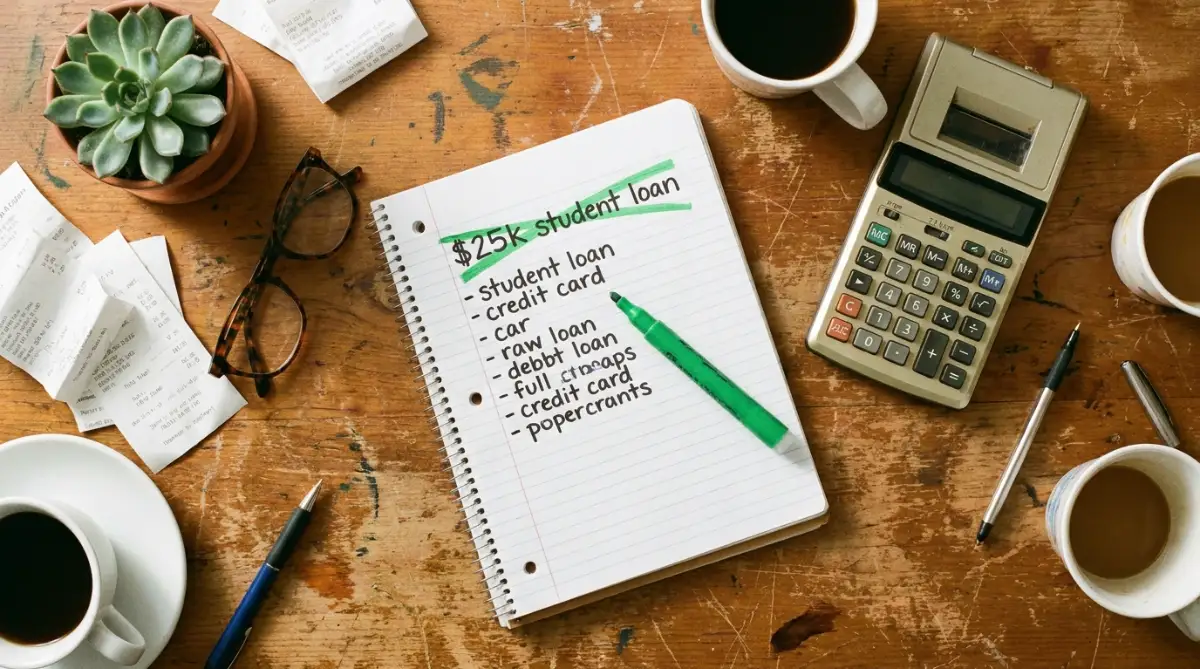
If you are graduating with student loans, car payments, or credit card debt, you probably feel like you are drowning. Looking at that massive total balance can cause literal panic attacks. It feels like you are starting a race ten miles behind the starting line.
You have to change how you look at this debt mountain to keep your sanity intact. Do not stare at the final number; focus entirely on your next actionable step. There are highly effective psychological methods to destroy this debt faster than you think.
One of the most popular strategies is the snowball method, which focuses purely on quick psychological wins. You list all your debts from the smallest total balance to the largest, completely ignoring the interest rates. You pay the absolute minimum on everything else and throw every extra dollar at the smallest debt.
When you completely knock out that first small debt, the mental relief is incredibly powerful. You take the money you were paying on the first debt and roll it right into the second smallest one. This creates a massive momentum that actually keeps you motivated to continue the hard work.

If you are a highly logical person who cares strictly about math, the avalanche method might suit you better. In this approach, you attack the debt with the highest interest rate first, regardless of the balance. This mathematical approach absolutely saves you the most money over time, even if it takes longer to feel that first victory.
Whichever method you pick, the actual secret is simply consistency. Do not try to pay off a five-year loan in three months by starving yourself. You will burn out, give up, and probably take on even more debt just to feel normal again. Build a sustainable attack plan that still lets you occasionally buy a coffee or see a movie.
Navigating the Dangerous Waters of Credit Scores
In college, a credit score sounds like an imaginary number that only matters when you want to buy a massive house. In the real world, this three-digit number controls almost every aspect of your financial life. Landlords, insurance companies, and sometimes even employers will judge your character based entirely on this score.
Having no credit history is often judged just as harshly as having a bad credit history. If you never borrow money, the system does not trust you. You have to play their game, but you must play it strictly by your own rules to stay safe.
The smartest way to build your score is to use a basic credit card like a debit card. Buy your standard weekly groceries with the card, and then immediately pay the entire balance off in full from your checking account. Never, ever buy something on a credit card that you do not already have the cash in the bank to cover.
Money Myth vs. Cold Hard Fact:
- The Myth: "You need to carry a small balance on your credit card every month to build your score."
- The Fact: That is a complete lie made up to cost you money in interest. Paying your balance down to exactly $0.00 every single month is the absolute best thing you can do for your credit score.
Payment history makes up the largest portion of your score. Missing just one single payment can violently crash your score and take months, or even years, to fully repair. Set every single bill you have on auto-pay for at least the minimum amount due, ensuring you never accidentally forget a due date.
Credit utilization is the second most important factor. This simply means how much of your available credit you are actually using. If your card has a $1,000 limit, try your best to never have a balance over $300 at any given time. Showing restraint proves to the banks that you are responsible and not desperate for cash.
Leveling Up: Smart Wealth Strategies for Your 20s
Once you figure out how to stop bleeding money every month, it is time to switch to the offensive side of personal finance. Most people assume that building wealth is something you only worry about after you turn forty and settle down. The mathematical truth is that every single dollar you invest in your twenties is worth incredibly more than a dollar invested later in life.
You do not need to be a math genius or a Wall Street expert to grow your money efficiently. The easiest and most profitable move you can make right out of school is taking advantage of your company retirement plan. If your employer offers any type of matching contribution for your retirement account, you must take it immediately.
Think of an employer match as a completely free pay raise that they will only give you if you agree to save your own money. If they offer a three percent match, you need to contribute at least three percent of your salary to that account. Leaving that match on the table is literally the exact same thing as refusing free money from your boss.
For many young adults, the idea of locking money away until retirement feels completely ridiculous. You might be focused on building a cash buffer while fighting debt just to survive the current month. While immediate survival is always the priority, starting small with investments builds a muscle of financial discipline.
The Magic of Getting Paid for Doing Absolutely Nothing
When you put your money into a basic savings account, it earns tiny pennies in interest while inflation quietly destroys its actual buying power. You need a better strategy to make your money work while you are sleeping. This is where the power of compound interest completely changes the game for young adults.
Compound interest is just the simple process of your money making a little bit of profit, and then that profit making its own profit. According to the educational resources provided by the U.S. Securities and Exchange Commission on saving and investing, starting this process early is the biggest advantage a young investor has. You do not need massive amounts of cash to start; consistency is actually much more powerful than the starting amount.
Imagine you start putting just fifty dollars a month into a standard index fund right after graduation. You will not miss that fifty dollars in your daily life, but over the next few decades, that small habit grows into a massive safety net. The earlier you start the clock on this compound growth, the less heavy lifting you have to do in your thirties and forties.
Planning for the Big Adult Purchases
As you gain more stability, your mind will naturally wander toward long-term goals like buying a house or starting a side business. These goals feel impossible when you are just starting out, but they become highly achievable when you break them down. You just need to organize your money into specific "sinking funds" for each goal.
A sinking fund is just a separate savings bucket designed for one specific future expense. For example, if you dream of buying real estate, you should start familiarizing yourself with a first-time homebuyer's handbook long before you actually call a real estate agent. Setting aside a tiny portion of your paycheck into a "future house" fund gives you a massive head start.
When that day finally comes, you will need to understand how banks look at your money. Learning how your mortgage amortization schedule explained affects your monthly payments will save you thousands of dollars in interest. Education is the greatest tool you have against aggressive lenders and salespeople.
If your big dream is launching a side hustle or becoming an independent contractor, you need to think about your legal and financial safety. Building up your savings allows you to take calculated risks without facing complete ruin. You can explore safe protection for you and your company to ensure your hard work is never stripped away by a sudden lawsuit or tax mistake.
Guarding Your Identity and Your Score
In our highly digital environment, protecting your actual identity is just as important as protecting your cash. As a new graduate, your clean credit profile is a massive target for identity thieves. If someone steals your information and opens accounts in your name, it can take years to clean up the mess.
You should make a strict habit of reviewing your credit reports from all three major bureaus at least once a year. The Consumer Financial Protection Bureau (CFPB) offers strict guidelines on how to safely access these reports without paying fake fee-based websites. You need to verify every single account listed on that report to ensure nobody else is using your name.
If you ever find yourself in a tight spot and need funding, knowing the rules is your best defense against predatory lenders. There are legitimate ways to explore getting a bank loan without collateral, but your credit score must be absolutely spotless. Treat your personal data like highly sensitive physical cash, because a stolen identity will freeze your entire financial life.

The Dangerous Traps That Keep Young Professionals Broke
Graduating from college gives you a false sense of invincibility. You finally have a degree, a job title, and a regular income stream that makes you feel incredibly wealthy. However, this exact confidence is what leads young adults straight into massive financial potholes.
The biggest and most common mistake is the "New Car Illusion." You get your first big paycheck and immediately drive to a dealership to reward yourself for all your hard work. You sign up for a massive seven-year auto loan just to look successful in front of people you barely even know.
That shiny new car is the fastest way to chain yourself to your desk for the next decade. A high car payment, combined with expensive insurance and premium gas, will absolutely choke your monthly cash flow. You will be sitting in traffic in a beautiful car, silently stressing out about how you are going to afford groceries that week.
The Hidden Danger of Sunk Costs
Another trap that completely derails young adults is feeling forced to stick with a specific career path just because of their college major. You might realize six months into your new job that you absolutely hate the industry you studied for. Instead of pivoting to something more profitable or fulfilling, you stay miserable because you spent so much money on the degree.
This is a classic psychological trap called the sunk cost fallacy. You cannot get the tuition money back, so torturing yourself in a low-paying or highly stressful job makes zero mathematical sense. Do not let your past academic choices act like a prison sentence for your future earning potential.
Sometimes taking a slight pay cut to switch to an industry with massive growth opportunities is the smartest financial move you can make. Your earning potential is your absolute biggest asset right now. If you are stuck in a dead-end position simply out of stubbornness, you are actively burning your own future wealth.
Misunderstanding the Purpose of Credit Cards
Far too many young professionals treat their credit card limit as if it is extra cash sitting in their bank account. When they want to take a spontaneous trip or buy a fancy new computer, they just swipe the card and promise to figure it out later. This specific behavior is how you end up paying double the original price for a simple laptop.
The Federal Trade Commission strictly warns consumers about the hidden dangers of only making minimum payments on high-interest debt. When you only pay the minimum required amount, the bank aggressively compounds the remaining balance. You could spend five years paying off a single weekend vacation if you fall into this toxic trap.
You have to shift your mindset and view credit cards strictly as a tool for safety and point building, never for actual borrowing. If you do not have the cold hard cash sitting in your checking account to pay for the item today, you simply cannot afford it. This one strict rule will keep you completely safe from the nightmare of consumer debt.
Ignoring Your Health to Save a Few Bucks
When you are young, healthy, and full of energy, paying for proper medical insurance feels like a complete waste of money. You might be tempted to skip the health coverage offered by your employer just to see a slightly bigger number on your paycheck. This is an incredibly reckless gamble that ruins lives every single day.
One broken bone, one unexpected surgery, or one sudden illness can leave you with a medical bill the size of a mortgage. You are never too young to experience a medical emergency. Skipping basic health coverage is not a clever savings strategy; it is a ticking time bomb waiting to explode your bank account.
Make sure you understand your company benefits package entirely. Look into health savings accounts if they are offered, as they provide an excellent way to stash tax-free money for future medical needs. Taking care of your physical body is quite literally the best financial investment you can ever make.
Stepping Into Your True Financial Power
Managing your money after graduation does not have to be a terrifying or miserable experience. You do not need to give up everything you love, stop seeing your friends, or live off cheap rice and beans forever. You simply need to build a protective system that runs entirely on autopilot.
When you learn to track your spending, respect your debt, and pay yourself first, you take massive control over your own destiny. You are no longer a victim of the system; you are the one writing the rules of your own life. The anxiety of checking your bank balance will slowly fade, replaced by a quiet, steady confidence in your future.
It takes time to build these habits, and you will definitely make a few silly mistakes along the way. That is perfectly normal and simply part of the adult learning process. The goal is progress and stability, not absolute perfection.
A Personal Note Before You Go:
I remember sitting on my bedroom floor, staring at a stack of bills, feeling completely hopeless and terrified that I would be broke forever. Taking that very first step to automate my savings and face my debt honestly changed the entire trajectory of my life. I promise you, with a little bit of patience and a lot of consistency, you have the exact power to build a life of total financial peace.
Real Questions Young Adults Actually Ask About Money
How much of my paycheck should I really be saving?
A great rule of thumb is to aim for saving at least twenty percent of your take-home pay, but that is not always possible right out of school. If you can only afford to save five percent right now, start there and slowly increase the amount every time you get a raise. The habit of saving is much more important than the actual dollar amount when you are first starting.
Should I pay off my student loans or start investing first?
You should always try to do a little bit of both at the exact same time. Make sure you are at least getting your employer match for retirement, because that is free money you cannot afford to skip. After that, focus your extra cash heavily on any debt that has an interest rate higher than six percent.
Is getting a credit card straight out of college a bad idea?
It is not a bad idea at all if you treat the card exactly like a debit card. Getting a basic card is the fastest way to build the credit score you will desperately need for renting apartments and getting good insurance rates. You just have to promise yourself that you will pay the entire balance off every single month without fail.
How do I build a working budget if my income changes every month?
If you work a job with irregular hours or rely on tips, you need to budget based on your lowest expected income, not your highest. Figure out the bare minimum you make in a bad month, and build your essential bills around that specific number. When you have a great month with extra cash, dump all of those extra funds straight into your savings and debt payments.
What actually happens if I simply cannot pay my student loans right now?
Do not just ignore the bills, because defaulting on loans will completely destroy your credit score and your financial future. Instead, immediately call your loan provider and explain your exact situation. Most federal loans and even some private lenders offer income-driven repayment plans or temporary pauses to help you survive a tough financial season.
Disclaimer: The information provided in this blog post is for educational and informational purposes only and does not constitute professional financial, tax, or legal advice. Every individual's financial situation is unique. Please consult with a certified financial planner or qualified professional before making any major financial decisions or investments.