
The Silent Parenting Mistake That Ruins Futures
Look, we've all been there. You're standing in aisle four of a grocery store, holding a screaming kid, and buying that random $10 plastic toy just to make the crying stop feels like the easiest way out. I have done it more times than I care to admit. But I quickly learned that handing over cash without showing my kids how it actually works is a guaranteed way to raise teenagers who think a credit card has no limit. Let's fix that money mindset before it becomes a real headache.
By simply handing over what he wanted without any concept of cost, I was raising an entitled child who thought money magically appeared from a plastic card. My own desire to make him happy was stripping away his ability to understand hard work, patience, and the value of a dollar. I was not just buying a toy; I was stealing his future financial independence.
This happens in households all over the world, every single day. We love our kids so much that we want to give them everything we never had growing up. But in doing so, we accidentally blind them to the real cost of living.
When children grow up without learning how money works, the results are completely devastating. They step into adulthood and get swallowed whole by credit card debt, student loans, and impulsive spending habits. They end up living paycheck to paycheck, constantly stressed, and completely unable to build a secure life for themselves.
Quick Action Plan: Raising Money-Smart Kids
- Ditch the free allowance: Pay them a "commission" for doing extra chores instead.
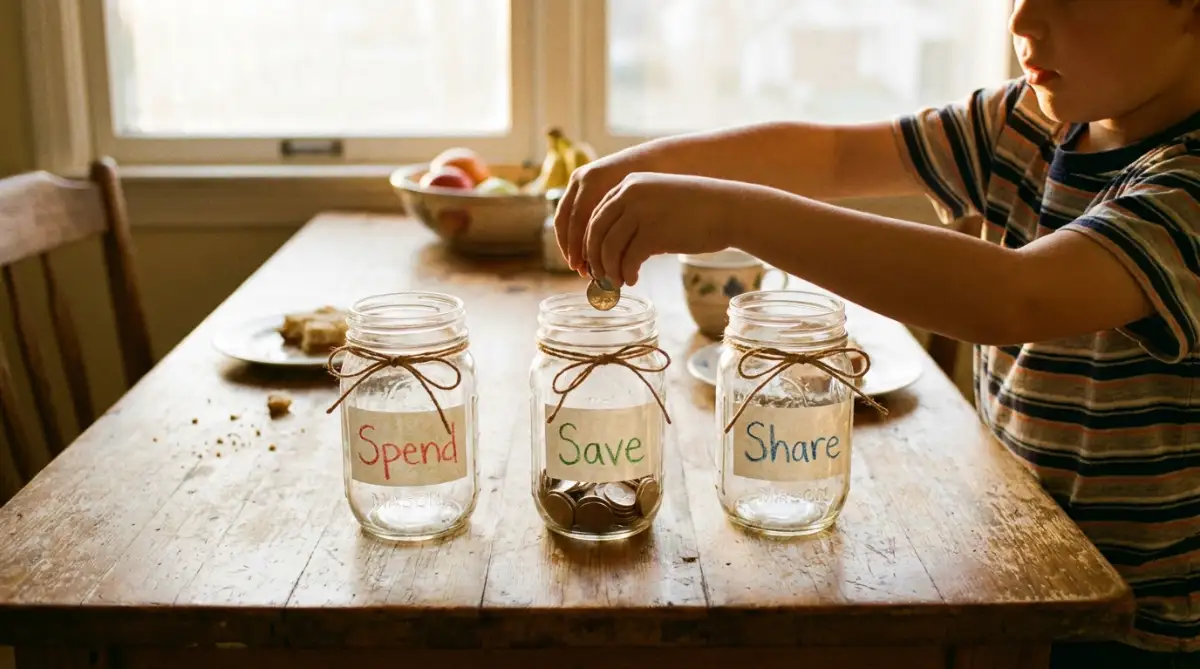
- Make cash visible: Use clear jars (Spend, Save, Give) so they can literally see their money growing or disappearing.
- Let them buy junk: Letting them waste $5 on a cheap toy today saves them from wasting $5,000 on a bad car loan tomorrow.
- Change your words: Stop saying "we are broke" and start saying "that is not in our budget right now."
Escaping the Trap: Practical Steps to Build Financial Independence
We have to face the truth that waiting until they are teenagers is simply too late. Habits are formed early, and the way a child views a five-dollar bill today will dictate how they manage a five-thousand-dollar paycheck later. Let's break down some highly effective, science-backed methods to rewire how your children think about cash.

Moving Away From "Free Money" Allowances
Handing your child a fixed amount of cash every Friday just for breathing is a common practice, but it teaches the wrong lesson. It creates an expectation that money is an absolute right, not a reward for providing value. We need to mirror the real world inside our homes.
Instead of an allowance, introduce a commission system. Just like adults go to work and earn a paycheck, children can complete age-appropriate tasks to earn their own money.
This directly links effort to income in their developing brains. If they choose not to do their tasks, they simply do not get paid. It is a completely safe environment for them to learn that laziness results in empty pockets.
Pro Tip: I used to pay my kids for basic things like making their beds, but I soon realized they should do that just because they live in our house. Now, I only pay for "extra" jobs like pulling weeds or washing the family car, which teaches them to go above and beyond for a real paycheck.
The Power of Visual Money
Adults can look at numbers on a banking app and understand what they mean. Children, however, are highly visual learners. Abstract concepts like digital money mean absolutely nothing to them.
They need to see, touch, and feel the money leaving their hands. This is why the classic jar system works incredibly well. Take three clear glass jars and label them: Spend, Save, and Give.
Every time your child earns money, help them divide it among these three jars. The "Spend" jar is for instant gratification, like candy or small toys. The "Save" jar is for bigger goals, and the "Give" jar teaches them empathy and community support.
Seeing the jars fill up slowly gives them a massive sense of pride. Conversely, watching the "Spend" jar empty out when they buy something gives them a healthy, mild sting of loss. This physical reaction is exactly what builds smart spending habits.
Money Mindset: Myth vs. Fact
- The Myth: Kids need a weekly allowance just so they have spending money.
- The Fact: Money handed out for free creates entitlement. Tying money to extra chores (commissions) builds a solid work ethic. My rule at home? You don't get paid for breathing; you get paid for helping out.
Watch This Breakdown Before You Start the Jar System!
If you want to see exactly how to divide the money and keep your kids excited about saving, this quick video explains the perfect ratio to use at home.
Letting Them Fail While It Is Cheap
One of the hardest things to do as a parent is to watch your child make a mistake. When they take their hard-earned "Spend" money and buy a cheap, poorly made toy that breaks in ten minutes, your first instinct is to buy them a new one. Do not do it.
This is the most powerful lesson they can possibly learn. Feeling the deep disappointment of wasting their money on something useless will stick with them forever. They will remember that feeling the next time they are tempted by a flashy advertisement.
Mistakes made under your roof with ten dollars are completely safe. Mistakes made at age twenty-five with ten thousand dollars can ruin their lives. Let them cry over the broken plastic toy today so they do not cry over a repossessed car tomorrow.
Comfort them, validate their sadness, but never bail them out. Ask them gently, "What do you think we should do differently next time we go to the store?" This shifts their brain from victim mode into problem-solving mode.
The Grocery Store Economics Boot Camp
The supermarket is the absolute best classroom for teaching financial basics. It is filled with endless temptations and requires constant decision-making. Before you walk through those sliding doors, set the ground rules clearly with your kids.
Give them a small amount of cash, say three dollars, and tell them this is their entire budget for a treat. As you walk down the aisles, point out the difference between needs and wants. Hold up a bag of rice and explain that this is a need because it gives our bodies energy.
Then hold up a box of colorful, sugary cereal and explain that this is a want. It tastes good, but we do not actually need it to survive. Have them actively identify items in your cart as either a need or a want.
When it comes time for them to spend their three dollars, they will likely find a candy bar that costs four dollars. Let them do the math. When they realize they are short, they will have to make a hard choice. They will learn to compare prices and settle for the two-dollar candy instead.

Quick Cheat Sheet: Grocery Store Money Scripts
Next time your kid begs for something expensive, try swapping your words:
- Instead of saying: "Put that back, it's too expensive."
- Try saying: "That looks awesome, but it's not on our shopping list today. Do you want to use your own jar money for it?"
- Why it works: You are giving them the power to choose, which instantly stops the whining.
How to Say "We Can't Afford It" the Right Way
The words we use around money shape our children's financial anxiety. Many parents casually say, "We can't afford that right now," when their kids ask for something expensive. While this seems harmless, it can actually make children feel insecure about their family's safety.
Instead of saying you cannot afford it, change your phrasing to empower your choices. Say, "That is not in our budget right now," or "We choose to spend our money on other priorities."
This simple shift in language teaches them that money is a tool you control, not a scary force that controls you. It shows them that saying no is not about being broke; it is about being smart and intentional with resources.
Teaching Delayed Gratification in an Instant World
We live in a society where everything is available at the click of a button. Next-day delivery and instant streaming have completely destroyed the concept of waiting. Financial success, however, requires massive amounts of patience.
If your child wants a video game console, do not just buy it for their birthday. Help them create a savings chart to stick on the refrigerator. Have them color in a block every time they add money to their "Save" jar.
The anticipation of waiting months to reach their goal builds character. When they finally take that heavy jar of coins to the store to buy the console, they will treat that item with incredible respect. They worked for it, they waited for it, and they earned it.
Dealing with Peer Pressure and Brand Names
As children get older, the game changes. It is no longer about candy at the checkout line; it is about wearing the same expensive shoes their friends wear. This peer pressure can completely derail their financial logic.
This is the perfect time to introduce the concept of opportunity cost. If they want a pair of shoes that costs two hundred dollars, explain what else that money could buy. Show them that two hundred dollars is equal to twenty movie tickets, or a huge chunk of money toward a first car.
If they still insist on the expensive brand name, offer to pay for the cost of a basic pair of shoes. If a basic pair costs fifty dollars, give them that amount. Tell them they are responsible for earning and saving the remaining one hundred and fifty dollars to get the brand they want.
This forces them to decide if a logo is really worth hours of their own hard labor. Most of the time, when it is their own money on the line, they suddenly realize the generic brand looks just fine.
Setting Up a Teenager for Real-World Banking
Once your child hits their teenage years, clear jars and piggy banks will not cut it anymore. They need to learn how to operate within the actual banking system before they leave for college. This is the time to open a joint checking account with a debit card.
Deposit their chore money or part-time job earnings directly into this account. Let them manage their own spending through the bank's mobile app. They need to learn how to track their balance and understand what happens when an account hits zero.
Have them take over paying for one of their own bills, like their monthly phone data plan or their streaming subscription. When they see exactly how fast recurring charges eat up their hard-earned money, they will start making entirely different choices.
You want them to practice swiping a card and managing a digital balance while they are still under your roof. If they overdraw their account and get hit with a fee, it is a fantastic, cheap lesson. You can guide them through calling the bank, explaining the mistake, and dealing with the consequences.
Fostering Contentment over Consumption
Perhaps the greatest financial lesson you can ever teach is contentment. Advertisers spend billions of dollars every single day to convince your child that they are not enough unless they buy more stuff. You have to actively fight this narrative in your home.
Take time regularly to practice gratitude as a family. Sit around the dinner table and talk about the things you are thankful for that do not cost a single penny. A beautiful sunset, a funny joke, a healthy body, or a good friend.
When children learn to find deep happiness in free, everyday moments, they stop looking to stores to fill their emotional voids. A child who is content is immune to impulse buying. They understand that money is just a tool to provide security and options, not a magic wand for happiness.
By taking these practical steps, you are doing so much more than just teaching them how to count change. You are giving them a shield against a life of debt and anxiety. You are raising strong, independent individuals who will control their money, rather than letting their money control them.
Moving Beyond the Piggy Bank: Master-Level Money Strategies
Once your child understands the basic concept of earning and saving, it is time to level up. You want to give them practical tools they can use for the rest of their lives. These advanced strategies will shift their mindset from simply holding onto money to actually growing it.
One of my favorite methods to teach real-world budgeting is through family utility challenges. Children are notorious for leaving every single light on in the house. Instead of yelling at them to turn off the switches, turn it into a profitable game for them.
Show them the electricity bill from the previous month. Tell them that if they help lower the bill this month by turning off lights and unplugging devices, you will split the savings with them. This immediately turns them into little household energy auditors.
They start understanding that everyday actions have a direct financial cost. When they see a lower number on the next bill and get handed a five-dollar reward, a massive lightbulb goes off in their head. They learn that saving resources is exactly the same as earning money.
The Magic of the Stock Market for Beginners
You might think investing is way too complicated for a child to grasp. However, you can explain it with an incredibly simple analogy. Tell them that saving money in a jar is like keeping seeds in a box, but investing is like planting those seeds in the dirt so they can grow into a massive tree.
Take a look at the things they already love and use every single day. If your teenager loves spending hours on a specific gaming console, sit down with them and look up the company that makes it. You can open a simple custodial brokerage account and help them buy a tiny fraction of a share in that exact company.
Suddenly, they are not just consumers anymore; they are part-owners. They will start checking the stock price on your phone and asking questions about how businesses make a profit. This hands-on experience is deeply educational and builds a foundation for long-term wealth building.
For parents looking to support their child's long-term journey, understanding youth financial education resources is an amazing place to start. It helps you find age-appropriate ways to discuss compound interest and the stock market.
Launching the Neighborhood Side Hustle
There comes a point when the chores around your house are simply not enough to fund their bigger dreams. This is the perfect opportunity to introduce them to the concept of entrepreneurship. Do not just let them sit around asking for handouts; encourage them to solve problems for your neighbors.
Whether it is washing cars, walking dogs, or pulling weeds, starting a small neighborhood service changes everything. They will learn how to speak confidently to adults, how to negotiate a fair price, and how to handle rejection. These soft skills are just as valuable as the money they earn.
If they want to take it seriously, you can help them by starting a small neighborhood business and treating it like a real venture. Help them design simple flyers to put in mailboxes.
When they earn their first twenty dollars from a neighbor, the pride on their face will be undeniable. They will quickly realize that the harder they work, the more they can earn. This completely destroys the lazy, entitled mindset that so many teenagers struggle with today.
Giving Them Control of Their Own Clothing Budget
As kids enter middle school and high school, their clothing requests become incredibly expensive. They want the newest sneakers, the branded jackets, and the trendy accessories. This usually leads to constant arguments at the shopping mall.
You can completely eliminate this friction by handing the responsibility over to them. At the beginning of the school season, determine a reasonable amount you are willing to spend on their wardrobe. Hand them that exact amount in cash and tell them they are in charge of their own shopping.
If they blow their entire budget on one highly expensive pair of designer jeans, let them do it. However, when winter arrives and they do not have a warm coat because they spent all their money, you must stand firm. Do not buy the coat for them.
Let them figure out how to earn the money for the coat themselves, or let them wear layers of old sweaters. This teaches them the harsh reality of budgeting and prioritizing needs over flashy wants. It prepares them for the real world, where creating a strong financial safety net is an absolute necessity.
Preparing for Massive Future Investments
Eventually, your children will face gigantic financial decisions like paying for college or buying their first car. If they have never managed more than fifty dollars at a time, these massive numbers will completely overwhelm them. You need to start talking about large-scale money concepts while they are still in high school.
Sit down and show them exactly how loans work. You can even walk them through understanding how long-term debt actually works using a simple online calculator. Show them how a high interest rate on a car loan can force them to pay thousands of dollars extra over five years.
You should also openly discuss the cost of higher education. If they are dreaming of an expensive private university, help them weigh the costs against the benefits of planning their future educational paths. Teach them how to hunt for scholarships and avoid the nightmare of crushing student loan debt.

The Hidden Traps That Destroy Their Money Mindset
Even with the absolute best intentions, parents often make seemingly harmless decisions that completely ruin their child's financial logic. We think we are being helpful, but we are actually building highly destructive habits. Let us look at the most dangerous pitfalls you must actively avoid.
The "Bank of Mom and Dad" Bailout System
This is arguably the most common and damaging mistake parents make across the board. Your teenager spends all their monthly allowance in the first week on fast food and video games. A few days later, they want to go to the movies with their friends, so they beg you for an advance on next week's pay.
When you hand over the cash, you are teaching them that overspending has zero negative consequences. You are acting exactly like a predatory credit card company, just without the interest rates. They learn that whenever they run out of money, they can simply ask for a bailout.
This habit directly translates into credit card debt in their twenties. When they run out of money in the real world, they will swipe a piece of plastic to fund their lifestyle because they are used to the "endless money" safety net. You have to be strong enough to let them miss out on the movie night.
Saying no is incredibly painful in the moment because you want your child to have fun. However, feeling the sting of an empty wallet is the only way they will ever learn to ration their cash. When the Bank of Mom and Dad closes its doors, they are forced to become financially independent.
Paying for Basic Human Decency and Grades
Many parents use money as a desperate bribe to control their children. They offer ten dollars for every "A" on a report card, or five dollars if the child behaves nicely at a family dinner. While this might get you short-term results, it creates a deeply flawed long-term mindset.
When you pay for good grades, the child stops caring about the actual learning process. They stop being curious and start treating their education like a mindless transaction. Research on childhood motivation consistently shows that external rewards actually destroy a child's natural internal drive.
Keep money completely separate from their moral and academic development. Reward good grades with a special family outing or a favorite home-cooked meal instead. Reserve financial payouts strictly for extra physical labor that goes beyond their daily responsibilities.
Projecting Your Own Money Anxiety Onto Them
Children are incredibly perceptive sponges. They absorb every single emotion and whispered conversation that happens in your house. If you and your spouse are constantly arguing about unpaid bills or sighing heavily when buying groceries, your kids will feel that tension deeply.
When money is treated as a massive source of fear and conflict, children develop a scarcity mindset. They grow up terrified of spending a single dime, or they go the opposite direction and spend recklessly to cope with their anxiety. You want to protect them from adult burdens without completely lying to them.
You must find a healthy balance of transparency. If times are tough, it is okay to tell them that the family is focusing on saving right now. However, you must deliver this news with total confidence and a clear action plan so they feel safe and secure.
Teach them that money is a tool we use to navigate life, not a monster hiding under the bed. When you show calm, rational behavior around family finances, they will naturally adopt that exact same peaceful confidence.
Buying Cheap Electronics Instead of Teaching Quality
We often think we are saving money by buying our kids the cheapest toys or generic electronics. A ten-dollar pair of headphones seems like a great deal compared to a fifty-dollar pair. However, when those cheap headphones break three times in a year, you end up spending more money in the long run.
This teaches kids a highly flawed lesson about value. They learn to only look at the immediate price tag instead of evaluating the lifespan of an item. You need to teach them the concept of "cost per use" and long-term quality.
Next time they want a gadget, teach them how to do proper research. You can guide them on researching everyday electronics before buying by reading customer reviews online. Show them that saving up for a high-quality item is always smarter than buying cheap junk that ends up in the trash.
When they eventually move out and need to furnish an apartment or buy a washing machine, this lesson will save them thousands of dollars. They will be patient enough to buy things that last, rather than constantly replacing broken garbage. They will also be ready for huge milestones, like preparing them for massive investments like buying a home, where quality inspections matter most.
Raising a Generation of Confident Spenders and Savers
The journey of teaching your kids about money is rarely smooth. There will be days when they complain bitterly about not getting what they want. There will be moments when you question if you are being entirely too strict compared to other parents on your street.
Always remember the bigger picture you are fighting for. You are not just trying to save a few bucks at the checkout line today. You are actively building their future freedom. You are ensuring that when they leave your home, they will not be paralyzed by credit card statements or bad auto loans.
By replacing free handouts with a strong work ethic, you are giving them the ultimate gift of self-respect. When they know how to earn, save, and give generously, they become unstoppable. They will walk into adulthood with a massive advantage over their peers who were sheltered from financial realities.
Take a deep breath and start small tomorrow. Introduce one new concept, whether it is the three-jar system or the grocery store challenge, and watch how quickly their little minds adapt.
A Quick Note From My Own Journey: I used to feel incredibly guilty every time I told my kids "no" at the store. But when I finally watched my teenage son confidently budget his own summer job money to buy a used car without borrowing a dime, all that temporary guilt completely vanished. Stay the course, hold your ground, and trust that you are giving them the best possible foundation for a stress-free life.
Everyday Questions About Kids and Cash
What is the best age to start teaching kids about money?
You should start as early as three or four years old with simple visual lessons. At this age, you can use a clear jar to help them save coins for small treats. The earlier you introduce the concept of exchanging money for goods, the more natural it becomes for them.
Should I pay my child for getting good grades?
No, paying for grades is generally a very bad idea. It trains your child to focus only on the financial reward rather than developing a genuine love for learning. Instead, celebrate their academic success with meaningful family experiences or extra privileges.
How much allowance should a child get each week?
Instead of a fixed allowance, consider paying them a set amount per extra chore they complete. If you prefer a fixed system, a common rule of thumb is one dollar per year of age per week. Just make sure that money is tied to specific responsibilities around the house.
How do I explain taxes to a younger child?
You can explain taxes in a fun, relatable way by introducing a "family tax" on their earnings. Take a tiny percentage of their chore money and put it into a family jar. Use that jar to buy something everyone enjoys, like pizza on Friday night, showing them how taxes fund community benefits.
What should I do if my child wastes all their savings on a bad purchase?
Do absolutely nothing to fix it for them. Let them feel the deep regret and frustration of wasting their hard-earned cash. This painful feeling is the best teacher in the world, and it will prevent them from making much larger financial mistakes when they are adults.
Disclaimer: The information provided in this blog post is for educational and informational purposes only and should not be construed as professional financial advice. Every family's financial situation is unique. Please consult with a certified financial planner or professional advisor before making any major financial decisions or implementing new financial strategies for your household.