The Automated Trap: Why My "Perfect" Profile Kept Getting Rejected
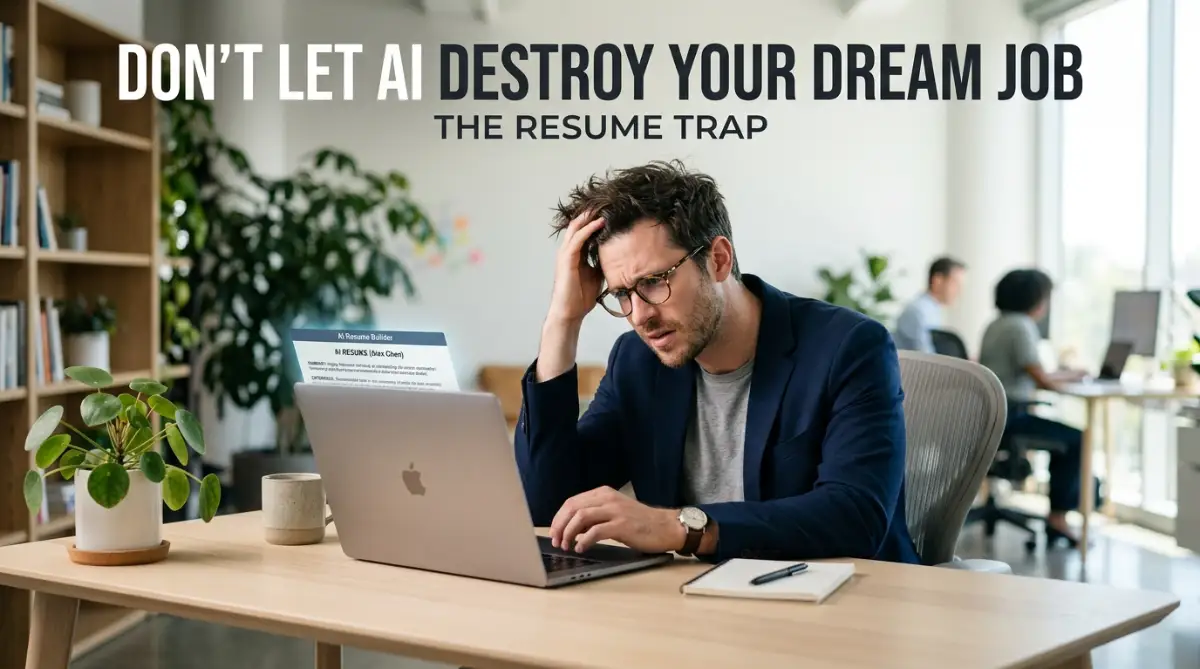
I still remember staring at my computer screen at 2 AM, feeling completely defeated and exhausted. My email inbox had become a dark graveyard of generic rejection letters from companies I desperately wanted to work for. I could not figure out what I was doing wrong.
I had great experience, a solid education, and a burning desire to prove myself in my industry. To make things "easier," I decided to use a popular artificial intelligence tool to write my entire job application. I typed in a few basic details, clicked a shiny button, and watched the software instantly generate what looked like a masterpiece.
The vocabulary sounded incredibly smart, the layout looked highly professional, and I honestly thought I had hacked the system. I proudly sent out dozens of these automated applications, fully expecting my phone to ring off the hook with interview offers. Instead, I got absolute silence.
When the rejections finally started rolling in, they all sounded exactly the same. They said they decided to move forward with other candidates who better fit their current needs. It felt like a punch to the gut every single time.
I started questioning my own worth, wondering if I simply lacked the talent or skills required for my dream job. Job hunting is already one of the most stressful things a normal person has to go through. It messes with your sleep, drains your confidence, and makes you doubt every professional decision you have ever made.
Every day, thousands of smart, capable people fall into this exact same trap. We want to save time, so we let software do the heavy lifting for us. We trade our unique personal stories for perfectly spelled, robotic paragraphs that mean absolutely nothing to the person reading them.
The mental toll of constant rejection is incredibly heavy. You wake up every morning checking your phone, hoping for a single positive reply, only to face another automated "no." The reality is, your skills are not the problem at all.
Myth vs. Reality: The Artificial Intelligence Job Hunt
The Common Myth: Using advanced software to write your application makes you look highly intelligent, professional, and perfectly aligned with what massive corporate companies want.
The Harsh Reality: Hiring managers can spot machine-generated text from a mile away. When you use these tools without heavy editing, you accidentally strip away your actual personality, making you look like a generic copy of a thousand other applicants.

The Mechanics of a Resume Disaster: What Happens Behind the Scenes
When we apply for jobs today, we are playing a game with very specific hidden rules. If you do not understand how these rules work, you will lose before you even step onto the field.
Think of your job application as a first date. If you showed up and started reading a perfectly memorized, robotic script, your date would walk out of the restaurant in five minutes. You need to show some actual human emotion.
When you use an automated generator, you are essentially handing the hiring manager a pre-written, emotionless script. Let us look at exactly why this approach fails so hard in the real world.
The "Clone Effect" in the Recruiter's Inbox
Imagine you are a busy recruiter named Sarah. Sarah has to read through five hundred applications before her lunch break. She opens the first file and reads an objective statement that says, "A highly motivated professional seeking to leverage synergistic skills to drive organizational success."
She rolls her eyes, but she keeps reading. Then she opens the next file. It has the exact same phrasing. By the time Sarah reaches the tenth application, she is completely numb to these complex buzzwords.
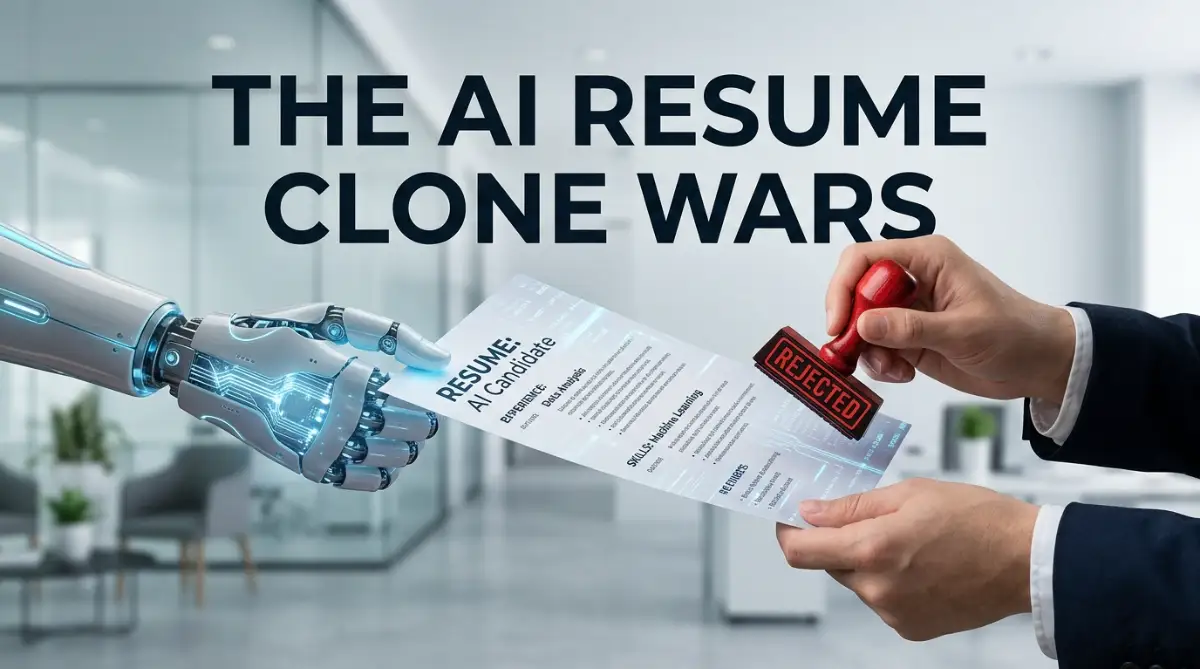
This is the clone effect. Because millions of people are using the exact same software platforms, the machines are spitting out the exact same sentence structures. You might think you sound incredibly smart, but to Sarah, you just sound like everyone else.
If you want to actually grab someone's attention, you have to break this pattern. You have to write something that a machine would never think to say.
If you want to see exactly how recruiters spot an automated application from a mile away, you need to watch this eye-opening breakdown.
The Keyword Stuffing Trap That Breaks ATS Systems
You have probably heard about the Applicant Tracking System, or ATS for short. This is the scanning software companies use to filter out unqualified people before a human ever looks at the files.
Many automated builders claim they will optimize your document perfectly for these systems. They do this by cramming every single industry keyword into your experience section.
While keywords are definitely important, stuffing them unnaturally actually hurts your chances. Modern ATS platforms are becoming much smarter. They look for context, not just a random list of terms.
If the scanner detects that your document is just a massive block of disconnected keywords, it will often flag your file as spam. Your beautifully generated document goes straight into the digital trash bin.
Losing Your Authentic Voice and Professional Soul
Every professional has a unique way of solving problems. Maybe you are great at calming down angry clients, or perhaps you have a special talent for organizing messy spreadsheets.
Software cannot know the late nights you spent fixing a major project bug. It does not know the actual sweat and tears you put into your career. It just pulls generic data from the internet.
When you let a machine write your entire summary, you lose your professional soul. You become a bland, tasteless cracker instead of a rich, flavorful meal. Employers want to hire real humans who have real experiences, not perfect robots.
Practical Steps to Humanize Your Profile Today
Now that we know exactly why these automated systems fail, we need to talk about how to fix the problem. You do not have to throw away your computer and write everything by hand.
You just need to change the way you interact with these tools. We are going to look at some deeply practical, proven strategies to bring your application back to life.
Shift Your Strategy: The 80/20 Rule
The biggest mistake people make is letting the software do one hundred percent of the work. You type a prompt, copy the result, and paste it directly into your document.
Instead, you need to adopt the 80/20 rule. Let the software do eighty percent of the basic structuring and brainstorming, but you must manually write the final twenty percent yourself.
Use the tools to help you remember action verbs or to organize your thoughts. Ask the tool to give you a basic outline. Once you have that outline, close the tab and write the actual sentences using your own natural voice.
This simple shift changes everything. It gives you the speed and efficiency of modern technology, while keeping the warmth and authenticity of a real human being.
Strip Away the Robotic Adjectives and Buzzwords
We need to do a massive cleanup of your current document. Open your file and look for words that nobody uses in normal, everyday conversation.
If you see words like "spearheaded," "synergistic," "paradigm-shifting," or "dynamically," you need to delete them immediately. These are massive red flags for hiring managers.
Replace these robotic adjectives with simple, direct action words. Instead of saying you "spearheaded a synergistic marketing initiative," just say you "managed a marketing campaign."
Simplicity is incredibly powerful. When you use simple words, the person reading your document does not have to work hard to understand your value. They can immediately see what you actually did.
Pro Tip: I remember sending out dozens of applications with the exact same automated summary, thinking I was working smarter. It was only when I finally deleted the robotic jargon and wrote naturally about a real project disaster I fixed, that my phone actually started ringing. My biggest realization is that hiring managers are desperate for authenticity, not perfectly generated buzzwords.
Inject Personal Case Studies Instead of Generic Bullet Points
Most automated documents list job duties. They will say things like "responsible for answering phone calls" or "tasked with managing team schedules."
A duty just tells the reader what your boss forced you to do. It does not tell them if you were actually any good at it.
You need to transform your generic bullet points into mini case studies. Use a highly effective structure: what was the problem, what action did you take, and what was the final result?
A Quick Comparison Matrix
To make this completely clear, let us look at a direct comparison between an automated bullet point and a human-edited one.
Notice how the human approach focuses heavily on real-world impact. When you tell a hiring manager that you saved your previous company five thousand dollars by reorganizing a spreadsheet, you instantly become memorable.
You prove that you understand business value. No machine can invent those specific, true numbers for you. You have to dig deep into your own memory to find those golden nuggets of information.
Format for Human Eyes First, Scanners Second
Many popular automated tools use incredibly complex designs. They put your skills in a left sidebar, your experience on the right, and add fancy graphics or charts to show your proficiency levels.
While these designs look beautiful on a screen, they are an absolute nightmare for both scanning software and human eyes.
When a human reads a document, their eyes naturally move in an F-shaped pattern. They read across the top, down the left side, and across the middle. Complex dual-column layouts disrupt this natural reading flow.
Furthermore, many older scanning systems read straight straight across the page from left to right. If you have two columns, the scanner mixes the text together into complete gibberish.
You must stick to a clean, single-column layout. Use clear, bold headings for your sections. Leave plenty of white space between your paragraphs so the document feels light and easy to read.
Focus on Your "Why" Instead of Just Your "What"
Machines are excellent at listing facts. They can easily list the coding languages you know, the software you use, and the degrees you have earned.
However, machines cannot explain why you care about your work. They cannot convey passion, curiosity, or dedication.
In your summary section at the very top of the page, do not just list your titles. Tell a very short story about what drives you.
For example, instead of writing "Experienced customer service rep," write "Customer service specialist who loves turning angry callers into loyal brand fans."
That simple sentence shows emotional intelligence. It shows that you understand the true purpose of your job, which is something an algorithm simply cannot comprehend.
The Psychological Shift in Your Job Hunt
When you stop relying entirely on generators, something amazing happens to your mindset. You stop feeling like a passive victim of the job market.
You take back control of your own narrative. You start remembering all the difficult challenges you have overcome in your career, which naturally boosts your confidence before an interview.
When you write your own authentic experiences, you speak with absolute authority. If an interviewer asks you about a specific bullet point, you do not have to try and remember what the software generated.
You just tell them the real story. This authenticity shines brightly in a sea of fake, automated applications.
By applying these exact steps, you stop playing the numbers game. You stop sending out hundreds of terrible applications and start sending out ten highly targeted, deeply personal ones. Quality will always beat quantity when it comes to landing your dream role.
Next-Level Strategies to Outsmart Automated Hiring Systems
Now that we know exactly why generic applications fail, we need a smarter approach. You can still use modern technology to speed up your job search, but you have to use it like a master craftsman uses a high-end tool.
The goal is not to let the software replace you. The goal is to let it handle the boring parts of formatting while you focus on selling your unique value.
Let us look at some highly advanced tactics that completely change the way you apply for jobs. These are the exact methods smart professionals use to bypass the digital trash bin and secure real interviews.
The "Voice Match" Technique for Authentic Writing
Most people simply open a chat window and type, "Write a summary for a project manager." This is a guaranteed way to get a robotic, boring result.
Instead, you need to train the tool to sound exactly like you. You can actually feed your past writing into the software before asking it to write anything new.
Take a few emails you have written to a boss, or a previous cover letter you are really proud of. Paste those into the prompt box and ask the tool to analyze your personal speaking style.
Tell it to pay attention to your sentence structure, your tone, and your preferred vocabulary. Once it understands your unique voice, you can ask it to draft new bullet points based on your real experience.
This simple extra step removes the robotic phrasing completely. It gives you a clean, polished draft that actually sounds like something you would naturally say in a professional meeting.
Building a Long-Term Master Career Document
One of the smartest things you can do for your future is to stop starting from scratch every time you want a new job. Relying on software to instantly invent your career history is a recipe for disaster.
Instead, you need to create a Master Career Document. This is a simple, private text file where you dump every single professional win, major project, and lesson learned over your entire career.
Did you fix a major client issue on a Tuesday afternoon? Write it down in your master document. Did you help train a new employee? Add it to the list.
When it is time to apply for a new position, you do not need to rely on generic algorithms. You just open your master file, pick the most relevant stories, and feed those specific facts into your writing assistant.
This is highly effective because you are treating your job search like starting a new business. You are building a solid foundation of real assets instead of looking for quick, cheap shortcuts.
Engineering the Perfect Context Prompt
If you want amazing results from modern software, you have to give it amazing instructions. You must set boundaries and provide deep context before you hit enter.
Do not just tell the machine your job title. Tell it about the specific company you are applying to, the culture they promote, and the exact problems they need solved.
For example, your prompt should look something like this: "I am applying for a sales role at a casual tech startup. I need to turn this rough list of my past sales numbers into three short, engaging bullet points. Do not use complex corporate jargon."
By setting strict rules, you force the machine to act like a helpful assistant rather than a robotic replacement. Understanding how machine learning models analyze data helps you realize that the output is entirely dependent on the specific words you input.
The "Baking from Scratch" Analogy
Think about baking a cake for a very important party. You could go to the store and buy a pre-made, mass-produced cake that tastes exactly like cardboard.
Or, you could bake one from scratch. Using modern technology is like using a high-powered stand mixer in your kitchen. The mixer does the heavy lifting of stirring the heavy dough, which saves you hours of arm pain.
However, the mixer does not choose the ingredients. It does not add the rich vanilla extract or decide how long the cake stays in the oven. You are still the master baker.
If you just let the machine do everything without your personal flavor, your application will be incredibly bland. You must manually add your personality to make the final product irresistible to hiring managers.
The Hidden Dangers and Costly Traps of Automated Applications
Even with the best intentions, it is incredibly easy to make massive mistakes when using these modern tools. I have seen highly talented people completely ruin their professional reputation because they trusted a machine too much.
When you use software to generate your professional history, you are taking on some serious hidden risks. If you do not actively watch out for these specific traps, you could easily lose out on the perfect opportunity.
Let us break down the absolute worst mistakes you can make, and exactly how they destroy your chances behind closed doors.
The Embarrassment of AI Hallucinations
This is easily the most dangerous trap of all. These smart writing programs are designed to please you. They want to give you a complete, beautiful answer, even if they have to invent facts to do it.
In the tech industry, this is known as a hallucination. The software might read your prompt and decide that a good data analyst should know a specific programming language.
Without asking you, it just naturally inserts that skill into your experience section. If you only skim the final document, you might not even notice that the machine just lied on your behalf.
Imagine sitting in a final interview with the hiring manager of your dreams. They look at your paper and ask you a deep technical question about a software you have never actually used.
The sheer panic and embarrassment of that moment is something you never want to experience. This risk is similar to the hidden dangers of automated coding software, where blindly trusting a machine can lead to catastrophic failure.
Stripping Away Your Empathy and Emotional Intelligence
Companies do not just hire a set of skills; they hire human beings. They want to know if you are a nice person, if you handle stress well, and if you will fit in with their current team.
Machines have absolutely zero emotional intelligence. When they write a cover letter or a personal summary, they sound incredibly cold and calculated.
They use overly formal phrasing that completely kills any chance of an emotional connection. The Harvard Business Review frequently highlights that authentic storytelling is what actually moves a hiring manager to pick up the phone.
If your application sounds like a legal contract, the reader will feel completely disconnected from you. They will toss your paper aside and look for someone who sounds like a real, passionate person.
The Fluff Factor That Wastes Valuable Space
You only have about six seconds to grab a recruiter's attention. That is a documented fact based on numerous eye-tracking studies.
Automated writers are notoriously bad at getting straight to the point. They love to add useless introductory phrases and fluffy filler words to make the text look longer and more impressive.
They will start sentences with things like, "It is important to note that my extensive background has thoroughly prepared me for..."
That is fourteen words that say absolutely nothing. By the time the busy recruiter finishes reading that useless intro, their six seconds are up, and they are moving to the next candidate.
You must relentlessly delete every single word that does not add immediate, tangible value to your story. Every inch of white space on that paper is prime real estate, so never let a machine fill it with garbage.
The Dangers of Ignoring Company Culture
Every single business has its own unique vibe and culture. A massive corporate banking firm wants to see high levels of traditional professionalism. A small graphic design agency wants to see creativity and modern thinking.
When you click "generate" on a generic writing tool, the machine does not know anything about the specific culture of the place you want to work. It usually defaults to a super stiff, corporate tone.
If you send a stiff, highly corporate application to a fun, laid-back startup, you instantly prove that you do not understand their brand. You fail the culture fit test before you even get a chance to interview.
You must manually adjust your tone based on where you are applying. You are crafting a custom key for a very specific lock, just like generating custom artificial intelligence images requires precise prompts for different art styles.
The Psychological Toll of Relying on Machines
We need to talk about what this does to your mental health. Job hunting is tough, and facing rejection hurts deeply.
When you write your own application and get rejected, you can look at it, learn from it, and improve for next time. You are in the driver's seat of your own career.
But when you let a machine do all the work and you still fail, you feel entirely helpless. You start thinking, "If this perfect, highly advanced software cannot even get me a job, I must be completely unhirable."
This creates a terrible cycle of imposter syndrome and self-doubt. The truth is, the software is what failed you, not your own skills.
Taking back control of your writing forces you to remember your actual worth. Aligning your educational background for career success requires personal reflection, and presenting that background requires your authentic voice.
Your Action Plan for Authentic Career Growth
We have covered a massive amount of ground today. We completely exposed the hidden traps of automated generators, and we explored exactly how smart professionals use technology responsibly.
You now hold a massive advantage over the thousands of people who are still spamming hiring managers with robotic, emotionless documents. You understand the psychology of the person sitting on the other side of the desk.
You know that they are tired, they are bored, and they are desperately searching for just one real, authentic human being to hire. You are now perfectly positioned to be that exact person.
Taking Immediate Control of Your Next Application
Do not just read this guide and go back to your old habits. I want you to take immediate action today.
Open up your current application file and read it out loud. If you stumble over complex words, or if it sounds like a textbook instead of a conversation, you have work to do.
Start by deleting the massive blocks of generic text. Pick just three of your absolute best career moments and write them out using your own natural words.
Focus heavily on the actual problems you solved and the exact results you achieved. If you can add a real number or a specific percentage to your bullet point, do it right now.
Remember, the Society for Human Resource Management (SHRM) emphasizes that hiring is fundamentally a human process, and technology should only support, not replace, that connection.
A Final Thought on Knowing Your Worth
My personal journey through the frustrating world of job hunting completely changed when I finally stopped trying to sound like a perfect corporate robot. I learned that my unique mistakes, my real-world struggles, and my authentic voice were actually my biggest selling points.
Never let a piece of software dictate your professional value. You have worked incredibly hard to get where you are, and your true story deserves to be told by you, and only you.
Common Questions About Job Application Tools
Can employers easily detect automated text on my job application?
Yes, hiring managers and recruiters read hundreds of applications every single week. They easily spot the repetitive sentence structures, robotic buzzwords, and lack of personal emotion that machines typically produce.
Is it against the rules to use writing software for my job hunt?
It is not illegal or explicitly against the rules to use these tools for brainstorming or basic formatting. The real problem happens when you copy and paste the generated text directly, which makes you look completely unoriginal to the employer.
How much of my professional profile should I write manually?
You should aim to manually edit and rewrite at least twenty to thirty percent of any generated text. Let the software help you build the basic outline, but make sure the final bullet points contain your actual voice and real-world metrics.
Will screening software automatically reject my application if it senses a machine wrote it?
Most standard screening platforms do not actively block you just for using a generator. However, they will reject your file if the automated tool stuffed too many keywords unnaturally, or if it used a crazy design format the scanner cannot read.
What is the absolute best way to bypass the digital sorting systems?
The best way to bypass digital filters is to keep your formatting incredibly simple and clean. Use standard headings, avoid complex dual-column designs, and naturally naturally weave relevant industry keywords into your real personal stories.
Disclaimer: The information provided in this article is for educational and informational purposes only and does not constitute professional career coaching or legal advice. Job market conditions and hiring algorithms change constantly. Always tailor your career strategies to your specific industry and consult with a certified career counselor for personalized guidance.