
The Heavy Guilt Behind My Screen: A Personal Wake-Up Call
I used to think my digital life was entirely clean and green. Every morning, I would sit with my coffee and generate dozens of beautiful images just for fun. I relied on smart chatbots to rewrite my emails, brainstorm ideas, and organize my daily schedule.
My life felt effortless, and I honestly believed I was just using invisible magic running in the cloud. I never stopped to think about what was actually happening behind my screen.
Then, one evening, I stumbled upon a detailed report showing the massive energy bills of modern tech companies. My jaw completely dropped. I learned that my casual daily prompts were forcing massive server farms to burn through immense amounts of electricity.
I suddenly realized that my harmless digital habits were leaving a very real, physical scar on our planet. A deep sense of guilt washed over me. I felt like I was personally contributing to a global problem without even knowing it.
This invisible pollution is creating a new kind of modern stress for everyday people. We already worry about extreme weather changes and rising electricity bills in our local communities. Adding the mental burden of "digital guilt" only makes our daily lives feel heavier.
Many people now experience intense climate anxiety. We try our best to recycle our plastic bottles and turn off the lights when we leave a room. Yet, we unknowingly undo all those good habits with just a few heavy queries on our computers.
We love the incredible convenience these smart tools bring to our tasks. But deep down, there is a nagging fear that we are trading the health of our planet for a bit of daily productivity.
Decoding the Hidden Hunger of Smart Technology
When we type a question into a search box, we expect an instant answer. We rarely think about the physical journey that simple question takes. Your request travels from your phone to a massive, warehouse-sized building filled with thousands of glowing computers.
These massive buildings, known as data centers, never sleep. They work around the clock, processing billions of requests from people all over the world. To do this, they require a shocking amount of raw power.
Think of a data center like a giant, high-performance sports car engine. If you keep your foot on the gas pedal 24 hours a day, the engine gets incredibly hot. To stop the servers from catching fire, companies must use massive cooling systems.
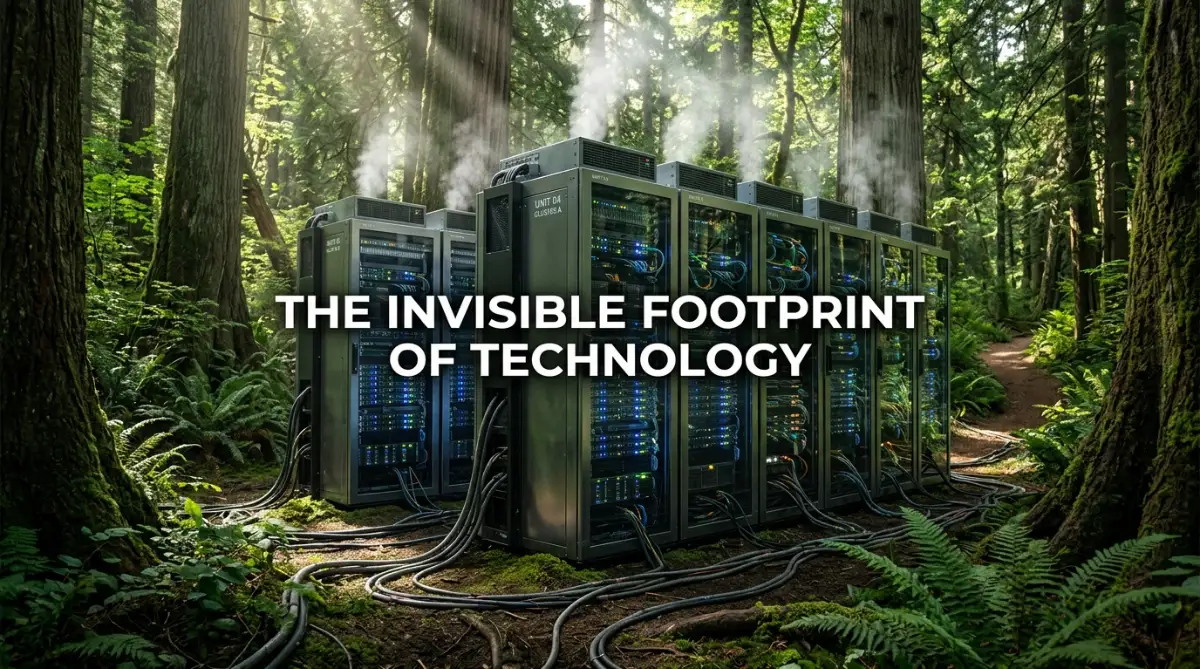
The Silent Thirst of Giant Data Centers
The biggest secret behind these cooling systems is their extreme thirst for fresh water. Servers generate intense heat when they solve complex mathematical problems. Air conditioning is not enough, so tech giants use giant cooling towers that evaporate millions of gallons of water.
This is not salty ocean water. These machines often drink the exact same clean, purified water that local towns rely on for drinking and farming. In areas where droughts are common, this creates a massive strain on the community.
Imagine living in a town where local farms are struggling to water their crops. Meanwhile, a shiny new tech building down the road is consuming millions of liters of water just to keep computers cold. This unfair balance is a harsh reality for many neighborhoods right now.
Electricity Consumption: A Small Town's Worth of Power
Building a smart model requires reading the entire internet multiple times. This process takes months of non-stop computing power. The electricity needed for just one major training cycle is often equal to the power used by thousands of homes over several years.
Pro Tip: I used to think every single query required equal energy, but my biggest realization was that generating images uses drastically more power than text. My simple trick now is to only use image generators when I genuinely need them for a project, rather than just playing around out of boredom.
If the local power grid relies on burning coal or natural gas, the pollution is released directly into our atmosphere. The cloud is not actually floating in the sky. The cloud is a very loud, very hot building sitting on the ground, plugged into the exact same power grid you use.
Want to see exactly how massive data centers are draining local water supplies in real time? Watch this eye-opening breakdown that reveals the hidden physical cost of the cloud.
Myth vs. Reality: Breaking Down the Misconceptions
There are many confusing stories about how clean the internet actually is. Let us clear up some of the most common misunderstandings.
Myth: Using digital tools is always 100% better for the environment than using physical paper.
Reality: While saving paper is great, the electricity used to power millions of servers creates millions of tons of carbon dioxide.
Myth: Tech companies run entirely on solar and wind power.
Reality: Many companies buy green energy credits to look good on paper. However, their physical buildings still pull regular, dirty energy from local power plants when the wind stops blowing.
Myth: Old computers and servers are easily recycled into new ones.
Reality: The special computer chips required for heavy processing burn out quickly and often end up in toxic electronic waste dumps.
E-Waste: The Graveyard of Burned-Out Hardware
Running complex algorithms requires highly specialized computer chips known as GPUs. These chips are incredibly powerful, but they also have a limited lifespan. Because they run at maximum speed constantly, they degrade faster than regular computer parts.
When these expensive chips burn out, they cannot be easily fixed. They are ripped out of the servers and replaced with newer, faster models. This creates an enormous mountain of electronic waste.
E-waste is one of the most toxic forms of garbage on earth. It contains heavy metals like lead and mercury, which can leak into the soil and poison groundwater. The physical garbage left behind by our digital habits is a growing crisis we rarely talk about.
Comparing Your Digital Actions
Not all digital tasks are created equal. Some actions barely leave a scratch, while others dig a deep hole into our energy reserves. Let us look at a simple comparison of how different requests impact the planet.
This table makes it very clear that our choices matter. We do not have to stop using technology completely. We just need to understand the true cost of our daily habits.
Why Your Daily Habits Actually Matter
You might be thinking that your single text prompt does not matter in the grand scheme of things. But remember, there are millions of people doing the exact same thing at the exact same moment.
Every time a system becomes more popular, companies have to build more servers to handle the traffic. Your demand directly signals the market to consume more land, more water, and more energy.
When we treat high-power technology like a cheap toy, we encourage a culture of waste. We start using massive supercomputers to answer silly questions that a simple search engine could handle in less than a second.
Making Smarter Choices Without Quitting Technology
The goal is not to throw away your computer and move into the woods. Technology is a powerful tool for solving problems, curing diseases, and connecting families. We just need to become responsible digital citizens.
Opting for Smaller, Efficient Models
Not every task requires the biggest, smartest system on the planet. Many small, lightweight models can run directly on your phone or laptop.
These smaller tools use a fraction of the energy because they do not have to communicate with a distant server. If you just need a quick grammar check, use a simple local tool instead of waking up a massive data center.
Limiting Unnecessary Media Generation
As we saw in the comparison table, generating images and videos requires massive amounts of power. Try to resist the urge to generate fifty versions of the same picture just to find the perfect lighting.
Think about what you really need before you press the button. Being intentional with your requests saves time, saves money, and directly reduces your carbon footprint.
Batching Your Requests Together
Instead of asking ten separate questions throughout the day, try to gather your thoughts. Ask one comprehensive question at once.
This reduces the number of times a server has to wake up, process your data, and send it back. It is exactly like planning your grocery trips so you only have to drive your car once a week.
The Hidden Journey of Raw Materials
Before a server can even be plugged into the wall, its parts must be dug out of the earth. The metals inside these machines come from deep mining operations all over the world.
Mining for copper, lithium, and rare earth metals destroys natural habitats and uses huge amounts of diesel fuel. The environmental cost begins long before the computer is ever turned on.
We must demand that big companies design their hardware to last longer. If parts were easier to repair and recycle, we could slow down the aggressive mining of our planet.
Demanding Transparency from Big Tech
Right now, many large technology companies hide their exact energy usage. They use clever marketing words to sound highly eco-friendly. They boast about planting trees while quietly building huge, power-hungry warehouses in our backyards.
As consumers, we have the power to demand clear numbers. We need plain language reports that tell us exactly how many gallons of water a specific data center uses daily.
When everyday people start asking tough questions, companies are forced to change their behavior. We have seen this happen with plastic bags and fast fashion. The digital world is simply the next frontier for environmental awareness.
Embracing a Balanced Digital Diet
Think of your digital consumption exactly like your food diet. Eating junk food every day makes you feel sluggish, and it is bad for your long-term health. Endlessly generating meaningless digital content creates a similar kind of waste.
A healthy digital diet means using powerful tools when they provide real value. It means stepping away from the screen to solve simple problems with your own brain.
It also means talking to your friends and family about this issue. Most people are completely unaware of the heavy physical cost of their digital habits. Sharing this knowledge is the fastest way to create a positive ripple effect.
The internet is arguably the greatest invention in human history. We just need to make sure we do not destroy our physical home while building our digital future.
Mastering Your Green Digital Footprint: Pro-Level Secrets
We have already explored the massive physical cost of our daily digital habits. Now, it is time to look at the advanced strategies that truly make a difference. You do not have to be a computer scientist to apply these expert secrets.
Understanding how deep learning operates behind the scenes gives you a massive advantage. When you know how the machine thinks, you can use it much more efficiently. This saves time, reduces your subscription costs, and heavily protects the environment.
The Magic of Local Processing
One of the best kept secrets in the tech world is called "edge computing." This simply means running smart programs directly on your own device. You do not always need to send your data across the ocean to a massive server farm.
Many modern smartphones and laptops have special chips built inside them. These chips are designed to handle complex tasks right there on your physical hardware. When you process things locally, you completely cut out the massive data center from the equation.
For example, many writing tools and photo editors now offer offline modes. Using these offline features requires zero cloud computing power. It is a tiny shift in your workflow that completely eliminates the associated water and energy waste.
Becoming a Master of Precision
Every time you ask a smart system to rethink a problem, you are firing up those massive servers all over again. The secret to minimizing this waste is learning how to ask the perfect question on your very first try.
Professionals who spend their days generating realistic images know exactly how to structure their commands. They use highly descriptive words, specific lighting terms, and clear layout instructions. This prevents the machine from guessing and making mistakes.
Think of it like giving directions to a taxi driver. If you just say "drive me to the city," the driver will waste a lot of gas driving around aimlessly. But if you give the exact street address and zip code, you get there efficiently without wasting fuel.
Carbon-Aware Computing
Did you know that the internet is actually cleaner at certain times of the day? This is a fascinating concept known as carbon-aware computing. The energy grid relies on different power sources depending on the time and weather.
When the sun is shining brightly, solar panels flood the local power grid with clean energy. When the wind is blowing hard at night, wind turbines do the same thing. If you perform your heavy digital tasks during these peak green hours, your carbon footprint drops dramatically.
Some researchers at the Massachusetts Institute of Technology (MIT) heavily track data center emissions and highlight the importance of timing. They suggest that running complex updates or large data downloads during daytime hours often utilizes much cleaner energy grids.
Planning a Smarter Strategy
If you run a small agency or manage a team, your collective digital footprint can grow very fast. Establishing clear rules for your team is completely essential. You must treat heavy computing power just like you treat office electricity.
When you are planning a modern business strategy, include a plan for digital sustainability. Encourage your employees to batch their research questions together. Ask them to turn off automated data syncing if it is not absolutely necessary.
Small changes across an entire team add up to massive environmental savings. It also reduces the need to buy expensive, high-tier software subscriptions. This naturally helps you in managing personal expenses better while doing something good for the earth.

The Dangerous Traps of Digital Ignorance
Changing our habits is never easy, especially when the damage is invisible. Because we cannot see the physical smoke coming out of our laptops, we easily fall into very harmful traps. Let us look at the biggest mistakes people make when trying to manage their tech usage.
The "All-You-Can-Eat" Buffet Trap
When we pay a flat monthly fee for a smart tool, we often feel the need to get our money's worth. We treat these tools like an endless buffet. We generate hundreds of useless paragraphs or silly pictures just because we have unlimited access.
This mindset completely ignores the physical reality of the technology. Just because your credit card is only charged once a month does not mean the electricity is free. The power grid is still burning coal or gas for every single extra request you make.
Instead of mindlessly consuming, we need to treat premium tech tools like fine dining. Use them when you have a specific, high-value goal in mind. Quality will always beat mindless quantity.
Falling for Corporate Greenwashing
Another massive mistake is blindly trusting the marketing materials of big tech companies. You will often see websites covered in green leaves, promising "net-zero carbon emissions." This sounds amazing, but the reality is often quite different.
Many companies achieve these titles by buying cheap "carbon credits" in other countries. They might pay to plant a forest halfway across the world. However, their local data center in your state is still drinking millions of gallons of community water.
According to reports from the Environmental Protection Agency (EPA) on corporate sustainability, true eco-friendly practices require actual reductions in energy use. Buying your way out of pollution does not solve the physical strain on local power grids. Always look for companies that are actively building more efficient hardware, not just buying green badges.
The Hidden Weight of Digital Hoarding
Take a moment to think about your cloud storage accounts. How many thousands of unread emails, duplicate photos, and failed AI-generated drafts are sitting in those folders? Most of us are serious digital hoarders.
We assume that saving files in the cloud is a harmless action. The bitter truth is that data centers must constantly use electricity to keep your forgotten files alive and accessible. Massive hard drives spin 24 hours a day just to hold onto data you will never look at again.
The Quick Digital Clean-Up Checklist:
- Empty your digital trash bins: Deleting files moves them to a trash folder. Empty that folder permanently to actually free up server space.
- Turn off auto-save for heavy media: Do not let applications automatically upload massive video or image files to the cloud without your permission.
- Audit your saved outputs: If you use smart generators, download the one good result and immediately delete the twenty failed attempts from the server history.
Ignoring the Security and Privacy Costs
There is another dark side to relying too heavily on cloud-based intelligence. Every time you send your personal data, business ideas, or private code to a server, you take a big risk. You are trusting a massive corporation to keep your information safe.
Mindlessly pasting sensitive information into a chat window is a terrible habit. We often see major software security risks when databases are accidentally leaked or hacked. The more unnecessary data you send to the cloud, the higher your chances of being exposed.
By limiting your cloud usage and processing things locally, you protect the environment and your privacy at the exact same time. It is a double victory that requires only a small shift in your daily routine.
The "Out of Sight, Out of Mind" Mentality
The absolute biggest mistake we make is simply choosing to forget. It is much easier to pretend the cloud is just magic. Thinking about heavy metals, e-waste, and water droughts feels overwhelming and stressful.
But staying ignorant does not make the problem disappear. It only makes the eventual crash much worse for everyone. We have to train ourselves to see the invisible cords connecting our lightweight phones to those massive, heavy server farms.
When analyzing everyday smart applications, try to actively visualize the physical journey of your data. This simple mental exercise naturally stops you from overusing technology without a good reason.
Building a Sustainable Digital Future Together
We are standing at a very interesting point in human history. The technology we have access to right now is completely mind-blowing. It has the power to cure diseases, organize chaos, and spark incredible creativity.
But absolute power requires a massive amount of responsibility. We cannot just act like spoiled children in a candy store, consuming everything in sight without thinking about tomorrow. The earth simply does not have enough raw materials or fresh water to support reckless digital habits.
The good news is that we hold all the power. Tech companies only build massive, energy-draining data centers because we demand instant, unlimited access. If everyday consumers start prioritizing efficiency and local processing, the massive corporations will have to follow our lead.
They will be forced to build smarter, smaller, and cleaner hardware. The researchers at the International Energy Agency (IEA) strongly emphasize that consumer demand heavily shapes the future of data center energy regulations. Our daily choices are directly voting for the kind of future we want to live in.
You do not need to quit your favorite tools to be a good global citizen. You just need to become a mindful operator. Think before you type. Run things offline when possible. Clean up your digital trash regularly.
I completely changed my approach after seeing my own digital waste. My biggest shift was treating every heavy digital request like turning on a massive industrial oven in my own kitchen; I now only hit the enter button when I am fully ready to bake something truly worthwhile.
Common Questions About the Environmental Cost of AI
Does using smart chatbots really consume a lot of water?
Yes, it actually does. Massive data centers use enormous cooling towers to prevent their computers from catching fire while processing your prompts. A single conversation with a high-powered chatbot can cause a server farm to evaporate up to a full bottle of fresh drinking water.
How can I reduce my personal digital carbon footprint?
The easiest way is to stop generating unnecessary media like high-resolution images or videos just for fun. You should also run applications locally on your own computer instead of relying on the cloud. Finally, delete your old, unused files from cloud storage to save server energy.
Are smaller local models better for the environment?
Absolutely. Small tools that run directly on your smartphone or laptop do not need to communicate with distant data centers. This completely bypasses the massive energy grids and water cooling systems, making your digital tasks almost completely green.
Why do data centers use so much electricity?
These buildings house thousands of highly advanced computers that never turn off. Solving complex mathematical puzzles requires the computer chips to draw intense amounts of raw power. Additionally, almost half of the electricity in a data center is used purely for the giant air conditioning units that keep the machines cold.
Is digital pollution worse than driving a car?
It depends entirely on the specific task. Sending a simple text email uses barely any energy. However, generating large batches of artificial videos or training a brand new network can easily consume more energy than driving several gas-powered cars for an entire year.
Disclaimer: The information provided in this article is for educational and informational purposes only. Environmental statistics and energy consumption data may vary depending on the specific technology provider, hardware updates, and regional power grids. We do not guarantee the absolute accuracy of external environmental reports. Please consult professional environmental resources or specific corporate sustainability reports for precise, real-time data regarding your technology usage.