
The Universal Frustration of "Press 1 for Support"
I remember a night when my internet went down right before a huge work deadline, and I spent an hour screaming at a screen because the bot kept offering to reset my password. It made me feel so helpless and angry that I actually cried out of pure frustration. My experience that night completely changed how I look at customer service, and I promised myself I would never let my own clients feel that way.
We have all been there. You are having a terrible day. Something is wrong with your account, a package is missing, or a service you paid for suddenly stopped working.
You go to a company's website hoping for a quick fix. A little chat window pops up. "Hi, I am your virtual assistant! How can I help you today?"
You type out your exact problem. You explain the situation carefully, hoping the machine on the other end will just understand and fix it. Instead, you get a cold, robotic response: "I am sorry, I do not understand. Please choose from the following options."
Suddenly, your mild annoyance turns into absolute rage. You are stuck in an endless loop of unhelpful menus. The tool that was supposed to save you time is now wasting it.
Why Old School Systems Fail Us
This broken experience happens because older systems do not actually read what you say. They just scan your sentence for specific keywords. If you use a word they do not recognize, their whole brain shuts down.
Think about how incredibly stressful this is when you are dealing with sensitive issues. Imagine you are trying to figure out a complex financial problem. You are already stressed, and you just want a straight answer.
If you are frantically searching for a step-by-step guide to cleaning up mistakes on your credit report, the last thing you want is a machine offering you a recipe for chocolate cake or telling you to call during business hours.
When technology lacks empathy and understanding, it makes us feel ignored. It damages trust. It makes us want to abandon that business forever.
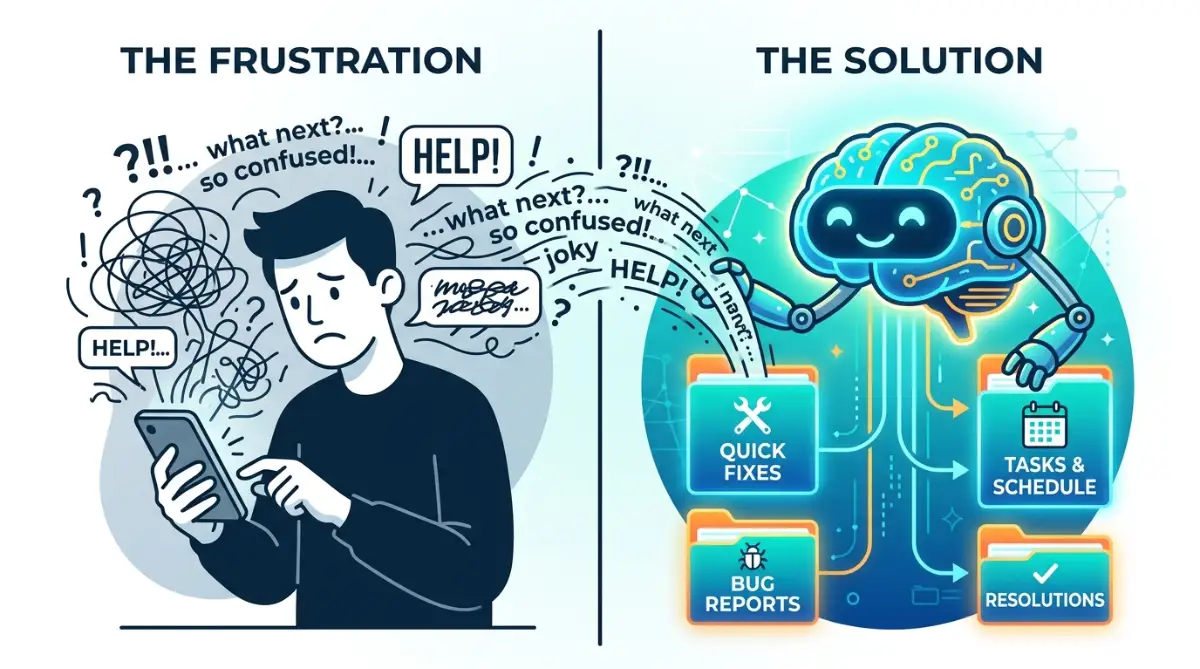
The Magic Inside the Machine: How Computers Finally Learned to Listen
Thankfully, things are changing fast. We are no longer stuck with those old, rigid machines. A brilliant piece of technology has entered the chat, literally.
It is called Natural Language Processing, or NLP for short. This is not just another boring tech term. It is the bridge between human emotion and machine logic.
NLP is a branch of artificial intelligence. Its entire job is to help computers read, understand, and make sense of human languages. We do not speak in perfect code. We use slang. We make spelling mistakes. We use sarcasm.
NLP takes all our messy, beautifully human communication and translates it into something a computer can actually work with.
Breaking Down the Brain of a Modern Bot
So, how does this actually work in real time? Let us look under the hood of a smart digital assistant.
When you type a message to a modern, NLP-powered tool, it does not just look for keywords. It goes through a rapid, complex thought process.
If you want to see exactly how these smart bots read our minds in real-time, watch this quick video breakdown before reading the detailed steps below. It will completely change how you look at the rest of this guide and make the whole process so much easier to understand!
1. Chopping Sentences into Pieces (Tokenization)
First, the machine breaks your sentence down into individual words or small phrases. These little pieces are called tokens. This helps the system digest a long, rambling paragraph into bite-sized chunks.
2. Finding the True Meaning (Intent Recognition)
This is where the magic really happens. The system looks at your tokens and asks, "What does this person actually want?"
Let's say you write, "My bill is way too high this month, fix it!" You did not use the word "refund" or "complaint." But a smart system understands that your intent is to dispute a charge.
3. Reading the Room (Sentiment Analysis)
This is my absolute favorite part of the technology. Modern bots can actually tell if you are happy, sad, or totally furious.
If you type in all caps with a lot of exclamation points, the NLP engine flags your message as "angry." It knows you are upset.
Instead of giving you a generic, cheerful response, it adjusts its tone. It might apologize immediately. Or better yet, it might instantly route you to a real human manager before you lose your temper completely.
Real-Life Scenarios: When Smart Chatbots Save the Day
Let us look at how this plays out in the real world. Imagine you run a large financial advisory website. People come to you with heavy, emotional burdens.
A user visits your site feeling completely overwhelmed by debt. They type a long, confusing paragraph into the chat box about their student loans and falling behind on payments.
An old bot would just fail and offer a menu. But an NLP bot reads the intent and the stress in the text. It responds warmly and instantly provides a link to help them break free from education debt.
The user feels heard. They get immediate value. A massive burden is lifted off their shoulders because a machine actually understood their pain.
Why This Matters for Everyday Businesses
You do not need to be a massive tech giant to care about this. If you run a website, sell a product, or offer a service, your customers expect instant, accurate answers.
According to research from major customer experience organizations, people will simply leave your website if they cannot find answers within seconds. In fact, a study shared by Customer Contact Week Digital shows that poor self-service tools actively harm brand loyalty.
By using tools that actually understand human language, you keep people on your page. You build trust. You show your visitors that their time is valuable to you.
We are moving away from the days of rigid menus. The new standard is fluid, natural, and helpful conversation.

Next-Level Strategies for Building Better Virtual Assistants
Now that we understand how this technology reads our minds, let us talk about how to make it work perfectly. If you are setting up one of these smart tools for your own business, you cannot just turn it on and walk away.
Even the smartest machine needs a good teacher.A huge mistake I made early on was feeding my first chatbot only perfect, textbook sentences, which caused it to fail completely when real customers used slang or made typos. I quickly realized that treating the bot like a messy, everyday conversation partner is the only way to make it truly smart. Pro tip: always use your actual customer support emails and chat logs to train your system instead of making up fake, perfect scenarios. You have to train your digital assistant just like you would train a brand-new employee.
Feed It Real Human Conversations
One of the biggest secrets to a successful NLP tool is the diet you feed it. You have to feed it real data.
Do not just program it with perfect, grammatically correct sentences. Real people do not talk like English professors on the internet.
Collect old support emails, chat logs, and social media comments. Look at the weird ways people ask questions.
Feed those misspellings, local slang, and weird abbreviations into your system's training data. The more messy reality the bot sees, the smarter it becomes at handling real-world chaos.
Create Smooth Handoffs to Real Humans
No matter how smart a machine gets, there are times when a human touch is completely necessary. A great system knows its own limits.
You need to program your bot with "escape hatches." If a customer asks a highly complex question, the bot should gracefully step aside.
For example, imagine a user is exploring deep financial options. They ask the bot deeply specific questions about borrowing money. The bot can easily explain why having a co-signer is a great move for a low-interest personal loan.
But if the user starts sharing highly sensitive personal banking details or asking for customized financial advice, the bot should instantly transfer the chat to a licensed human advisor.
It should also pass along the entire chat history. This way, the human agent can read the context immediately. The customer never has to repeat themselves.
The Dangerous Pitfalls: What Happens When We Get It Wrong
While this technology is amazing, it is not flawless. I see business owners make the same disastrous mistakes over and over again when implementing these tools.
When you get this wrong, you do not just lose a little money. You actively push your best customers away. Let us look at the most common traps and how to avoid them.
The "Set It and Forget It" Trap
Many people think AI is magic. They plug the software into their website, turn it on, and assume the job is done forever.
This is a massive mistake. Language changes constantly. Your products change. Your company policies change.
If you do not update your bot's knowledge base regularly, it will start giving out outdated, incorrect information. A bot confidently giving wrong answers is far worse than a bot that admits it does not know.
Ignoring the Tone of Voice
Another huge error is making the bot sound too robotic or, even worse, too excessively friendly in serious situations.
Imagine a customer messaging a bank because someone stole their credit card. They are panicked. If the bot responds with, "Awesome! I am super excited to help you with your stolen money today! that customer is going to explode with anger.
You must configure your sentiment analysis to adjust the bot's personality. Serious problems require a serious, calm, and professional tone.
Hiding the Human Option
Have you ever tried to find a phone number on a website, and the company intentionally hides it behind ten layers of chatbots? It is infuriating.
Some companies use AI as a wall to keep customers away from human staff. They think it saves money.
Instead, it destroys the user experience. The Nielsen Norman Group, a leading authority on user experience, clearly notes that forcing users into dead-end chatbot loops creates deep user frustration.
Your smart assistant should be a helpful guide, not a prison guard. Always give the user an easy, visible button to say, "I want to speak to a person."
Wrapping It Up: Your Next Steps to Better Communication
We have covered a lot of ground today. We started with the intense frustration of old, broken systems. We looked at the beautiful logic of how machines finally learned to read our emotions.
We also explored the smart ways to train these systems, and the dangerous traps that can ruin a customer's day.
The biggest takeaway here is that technology should always make our lives easier, not harder. Natural language processing is a brilliant tool, but it is still just a tool.
Its true power comes from how much you care about the people on the other side of the screen. When you combine smart software with deep human empathy, you create an unbeatable experience.
Take a look at the tools you interact with today. Notice how they respond to you. If you manage a website, ask yourself if your digital front door is welcoming or frustrating.
You have the power to fix bad communication. Start exploring these smart systems today. Feed them good data. Teach them to be kind. Your visitors will thank you, and your business will thrive because of it.
Upgrading my own systems was scary at first, but seeing my customers get instant, helpful answers changed my business forever. You do not need to be a tech genius to make this happen, so take that first step today and watch your customer happiness grow. I promise you that making your digital front door a little more human is the best investment you will ever make.
Disclaimer: The information provided in this article is for educational and informational purposes only. Technology and software features change frequently. Always consult with a professional IT specialist or software provider before implementing new automated systems into your business infrastructure.