
The Heavy Burden of Choosing the Wrong Home Loan
Picking a home loan does not have to feel like you are defusing a bomb. When I bought my first place, the sheer panic of choosing between a fixed or flexible interest rate kept me up for nights. But after cutting through the confusing banking noise, I realized the choice actually comes down to one simple question about your daily budget. Let's strip away the Wall Street double-speak and look at exactly how to pick the right mortgage for your family, without the usual headaches.
When I first started looking for a house, I thought finding the perfect neighborhood would be the hardest part of the process. I had no idea that picking the right financing option would keep me tossing and turning at night. Every time I asked for advice, I got completely conflicting answers from my friends and family.
My uncle told me that locking my interest in was the only safe way to protect my family from economic crashes. On the very same day, my coworker laughed and said I was throwing money away if I did not choose a flexible loan. I felt like I was standing at a crossroads blindfolded. The pressure to make the perfect choice was absolutely exhausting.
This is exactly what everyday people go through when buying a home. You save up your hard-earned money for years, only to face a complicated banking system that speaks a totally different language. You start wondering if one bad signature will ruin your monthly budget forever.
What You Will Learn In This Guide:
- Why fixed rates cost a little more upfront but protect you from nasty economic surprises.
- How variable rates can save you money, but also carry hidden monthly risks.
- The truth about the massive penalty fees banks charge if you ever need to break your contract early.
- My personal "Shadow Budget" trick to safely manage a flexible home loan without losing sleep.
Breaking Down the Great Mortgage Mystery
Let us completely strip away the confusing bank terminology right now. At the end of the day, you are simply borrowing a large chunk of money to buy a house. The bank is charging you a fee for lending you that money, which we call interest.
The only thing you are really deciding is how that interest fee behaves over the next few years. Will it stay perfectly flat and predictable, or will it move up and down based on the economy? Understanding this basic concept is your first step toward financial confidence.
We are going to look closely at both options so you can see exactly how they work in the real world. I want you to feel fully empowered when you finally sit across from your loan officer. Let us look at the facts without any of the confusing Wall Street jargon.
Quick Look: Fixed vs. Variable Rates
| Feature | Fixed-Rate Loan | Variable-Rate Loan |
| :--- | :--- | :--- |
| Monthly Bill | Stays exactly the same | Can go up or down |
| Starting Cost | Usually a bit higher | Usually starts cheaper |
| Break Penalty | Very high (Interest Rate Differential) | Usually low (3 months of interest) |
| Best Fit For | People who hate surprises and stick to tight budgets | People who plan to move soon or can handle sudden cost bumps |
The Predictable Comfort of a Fixed-Rate Loan
Imagine signing up for a premium movie streaming service for an entire year. You know exactly what that subscription costs every single month, no matter what happens. Even if the streaming company adds a thousand new movies and raises prices for new customers, your monthly bill stays exactly the same.
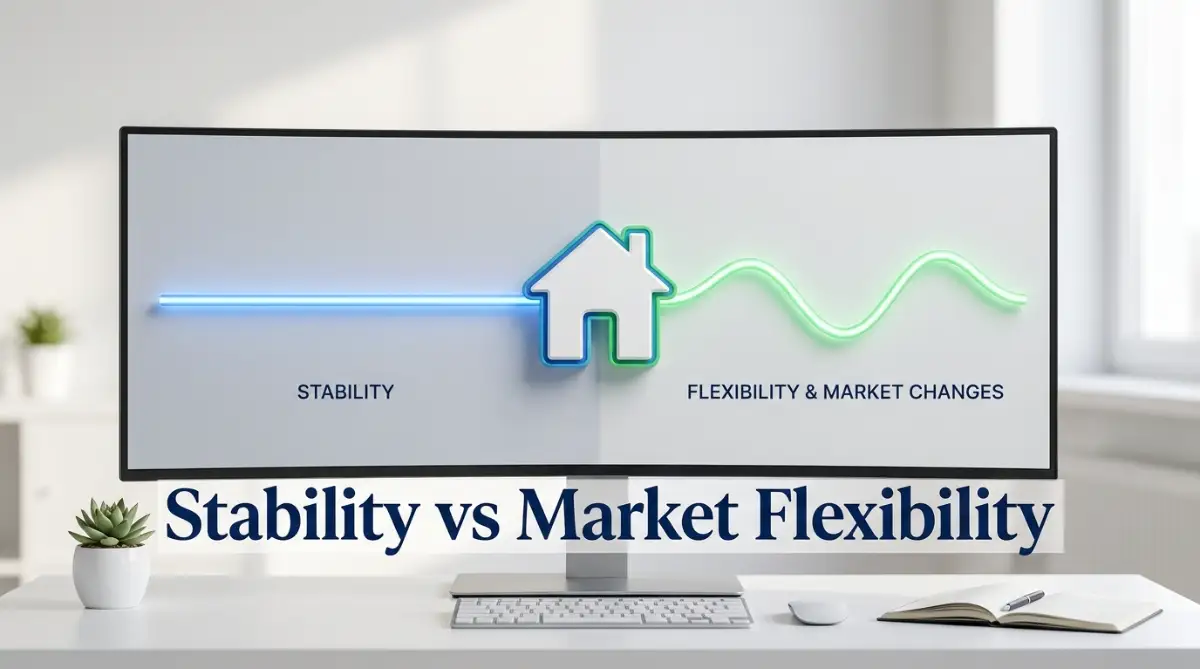
This is exactly how a fixed-rate mortgage operates. When you sign your contract, you and the bank agree on a specific interest percentage. That number gets locked in a vault, and it does not change for the entire length of your loan term.
Because of this lock, your monthly principal and interest payment will never surprise you. You can easily plan your family budget, set up automatic payments, and completely forget about it. This kind of loan offers ultimate peace of mind.

For most normal people, this predictability is a massive relief. You never have to check the financial news or worry about what the central bank is doing. If inflation hits hard and interest costs explode nationwide, you are fully protected behind your locked contract.
However, there is a very real catch to this safety net. Because the bank is taking on the risk of future economic changes, they usually charge you a slightly higher premium from day one. You are essentially paying extra for the comfort of guaranteed stability.
Additionally, if the economy suddenly drops and interest costs become super cheap across the country, you are still stuck paying your higher agreed-upon rate. You do not get to enjoy those savings unless you completely break your contract, which comes with hefty penalty fees.
The Wild Ride of Variable-Rate Financing
Now, let us imagine your monthly electricity bill instead of a streaming service. Some months the weather is mild, and your bill is wonderfully low. Other months, extreme heat forces you to blast the air conditioning, and your bill shoots up significantly.
A variable-rate mortgage follows a similar pattern of ups and downs. The interest you pay on your home loan is directly tied to a specific financial benchmark, usually called the prime rate. When the country’s central bank changes its main interest rate, your loan rate immediately follows suit.
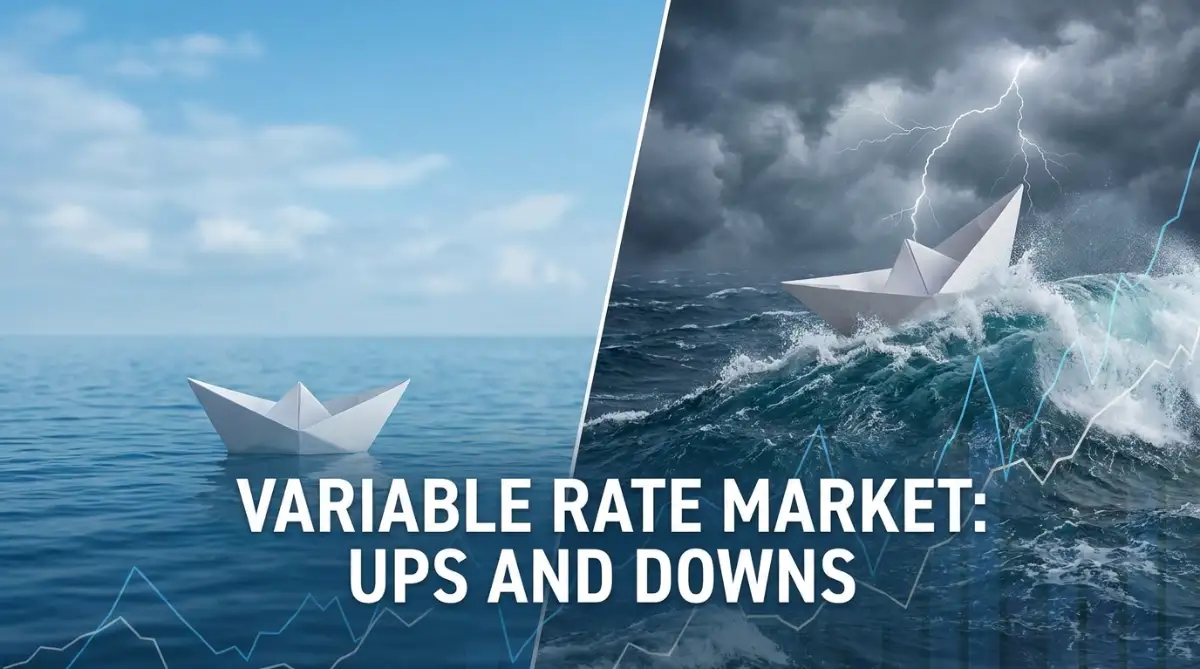
This means your borrowing costs will actively float up and down during your term. When the economy is struggling, central banks often lower rates to encourage spending. If you have a flexible loan during this time, you instantly start saving money without having to do a single thing.
Historically, people who choose this flexible path often end up paying less interest over the entire life of their mortgage. The banks usually offer a much lower starting percentage because you are the one accepting the economic risk. It looks incredibly attractive on paper when you first see the numbers.
Watch this quick video to see a visual breakdown of how interest rates directly impact your monthly budget.
But you absolutely must understand the dark side of this flexibility. If inflation spikes and the central bank raises rates aggressively, your home loan costs will climb very quickly. You might suddenly find yourself paying hundreds of dollars more every single month, which can instantly destroy a tight family budget.
If you are a naturally anxious person, this constant shifting might literally keep you awake at night. You have to be completely honest with yourself about your ability to handle sudden financial surprises. Saving a few dollars is never worth sacrificing your mental health and daily happiness.
How Your Payments Actually Work on a Flexible Loan
There is a massive misunderstanding about how these flexible loans actually affect your bank account every month. Many people assume that their monthly payment amount changes every single time the interest rate changes. While this is sometimes true, it is not the only way banks handle things.
In many cases, your bank will actually keep your total monthly payment exactly the same, even on a flexible loan. What actually changes behind the scenes is how your money gets divided up. This is a very important detail that many loan officers fail to explain clearly.
Let us say your payment is a thousand dollars a month. If interest rates go up, the bank takes a larger chunk of that thousand dollars just to cover the new interest fee. This leaves very little money to actually pay down your main debt, which means it will take much longer to own your home outright.
If rates drop, the opposite happens, and more of your money goes directly toward paying off the house. So while your budget might feel safe because the payment looks identical, your long-term financial picture is drastically changing. Always ask your lender exactly how they structure their flexible payment terms.
Real-Life Math Check:
Let's say you borrow $300,000. If you have a variable rate and the central bank bumps interest up by just 0.5%, your borrowing cost jumps by roughly $1,500 a year. If your budget is already stretched thin paying for groceries and gas, that sudden extra expense can hurt. Always run the math on a "worst-case scenario" before you sign.
Pro Tip from My Experience: When I bought my first house, I completely ignored the penalty fees for breaking a fixed contract early. I ended up needing to move for a new job just two years later, and that simple oversight cost me thousands in unexpected bank fees. Always ask your lender exactly what happens financially if you need to sell the house before your term officially ends.
The Famous "Sleep Test" for Home Buyers
Financial experts often talk about numbers, charts, and historical market data when giving advice. But I strongly believe the best way to choose your loan type is by taking the basic "Sleep Test." This has nothing to do with math, and everything to do with human psychology.
Ask yourself this simple question: If your mortgage payment suddenly increased by three hundred dollars next month, how would you react? If the thought alone makes your chest tighten and ruins your mood, you already have your answer.
Some people have a very high tolerance for risk. They have extra cash sitting in their savings account, and they do not panic when the market gets rocky. These individuals can easily ride the waves of a flexible loan and enjoy the long-term mathematical benefits without breaking a sweat.
Other people need absolute control over their lives to feel safe. They budget every single dollar carefully and hate surprises of any kind. For these folks, paying a slightly higher initial percentage for a locked loan is a completely fair trade for achieving total peace of mind.
Do not let anyone make you feel stupid for choosing stability over potential savings. Personal finance is deeply personal, and your emotional well-being is just as valuable as your bank balance. You must choose the path that lets you sleep soundly in your new bedroom.
Myth vs Reality: Breaking Down Common Lies
The internet is absolutely flooded with terrible advice regarding real estate financing. I want to clear up some of the most dangerous myths that confuse hard-working families every single day. Taking these myths as facts can lead to disastrous financial mistakes.
Myth 1: You can never switch from a flexible loan to a locked loan once you sign the paperwork.
Reality: This is completely false. Most banks actually allow you to convert your flexible rate into a locked rate at any time during your term. This gives you a great escape hatch if the economy starts getting too scary for your liking.
Myth 2: Locked loans are a scam created by banks to steal extra money from terrified buyers.
Reality: Banks actually take on significant risk when they guarantee your rate for five or ten years. If borrowing costs skyrocket globally, the bank still has to honor your low rate, which hurts their profits. The premium you pay is simply the cost of transferring that economic risk away from your family.
Myth 3: You should always pick whatever option has the lowest number on the day you sign.
Reality: A low starting rate is just a snapshot in time. A flexible loan might look cheaper today, but it could easily become much more expensive six months from now. You have to look at the entire lifespan of the contract, not just the opening day special.
Why the Penalty Fees Matter So Much
Let us talk about a harsh reality that nobody likes to discuss when buying a house. Life changes very fast, and sometimes you have to break your mortgage contract before it naturally expires. You might get divorced, lose a job, or simply need a bigger space for a growing family.
When you break a home loan contract early, the bank will hit you with a cancellation fee. This is where the difference between locked and flexible loans becomes incredibly obvious. The way banks calculate these fees is completely different for each type of product.
If you have a flexible loan, the penalty to break it is usually very straightforward. Most banks simply charge you the equivalent of three months' worth of interest. While it is annoying to pay, it is usually a very predictable and manageable amount of money.
Breaking a locked loan is a completely different nightmare. Banks use a complicated formula called the Interest Rate Differential to calculate your penalty. Depending on the current market, this penalty can easily cost you tens of thousands of dollars out of nowhere.
If there is any chance at all that you might move within the next few years, you must consider these hidden exit fees. I have seen families lose their entire home equity just trying to get out of a strict locked contract. Flexibility is not just about the monthly rate; it is also about your freedom to move.
Understanding the Economic Triggers
You might be wondering who actually controls these shifting percentages behind the scenes. It is not just a group of grumpy bankers randomly deciding to make your life expensive. The rates are heavily influenced by massive global economic forces that affect everything we buy.
When a country experiences heavy inflation, prices for groceries, gas, and clothes go up. To stop things from getting out of control, the central bank steps in and makes borrowing money more expensive. This cools down the economy because people stop buying houses and cars quite as quickly.
If you are holding a flexible loan during this time, you will immediately feel the pain of those anti-inflation measures. The central bank's fight against rising prices will show up directly on your monthly bank statement. It is a very direct connection to the health of the entire country.
On the flip side, if the economy slows down too much and people are losing jobs, the central bank steps in again. They make borrowing money very cheap to encourage businesses to grow and people to buy homes. This is the exact moment when flexible loan holders start celebrating their rapidly shrinking monthly costs.
Understanding this basic cycle helps remove the mystery from the process. You are not just gambling blindly; you are making an educated guess about where the economy is heading next. If you pay attention to the news, you can generally sense which way the wind is blowing.
A Quick Comparison Strategy for First-Time Buyers
If this is your very first time buying property, you have a unique set of challenges. First-time buyers usually have smaller down payments and tighter monthly budgets compared to older homeowners. You do not have a huge cushion of cash to fall back on if things go sideways.
Because of this vulnerability, many financial advisors strongly recommend locked rates for beginners. When you are just learning how to handle homeownership, property taxes, and unexpected repairs, you need absolute stability in your main mortgage payment. Removing the interest rate guessing game takes a massive weight off your shoulders.
However, if you are an experienced buyer purchasing a second property or an investment home, the rules change entirely. Investors often prefer flexible rates because the penalties for selling the property are much lower. They treat the changing interest as just another business expense to be managed.
You must evaluate exactly what stage of life you are in right now. A young couple expecting a baby needs very different things than a retired person downsizing their lifestyle. Never blindly copy what your friends or neighbors are doing with their own money.
Managing the Psychological Pressure of Debt
We rarely talk about how massive debt actually affects our daily mood. Holding a mortgage is a serious psychological weight, regardless of the mathematical structure you choose. You are essentially promising to pay a massive sum of money over several decades.
If you pick a flexible plan, you are signing up to monitor that debt actively. You will find yourself checking financial headlines and worrying about the central bank's next meeting. For some, this active management makes them feel engaged and smart.
For others, that active management turns into a terrible obsession. They constantly calculate how much money they could have saved if they had just picked the other option. This kind of financial regret is toxic and can completely ruin the enjoyment of your beautiful new home.
A locked plan allows you to mentally put your debt in a box and close the lid. You make the payment, you live your life, and you focus your energy on your family and hobbies. You are paying a premium precisely to buy back your mental bandwidth.
By fully understanding exactly how these two paths diverge, you can safely navigate the complex real estate market. You now have the foundational knowledge to walk into a bank and ask the right questions. The heavy burden of confusion is gone, leaving you with clarity and power.
Mastering Your Loan Like a True Financial Insider
Once you finally understand the basic mechanics of home financing, you can start using some brilliant strategies to protect your family’s wealth. Most buyers simply sign their paperwork, set up an automatic bank draft, and completely forget about their loan. But taking a slightly more active role can literally save you tens of thousands of dollars over the lifetime of your property.
One of the smartest tricks you can use is called the "Shadow Budget" method. If you decide to choose a flexible loan because the initial percentage is delightfully low, do not immediately spend those savings on a new car. Instead, calculate what your monthly bill would be if you had chosen the more expensive locked option.
Set up your monthly payments to match that higher imaginary number right from the beginning. The bank will take their required interest fee, and all of that extra money will go straight toward destroying your main debt balance. This acts as a massive shock absorber for your budget.
If the economy shifts and the bank eventually raises your required payment, you will not even feel it. You are already accustomed to paying the higher amount out of your everyday bank account. This clever strategy gives you the mathematical benefits of a floating rate while perfectly simulating the emotional safety of a locked plan.
The Hidden Power of Prepayment Privileges
Another powerful tool you must look for in your contract is the prepayment privilege. Almost every good lender allows you to pay a certain amount of extra money toward your home every single year without any penalty. This might sound incredibly boring, but it is actually a financial superpower.
When you make a regular monthly payment, a huge portion of that money just pays the bank’s profit margin. However, when you drop an extra lump sum onto your loan, one hundred percent of those dollars attack your principal balance. By doing this, you are actively building a cash buffer while fighting debt in a very smart, long-term way.
Even throwing an extra fifty dollars a week at your mortgage can shave years off your total repayment schedule. It drastically reduces the overall interest you will owe, saving you a massive amount of cash. You should always review your mortgage amortization schedule directly with your lender so you can see exactly how much time you are erasing.
If you happen to get a bonus at work or a nice tax refund, dropping it straight onto your home is a fantastic move. It feels incredibly rewarding to watch that massive debt number shrink faster than the bank initially projected. Taking aggressive control of your debt is the absolute best way to secure your family's future.
Protecting Yourself With the Hybrid Approach
Many everyday buyers have absolutely no idea that you can sometimes combine both financing types into a single package. Some modern lenders offer a hybrid product, where you split your massive loan right down the middle. Half of your debt gets locked securely in a vault, while the other half floats with the market.
This middle-ground approach is absolutely perfect for people who feel entirely paralyzed by financial decisions. If borrowing costs suddenly explode globally, only half of your debt becomes more expensive, shielding your monthly budget from total disaster. Conversely, if costs drop, you still get to enjoy some nice savings on the floating portion.
You can think of it like diversifying your investments so you do not have all your eggs in one fragile basket. Before you sign anything, you should always ask your broker if they have hybrid options available. It is a highly creative way to master your property purchase without taking on unnecessary stress.
You can also look into reliable educational platforms to learn how national banks operate behind closed doors. Reading up on how national interest targets actually work can instantly make you a much more confident negotiator. The more you understand the underlying system, the harder it is for a bank to push you into a bad product.

Dangerous Traps That Can Easily Wreck Your Finances
Making a poor choice at the negotiation table can haunt your bank account for a very long time. I have seen incredibly smart, hardworking people fall into devastating traps just because they rushed the process. We need to talk about these common pitfalls so you can steer completely clear of them.
The most common trap is what financial experts call the "Qualifying Illusion." Often, lenders will offer an unbelievably low introductory rate on a flexible product just to get you through the front door. Buyers see this tiny monthly payment and suddenly convince themselves they can afford a much bigger, fancier house.
They stretch their family budget to the absolute limit, buying a property that leaves them with zero extra cash at the end of the month. Six months later, the economy changes, the bank raises the payment, and the family instantly starts drowning in bills. This is how everyday people accidentally become completely "house poor."
You should never borrow the absolute maximum amount the bank offers you, regardless of how cheap the payments look today. Always leave yourself a comfortable cushion for property taxes, sudden roof repairs, and regular grocery inflation. Protecting your daily quality of life is much more important than impressing your friends with a giant backyard.
The Disaster of the Panic Lock-In
Human psychology makes us do very silly things when we feel scared or threatened by the news. Imagine you start with a wonderful floating rate, and everything is going perfectly well. Suddenly, the economy shifts, borrowing costs start creeping upward, and financial headlines start predicting a total market meltdown.
Many homeowners completely panic during these stressful moments. They rush straight to their bank and demand to lock their rate immediately to stop the pain. The massive problem here is that they are locking in their new contract at the absolute peak of the market frenzy.
They end up securing a terrible, incredibly high rate purely out of fear and anxiety. If they had simply stayed calm and reviewed the current housing market data, they might have seen that the economic storm was almost over. When the market naturally cools down a few months later, they are trapped paying that sky-high locked rate for the next five years.
If you choose a flexible path, you must be prepared to weather a few storms without completely losing your nerve. You cannot constantly react to every single scary headline you read on social media. Developing a strong emotional stomach is a mandatory requirement for this specific type of financing.
Ignoring the Reality of Life Changes
We all love to imagine that our current living situation will stay perfectly identical for the next decade. We assume we will keep the exact same job, stay in the exact same city, and never need a different floor plan. But life is incredibly messy, and unexpected events happen to good people every single day.
Signing a strict, heavily locked contract without understanding the penalty fees is a massive gamble on your own future. If a sudden medical issue forces you to relocate, or you simply need to downsize, breaking that contract can cost you a small fortune. Always prioritize flexibility if your career or family size is currently in a transitional phase.
Sometimes, paying a slightly higher initial fee is entirely worth it if the exit penalties are highly forgiving. You might even find yourself looking into alternative funding or getting a bank loan without collateral just to cover unexpected moving expenses. Never let a bank trap you in a financial box that you cannot afford to escape from.
You should always treat your mortgage contract as a highly serious legal document, not just a standard form to initial. Taking your time to understand every single clause is a great step toward seeking safe protection for you and your company or your personal assets. You are the only person who can truly advocate for your financial safety.
Your Personal Blueprint for Stress-Free Homeownership
Choosing how to finance your property does not have to feel like defusing a complicated bomb. It really comes down to honestly evaluating your current cash flow and your emotional tolerance for surprise expenses. If you hate checking the financial news and want total predictability, locking your contract is a perfectly wonderful choice.
If you have a solid emergency fund, a healthy income, and you want to mathematically beat the system, a floating plan could be highly rewarding. There is absolutely no single right answer that applies to every family on the block. Your perfect choice is simply the one that perfectly supports your specific lifestyle and daily happiness.
Take a deep breath, gather your documents, and have an open, honest conversation with a trusted broker. Do not be afraid to ask the exact same question three times if their answer sounds like confusing banking jargon. You hold all the power as the consumer, and lenders want your business.
I remember pacing around my living room, absolutely terrified of making the wrong choice for my family. But when I finally locked in my own rate, focusing completely on what let me sleep peacefully at night, all that heavy anxiety instantly vanished. You have the knowledge now to take control, so go out there and secure your dream home with total confidence!
Questions Buyers Always Ask Me About Home Loans
Can I easily switch my loan type after I sign the papers?
Yes, most lenders are actually quite happy to let you convert a flexible loan into a locked one at any time. However, moving from a locked contract to a flexible one usually requires you to completely break your agreement. This will trigger those heavy penalty fees we discussed earlier.
What really happens to my bill if the central bank raises rates?
If you hold a flexible product, your lender will immediately pass that exact increase onto your account. Depending on how your specific contract is structured, your required monthly payment will either go up, or more of your current payment will be diverted to pay the new interest fee. Always clarify your specific terms with your broker before signing.
Is a flexible rate always cheaper over the long run?
Historically speaking, flexible plans have generally saved borrowers money over periods of twenty or thirty years. However, history does not guarantee your personal future, and short-term economic spikes can be highly painful. You should never pick it just because statistics look good if your monthly budget cannot handle a sudden spike.
Are all bank penalty fees calculated the same way?
Absolutely not, and this is where many families get unpleasantly surprised. Flexible products usually charge a very simple fee equal to about three months of your standard interest. Locked products use a complicated calculation based on current market numbers, which can easily cost you thousands of dollars more.
Should I pay an expert to help me make this choice?
Working with an independent mortgage broker can be incredibly helpful because they do not work for one specific bank. They can look at your personal budget and show you completely unbiased options from dozens of different lenders. They can also access official consumer protection guides to ensure you are getting a highly competitive deal.
Disclaimer: The content provided in this blog post is strictly for informational and educational purposes only and should not be considered professional financial, legal, or investment advice. Interest rates, banking policies, and economic conditions change frequently. Always consult with a certified financial advisor or a licensed mortgage professional to discuss your unique personal circumstances before making any major financial or real estate decisions. The author and publisher are not responsible for any financial losses or damages incurred as a result of using this information.