The Silent Weight We Carry: My Battle with Borrowed Money
I still remember the exact moment my stomach dropped while looking at my phone screen. I was sitting on the edge of my bed, staring at three different credit card balances that seemed to grow like magic overnight. I thought borrowing money was just a normal part of growing up, but I had completely lost control. Every paycheck felt like it was instantly swallowed by minimum payments. I was working incredibly hard, yet my bank account always showed zero at the end of the month.
It felt like I was walking around with a heavy backpack that kept getting heavier every single day. I could not sleep properly, and my constant worry about money started affecting my relationships.
The mental peace I once had was completely gone. Everyday decisions, like buying groceries or going out for a simple coffee, became a source of extreme anxiety. I was terrified of answering unknown phone calls, thinking it was another collection agency.
This is the harsh reality for so many of us today. We borrow money to fix a temporary problem, only to create a permanent financial nightmare. It drains our energy, ruins our mood, and makes us feel entirely trapped.
But then, I learned a secret that completely shifted my mindset. I realized that the rich also borrow money, but they do it in a completely different way. The wealthy understand that not all borrowed money is a trap designed to keep you broke.
Some loans actually help you build wealth, while others slowly steal your future. This simple realization changed my entire life. I want to share exactly what I learned with you today, so you can finally break free from money stress.
Decoding the Money Matrix: Not All Loans Are Evil
When we hear the word "loan," most of us automatically panic. We have been taught since childhood that owing money is a terrible thing.
But the truth is a little more interesting than that. Money is simply a tool, and a loan is just a way to access that tool faster. The real problem is not the borrowing itself.
The problem is what you do with the cash after it hits your bank account. If you use it to buy things that lose value, you are actively destroying your wealth.
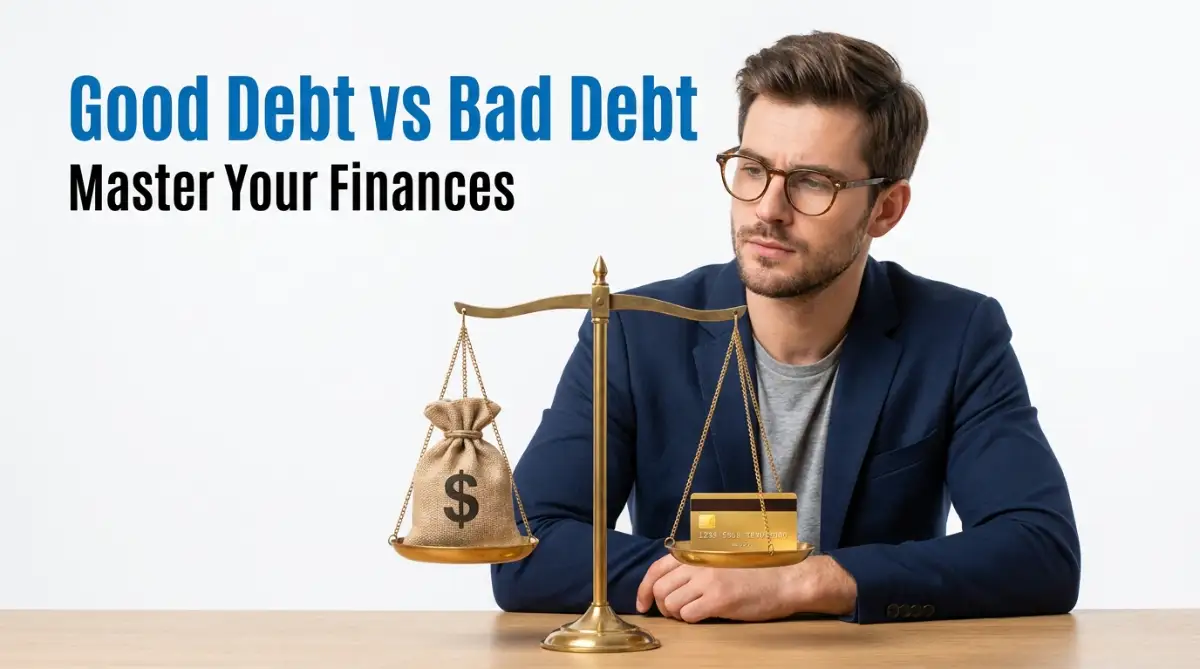
If you use it to buy things that make you more money, you are playing the game like a millionaire. Let us break down this concept so you can see exactly how it works in everyday life.
What Exactly Makes a Loan "Good"?
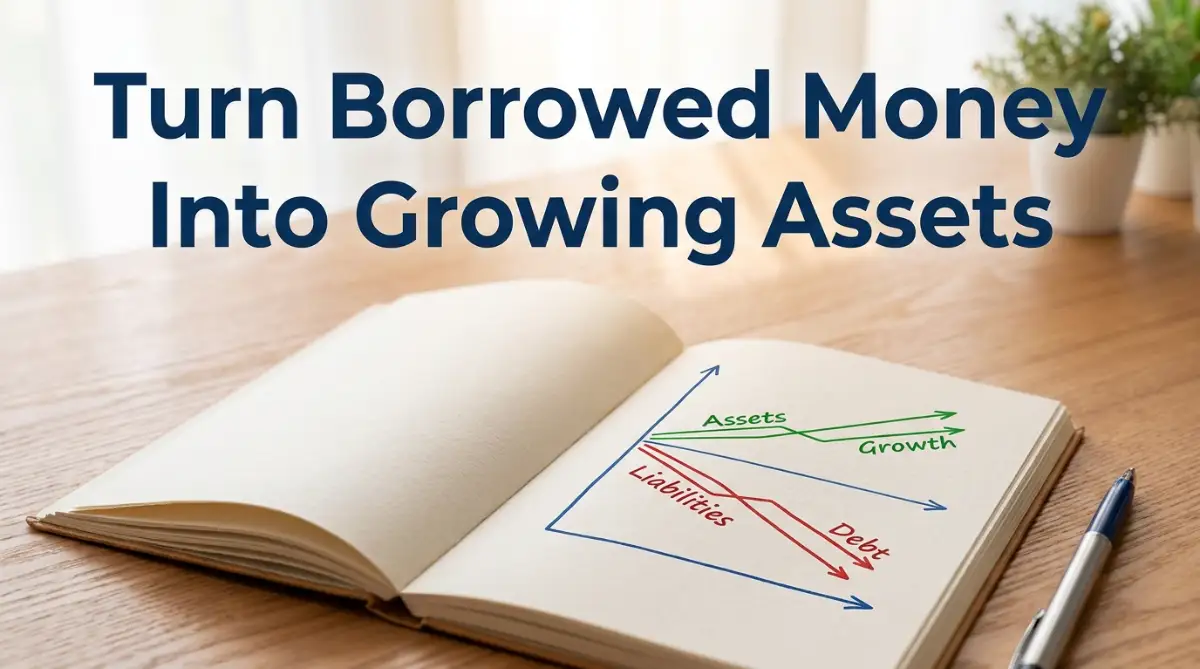
A loan is considered positive when it helps you increase your overall net worth over time. You are essentially using someone else's money to build your own future wealth.
Think of it as planting a seed. You borrow money to buy the seed, you plant it, and eventually, it grows into a massive tree that gives you endless fruit. The value you get from the tree is much higher than the small amount you paid for the seed.
Real-Life Scenarios of Smart Borrowing
The most common example of this is a mortgage for a house. Yes, you owe the bank a large sum of money. But over the years, the value of that house usually goes up.
By the time you pay off the bank, your property might be worth double what you paid for it. Another great example is taking a loan for higher education or specialized skill training.
You might graduate with some student loans, but your new degree allows you to earn a significantly higher salary. The extra money you make every month easily covers the loan payments. You are left with a massive profit in the long run.
Business loans fall into this category too. If you borrow money to buy new equipment for your bakery, that equipment helps you sell more cakes. The extra profit easily pays off the equipment, and then everything else is pure cash in your pocket.
Here is a brilliant introductory video that perfectly explains how smart borrowing can change your financial future.
My Personal Realization on Buying Assets
When I first started trying to fix my finances, I made the mistake of avoiding every single type of credit. I was so scared of owing money that I missed out on a great opportunity to buy a small piece of profitable real estate. I finally realized that my fear was holding me back from actually growing my wealth. The trick is not to fear credit, but to respect it and use it only for things that pay you back.
The Dark Side: Understanding Toxic Balances
Now, let us talk about the type of borrowing that keeps hard-working people completely broke. This is money you borrow to buy things that lose value the second you purchase them.
We call this a depreciating asset. The most common trap here is high-interest credit card debt used for everyday shopping.
You swipe your card for a fancy dinner, expensive clothes, or the newest smartphone. Those items are great, but they will never put money back into your pocket.
In fact, the smartphone loses half its value the moment you take it out of the box. Meanwhile, the credit card company is charging you massive interest every single month. You end up paying double the original price for a phone that is already outdated.
Why Car Loans Can Be a Trap
Another huge trap is borrowing a massive amount of money to buy a brand new luxury car. Cars are notorious for losing value incredibly fast.
If you take out a five-year loan for a luxury vehicle, you are paying interest on an item that is getting cheaper every single day. Eventually, you will owe the bank more than the car is actually worth.
This is known as being "underwater" on a loan. It is a highly stressful position to be in, especially if you suddenly need to sell the car.
Borrowing for a basic, reliable car to get to a good job is totally fine. But borrowing extra just to look rich to your neighbors is a fast track to poverty.
Myth vs Reality: The Great Debt Illusion
There is so much confusing advice out there about personal finance. Let us clear up some of the biggest myths right now.
Myth: The only way to be financially secure is to have zero loans.
Reality: Many of the richest people in the world use borrowed money strategically to fund massive business projects. They know that zero loans often means zero leverage.
Myth: Credit cards are pure evil and should be cut up immediately.
Reality: Credit cards are actually amazing tools if you pay them off in full every single month. They offer fraud protection and travel rewards, but they become toxic only when you carry a balance.
Myth: Renting is always throwing money away, so you must get a mortgage.
Reality: Sometimes renting is much smarter if you live in a very expensive city. A mortgage is only smart if the math makes sense for your long-term plans.
A Quick Breakdown: Spotting the Difference
Sometimes it helps to see things side by side. I made a simple comparison so you can easily scan the differences.
This chart alone should change the way you look at your next major purchase. Always ask yourself which column your purchase falls into before you sign any paperwork.
The Psychology of Spending Borrowed Cash
Why do we fall into these money traps in the first place? It really comes down to human psychology.
When you hand over cold, hard cash for a purchase, it physically hurts your brain. Studies show that paying with cash activates the pain centers in our minds.
But when you swipe a piece of plastic, it does not feel real. You get the instant thrill of buying something shiny, without the immediate pain of losing your money.
This disconnect makes it incredibly easy to spend twice as much as you originally planned. Retailers know this psychological trick, which is why they push store cards on you at the checkout counter.
They will offer you a tempting discount today, knowing you will likely carry a balance and pay them massive interest for years. Protecting your mind from these marketing tricks is your first line of defense.
How to Stop the Bleeding Today
If you are currently trapped in toxic loans, you are probably feeling overwhelmed. The good news is that you can absolutely turn this situation around.
The first rule of getting out of a hole is to stop digging. You must stop taking on new high-interest balances immediately.
Take your credit cards out of your wallet and leave them at home. Delete your saved card information from your favorite online shopping apps.
Make it physically difficult for yourself to make impulsive purchases. If you want to buy something non-essential, force yourself to wait at least 48 hours.
Most of the time, the urge to buy will completely fade away after two days. This simple waiting period can save you thousands of dollars over a lifetime.
Designing Your Financial Escape Route
Once you have stopped the bleeding, it is time to attack the existing balances. You need a clear, actionable plan that keeps you motivated.
There are two popular methods that actually work. The first is called the Avalanche method, and it is brilliant for saving money.
With this strategy, you list all your toxic balances and focus every extra dollar on the one with the highest interest rate. You pay minimums on everything else.
This method mathematically saves you the most money in the long run. However, some people find it hard to stay motivated if that high-interest balance is very large.
That is where the Snowball method comes in. This is my personal favorite because it plays on human psychology.
Building Momentum with the Snowball Method
Instead of looking at interest rates, you organize your balances from smallest to largest. You attack the smallest one with extreme focus while paying minimums on the rest.
When you pay off that first small balance, you get a massive rush of victory. You feel completely unstoppable.
You then take the money you were paying on the first one and roll it into the second smallest balance. The payment gets bigger, just like a snowball rolling down a snowy hill.
By the time you reach your massive loans, you have a huge monthly payment to throw at them. This method works incredibly well because it gives you quick wins that keep your motivation totally high.
The Magic of Emergency Funds
One major reason people fall back into toxic balances is because life happens. A car breaks down, a medical emergency pops up, or the roof starts leaking.
If you do not have cash saved up, you will immediately reach for that credit card. This completely ruins all the hard work you put into paying them off.
This is why building a small emergency fund is absolutely essential. Before you heavily attack your balances, try to save up one month of basic living expenses.
Keep this money in a completely separate savings account that is hard to access. It is not for vacations or new shoes; it is strictly for true emergencies.
Having this cash buffer gives you incredible peace of mind. It acts as a shield, protecting your hard-earned progress from unexpected financial disasters.
Shifting Your Mindset for Permanent Wealth
Getting out of a bad financial spot is only half the battle. Staying out requires a complete change in how you view the world.
You have to stop caring about what other people think of your lifestyle. Most people who look rich on social media are actually drowning in high-interest payments behind closed doors.
They are playing a game of pretend that ends in severe financial pain. True wealth is often quiet and invisible.
It is the money sitting securely in an index fund, or the equity building up in a modest home. It is the absolute freedom to sleep peacefully at night knowing nobody is coming to collect a payment.
Once you taste that level of freedom, you will never want to go back to impressing strangers with borrowed money. You will naturally start seeking out smart, asset-building opportunities instead.
Leveraging Smart Loans for Your Future
When your toxic balances are finally gone, your financial world opens up. You suddenly have all this extra cash flow every month.
Now, you can start looking at smart borrowing opportunities. Maybe you have always wanted to start a small online business.
With a clean financial slate, you might qualify for a very low-interest small business loan. Because your daily expenses are low, you can safely take this calculated risk.
If the business succeeds, that small loan just created a massive new income stream for your family. This is how the wealthy use the banking system to their advantage.
They do not use banks to buy consumer toys; they use them as partners in building their empires. You can do the exact same thing once you clean up your foundation.
Your Action Plan for This Week
Reading about personal finance is great, but taking action is what actually changes your life. I want you to do three simple things this week.
First, sit down with a piece of paper and write out every single person or company you owe money to. Write down the total amount, the minimum payment, and the interest rate.
Yes, looking at the total number might be scary, but hiding from it is much worse. You cannot defeat an enemy you refuse to look at.
Second, categorize each of these balances. Put a big 'G' next to the ones that are building your wealth, and a big 'B' next to the ones that are draining you.
Third, pick one small toxic balance to destroy this month. Sell some old things online, work a few extra hours, and eliminate it completely.
This single step will prove to you that financial freedom is completely possible. You are in control of your money, it no longer controls you.
Next-Level Money Moves: Expert Secrets to Managing Borrowed Funds
Now that we understand exactly how different types of loans affect our lives, it is time to look at some high-level strategies. These are the exact methods financially successful people use to stay entirely in control of their cash flow.
You do not need an advanced finance degree to use these tricks. You just need a little bit of discipline and the willingness to look closely at your own numbers.
When you learn how the banking system actually works, you can start using their rules to benefit your own wallet. Let us explore some incredibly effective ways to outsmart the system and keep more money in your pocket.
The Magic Phone Call Most People Ignore
Did you know you can often lower the interest rate on your current balances with a simple five-minute phone call? Most people are entirely terrified of calling their bank, but customer service agents have the power to help you.
If you have a history of making your payments on time, you hold a lot of leverage. You can simply call the number on the back of your card and ask for a permanent interest rate reduction.
You can even mention that you are thinking about transferring your balance to a competitor's card. Banks hate losing reliable customers, and they will often lower your rate just to keep your account active.
This one simple conversation can instantly save you hundreds of dollars over the next year. It requires zero extra work, just a little bit of confidence on the phone.
Mastering the Balance Transfer Game
If your current bank absolutely refuses to lower your interest rate, you have another highly effective option. You can move that toxic balance to a completely different bank that offers a promotional zero-percent interest period.
This strategy is known as a balance transfer, and it is a massive lifesaver for heavy balances. Many credit card companies will give you 12 to 18 months of zero interest just for moving your money over to them.
During this promotional period, every single dollar you pay goes directly towards destroying the main principal amount. You are no longer fighting against the daily interest charges that keep your balance high.
However, you must be incredibly careful when using this strategy. You have to commit to paying off the entire amount before that promotional period ends, or the high interest will completely return.
If you want to understand how the government monitors these banking offers, you can read the federal guidelines on credit utilization to stay informed. Always read the fine print before you sign up for any new financial product.
The Hidden 30 Percent Rule
If you want to maintain a beautiful credit score while borrowing money, you have to memorize the thirty percent rule. Credit bureaus closely watch how much credit you have available versus how much you are actually using.
If your credit card has a limit of ten thousand dollars, you should never carry a balance higher than three thousand dollars at any time. When you max out your available credit, the banks view you as a highly risky customer.
They assume you are desperate for cash and might stop making payments soon. This instantly drops your credit score and makes it much harder to get approved for future loans.
By keeping your utilization low, you signal to the banks that you are highly responsible and strictly in control. This makes it incredibly easy to get approved for things like mastering the property buying process as a beginner when you are ready.
Leveraging Money for Maximum Profit
Once your toxic consumer balances are completely gone, you can start using borrowed money to generate real wealth. The wealthiest individuals rarely use their own cash to start new projects.
Instead, they use the bank's money to build assets that produce monthly cash flow. For example, if you are looking into launching a successful side business, a low-interest business loan can help you buy the necessary inventory right away.
The profits from your new business will easily cover the small monthly loan payment. Everything left over after that payment is pure profit that goes directly into your savings account.
You can also use loans to upgrade your earning potential through smart education. If you are focused on choosing an education path that actually pays off, a student loan is an investment in your future earning power.
You just have to make sure the expected salary of your new career makes the monthly loan payments feel completely effortless. Always do the math before signing any paperwork for educational funding.

The Hidden Traps: What Destroys Your Financial Progress
We have talked a lot about the smart things you should do with your money. But it is equally important to discuss the massive mistakes that keep hard-working people trapped in a cycle of poverty.
Sometimes, avoiding a bad financial decision is just as profitable as making a good one. Let us look at the most dangerous financial pitfalls that you need to avoid at all costs.
The Minimum Payment Illusion
The absolute fastest way to destroy your financial future is by only paying the minimum amount due on your credit cards. The bank specifically calculates this tiny minimum payment to keep you in debt for as long as legally possible.
When you only pay the minimum, you are barely covering the interest that was charged for that month. You are not actually making a dent in the original money you borrowed.
For example, if you owe three thousand dollars and only pay the minimum, it could take you over ten years to pay it off completely. You will also end up paying thousands of extra dollars purely in interest charges.
Whenever you receive a bill, completely ignore the minimum payment box. Always look at the total balance and pay as much as you physically can every single month.
The Store Discount Danger
We have all been in the checkout line at a popular clothing or electronics store when the cashier offers a tempting deal. They smile and tell you that you can save twenty percent on your entire purchase today if you just open a store credit card.
In the heat of the moment, saving fifty bucks sounds like an amazing idea. But this is one of the biggest psychological traps in modern retail shopping.
These store cards almost always carry ridiculously high interest rates, sometimes hitting close to thirty percent. If you do not pay off that store card immediately, the interest charges will completely wipe out that initial discount within a few weeks.
According to economic research on household spending patterns, store-specific financing creates massive long-term financial leaks for average families. Politely decline these offers, pay with the cash you already have, and walk out of the store securely.
Closing Old Accounts Out of Panic
When people finally decide to clean up their finances, they often go on a card-canceling spree. They grab a pair of scissors and cut up all their old, unused credit cards while calling the bank to close the accounts.
While this feels incredibly satisfying, it actually does severe damage to your credit score. Your credit history length is a massive factor in determining how trustworthy you appear to future lenders.
When you close your oldest credit card, you instantly wipe out years of good credit history. You also lower your total available credit limit, which heavily spikes your credit utilization ratio.
Instead of closing these old accounts, simply cut up the physical plastic card so you cannot use it for impulse shopping. Let the account stay completely open and active on your credit report to protect your long-term score.
Co-Signing is a Relationship Killer
At some point in your life, a family member or a close friend might ask you to co-sign a loan for them. They might need a new car or an apartment, but their own credit score is too low to get approved.
They will promise you that they will make every single payment perfectly on time. However, co-signing is financially one of the most dangerous things you can ever do.
When you co-sign, you are legally taking one hundred percent responsibility for that entire balance. If your friend loses their job and misses a payment, the bank is going to come directly after your bank account.
Even worse, that missed payment will be reported directly to your credit file, ruining your own ability to borrow money later. If you want to help a friend, give them cash if you can afford it, but never mix your legal name with their financial problems.
Falling for Quick-Fix Scams
When people are completely drowning in toxic balances, they often look for a magical way out. They see late-night commercials promising to erase all their financial problems for a small upfront fee.
These companies claim they have a secret legal trick to make your balances completely disappear. Unfortunately, the vast majority of these programs are incredibly predatory scams.
They will take your upfront fee and often leave your credit score completely destroyed in the process. You can check the strict warnings about quick-fix credit repair schemes to understand exactly how these scammers operate.
The hard truth is that there are no magical shortcuts to fixing a messy financial situation. It takes time, discipline, and a solid strategy to completely turn things around naturally.
Your Master Plan for a Stress-Free Financial Life
We have covered exactly how the system works, how to use it to your advantage, and what massive traps to avoid. Now, it is time to put all of this knowledge into a real-world action plan.
Knowledge without execution is completely useless. You have to take everything you learned today and apply it to your very next paycheck.
Redefining Your Relationship With Spending
Your first major step is changing the way you view the items you buy every week. Before you make any non-essential purchase, try calculating the cost in terms of your working hours.
If you make twenty dollars an hour, a four-hundred-dollar smartwatch actually costs you twenty solid hours of your working life. Ask yourself if that shiny new gadget is truly worth giving up almost three full days of your freedom.
This simple mental shift instantly cures the desire to impulse shop for things you do not genuinely need. You will naturally start keeping more cash in your checking account without feeling like you are restricting yourself.
Building Your Ultimate Safety Net
You cannot fight toxic balances effectively if you are constantly relying on them for sudden emergencies. Life is completely unpredictable, and random expenses will absolutely happen when you least expect them.
This is why having a fully funded savings account is your strongest defense mechanism. If you want a proven strategy, check out this guide on building a cash buffer while tackling high interest balances.
When your car needs new brakes, you simply pay for it with cash instead of swiping a high-interest card. This allows your debt-payoff journey to continue completely uninterrupted by daily life events.
Focus on Your Total Net Worth
Stop judging your financial success purely by how much money you currently owe. A mortgage might mean you owe two hundred thousand dollars, but if the house is worth four hundred thousand, you are actually in a beautiful position.
To understand exactly how your mortgage payments are structured, you need to realize that each payment builds your personal wealth. You are slowly converting the bank's money into your own permanent asset.
Start tracking your net worth every single month on a simple piece of paper. Add up all the cash and assets you own, then subtract everything you owe to the banks.
Watching your net worth turn from a negative number into a positive one is incredibly addictive. It gives you the perfect motivation to keep making smart, calculated financial choices every single day.
If you ever need funding for a smart opportunity later, you can always explore getting approved for bank funding without risking your own assets. By following official banking standards for managing liabilities safely, you will always stay one step ahead of the system.
Common Questions About Managing Your Money And Loans
Here are some of the most common questions people ask when they are trying to master their personal cash flow. I want to give you completely honest and direct answers to clear up any remaining confusion.
Does having multiple loans ruin my credit score forever?
Absolutely not. Having a mix of different accounts, like a car loan and a credit card, can actually make your score much higher. The only thing that ruins your score is missing a payment or maxing out the total limit you were given.
Should I focus on investing or clearing my balances first?
It purely depends on the interest rates attached to your current accounts. If your credit cards are charging twenty percent, pay those off completely before putting money into the stock market. You cannot beat a guaranteed twenty percent loss with random market investments.
Is taking a personal loan to consolidate my credit cards a smart move?
Yes, but only if the personal loan has a significantly lower interest rate than your current cards. You also must have the absolute discipline to never use those credit cards again once the balances are cleared. Otherwise, you will just end up with double the amount of financial stress.
How quickly can I actually get rid of high-interest balances?
It completely depends on how aggressive you are willing to get with your monthly budget. By cutting out unnecessary subscriptions, cooking at home, and taking on a side hustle, many people eliminate massive amounts of toxic balances in under a year.
Can student loans actually hurt my financial future?
Student loans are a huge problem only if you borrow massive amounts for a career path that pays a very low starting salary. If you borrow money smartly to become an engineer, a nurse, or an accountant, the investment easily pays for itself over your lifetime.
I know exactly how heavy the burden of owing money feels, because I carried that terrifying weight for years. My biggest hope is that this guide helps you take your power back today, so you can build a financial future you are genuinely proud of.
Disclaimer: The information provided in this blog post is for general educational and informational purposes only and does not constitute professional financial, legal, or tax advice. Personal finance situations are highly unique to each individual. Please consult with a certified financial planner or professional advisor before making any major financial decisions, taking out new loans, or attempting complex money management strategies.