Why Waking Up Feels Like a Daily Battle (And How I Fixed It)
I used to hit the snooze button at least four times every single morning. My bedroom always felt like a dark, freezing cave, and leaving the comfort of my warm blanket felt physically painful. I would stumble out of bed with a heavy head, tripping over my own shoes in the dark just to find the light switch.
Every morning started with rushing, unnecessary stress, and instant regret about staying up too late the night before. I knew I needed a massive change, but relying on sheer willpower alone was simply not working for me.
Most people experience this exact same morning misery day after day. You open your eyes to a harsh, blaring smartphone alarm that spikes your heart rate instantly. The room is completely pitch black, which easily confuses your brain into thinking it is still the middle of the night.
This sudden, aggressive jolt creates a deep sense of morning grogginess. Scientists actually call this heavy feeling "sleep inertia," and it can ruin the first few hours of your day. When your morning starts with chaos, that negative energy heavily impacts your mood.
You might end up snapping at your family members or feeling completely exhausted before you even start working. The mental toll of fighting yourself just to get out of bed drains the energy you need for creative or meaningful tasks.
The Science of Waking Up Without the Struggle
To actually fix this problem, we need to understand how the human body naturally prefers to wake up. Our bodies are heavily guided by an internal clock known as the circadian rhythm.
For thousands of years, humans naturally woke up to the slow, gradual brightening of the morning sun. The gentle increase in light sends a direct signal to your brain to stop producing melatonin, which is the hormone that makes you feel sleepy.
Today, thick blackout curtains and fixed work schedules completely block this natural process. We force ourselves awake in the dark, which feels incredibly unnatural to our biological systems.
This is exactly where simple smart home technology comes in as a massive lifesaver. By cleverly using smart LED lights and highly affordable programmable plugs, you can recreate a perfect, natural sunrise right inside your bedroom.
You no longer have to rely on a screaming alarm clock to shock you out of sleep. Instead, your room gently prepares your body for the day before you even open your eyes.
Syncing Your Bedroom Lights with Your Biological Clock
The very first step to building a frictionless morning is fixing your bedroom lighting environment. You want to install a smart LED bulb in your bedside lamp or your main ceiling fixture.
These smart bulbs connect directly to your home Wi-Fi and can be controlled entirely through a simple app on your phone. The real magic happens when you use the scheduling feature inside these smart home applications.
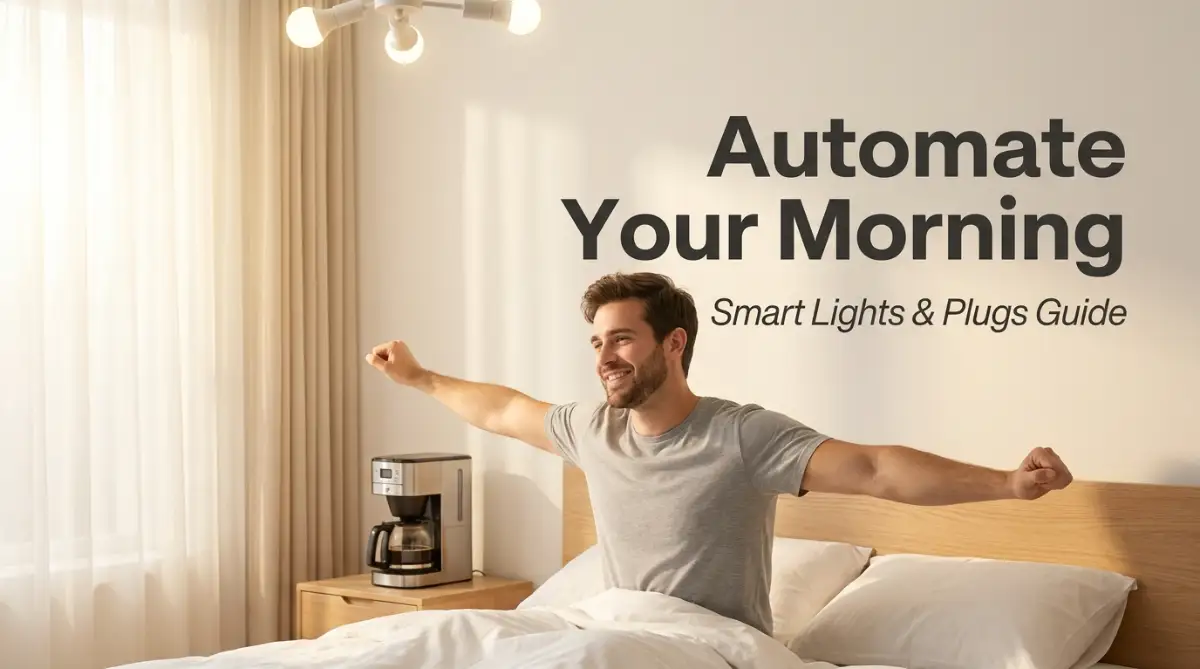
Instead of turning on instantly at full brightness, you can program the smart bulb to slowly fade on over a 30-minute period. For example, if you need to wake up at 7:00 AM, you can set the light to turn on at 1% brightness starting at 6:30 AM.
Over the next half hour, the light will slowly transition from a dim, warm orange glow to a bright, energizing daylight white. This gradual shift mimics a real sunrise perfectly.
As the room slowly brightens, the light travels right through your closed eyelids. Your brain naturally detects this change and gently begins bringing you out of your deep sleep cycles.
By the time your actual alarm rings at 7:00 AM, your body is already in a light sleep phase, making it incredibly easy to just sit up and start your day.
Automating the Coffee Machine for Instant Motivation
Getting out of bed is only the first half of the battle. The second half is finding the motivation to actually walk into the kitchen and start your morning tasks.
Here is a bold truth: Decision fatigue in the morning is the number one reason people skip their healthy habits. If you have to grind coffee beans, fill the water tank, and wait for the machine to heat up, your sleepy brain will just tell you to go back to bed.
This is where a simple, affordable programmable smart plug becomes your best friend. A smart plug goes directly into your normal wall outlet, and then you plug your standard, "dumb" coffee maker into it.
You simply prep your coffee machine the night before by adding the water and the coffee grounds. Then, you turn the physical switch on the coffee machine to the "ON" position.
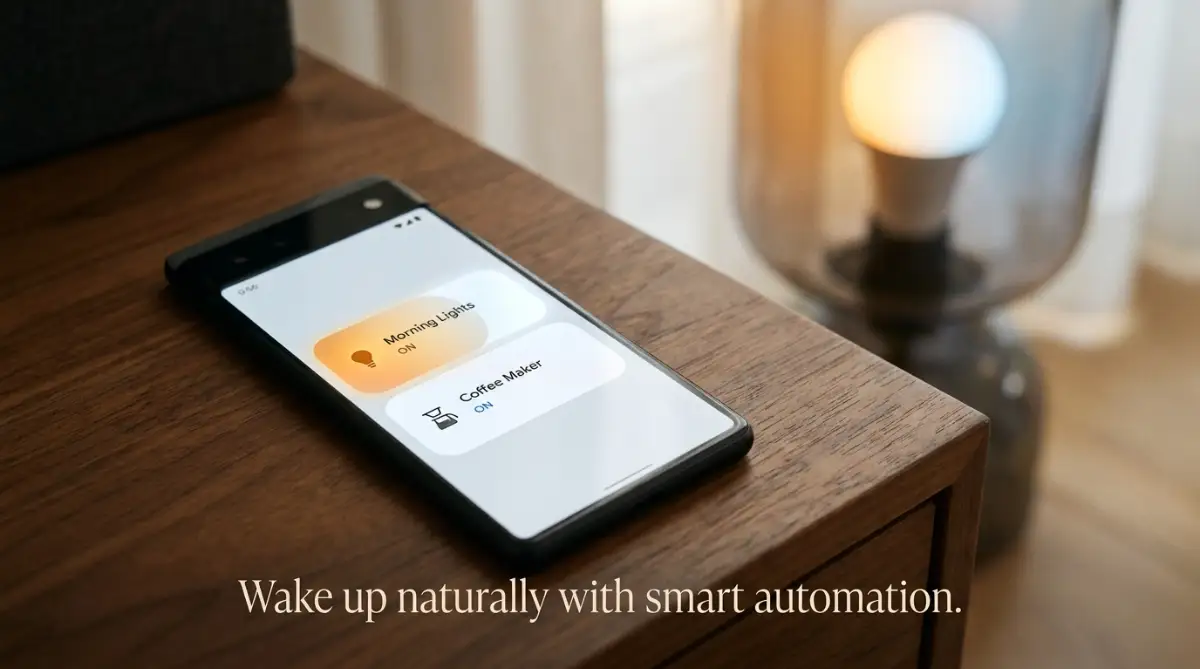
Using your smartphone app, you can program the smart plug to send power to the machine exactly five minutes before your alarm goes off.
"Want to see exactly how to wire this up safely?" Watch this quick breakdown of setting up your first smart plug in under three minutes.
When you finally open your eyes, the rich, welcoming smell of freshly brewed coffee is already floating through your house. You do not have to think, you do not have to wait, and you definitely do not have to do any extra work.
The reward for getting out of bed is already sitting there waiting for you. This tiny psychological shift completely changes how you view your mornings.
My personal mornings changed forever when I stopped treating my alarm like a punishment. Instead, I started using my smart plug to trigger positive rewards that I actually looked forward to enjoying.
Banishing the Cold with Automated Space Heaters
Another major reason we refuse to leave the bed is the uncomfortable temperature drop in the morning. Leaving a perfectly warm, cozy blanket to step onto a cold floor is a terrible feeling.
Your brain automatically associates the outside of the bed with physical discomfort. We can completely eliminate this friction point using the exact same smart plug strategy.
If you use a small, safe electric space heater in your room, you can connect it to a heavy-duty smart plug. Just make sure the smart plug is rated for the correct wattage of your specific heater.
Set the smart plug schedule to activate about fifteen minutes before you plan to wake up. By the time your gentle smart lights finish their sunrise simulation, your bedroom will be wrapped in a comfortable, warm embrace.
The contrast between the warm bed and the cold room completely disappears. You can comfortably throw off the blankets and step into a perfectly heated environment without shivering.
I actually tried setting up my heater without checking the plug's power rating once, and the plug kept safely turning itself off. Always double-check that your smart plug can handle at least 1500 watts if you plan to connect a heating device to it.
This simple temperature control trick removes the physical dread of winter mornings entirely. You are literally engineering an environment where staying in bed becomes less appealing than getting up.
Connecting the Dots: Building a Unified Routine
Now that we have the individual pieces, we need to link them together into a smooth, flowing system. The goal is to make all these devices talk to each other without you lifting a single finger.
If you use an ecosystem like Google Home, Amazon Alexa, or Apple HomeKit, you can group these actions into a single "Routine." You simply open your chosen app and create a new automation called "Good Morning."
You can set this routine to trigger automatically at a specific time, or even when you dismiss the alarm on your smartphone.
Imagine this highly practical scenario for a Monday morning. At exactly 6:30 AM, your bedside lamp begins its gentle 30-minute sunrise fade.
At 6:45 AM, the smart plug connected to your bedroom heater clicks on, slowly warming up the floor around your bed. At 6:55 AM, the smart plug in the kitchen activates, and your coffee maker starts brewing your favorite roast.
At 7:00 AM, your phone plays a soft, acoustic guitar melody instead of a blaring siren. You wake up naturally, the room is warm, and your breakfast is already half-prepared.
This is not some futuristic, highly expensive luxury lifestyle reserved for millionaires. You can easily achieve this exact setup with just one smart bulb and two smart plugs from your local hardware store.
Overcoming the Initial Setup Hesitation
A lot of people feel deeply intimidated by the idea of setting up smart home technology. They assume it requires complicated wiring, expensive hubs, or advanced technical skills.
The reality is that modern smart devices are designed specifically for absolute beginners. You literally just screw the bulb into the socket, plug the smart plug into the wall, and download a free app.
The apps usually guide you step-by-step with very clear pictures and simple instructions. It takes less than ten minutes to set up a device that will positively impact your mornings for years to come.
If you run into any connection issues, it is usually just because your home Wi-Fi router is too far away. Moving the router slightly closer or ensuring you are connecting to the 2.4GHz network usually solves the problem instantly.
Once the initial setup is done, you never have to touch the configuration settings again unless your daily schedule changes. The system simply runs silently in the background, reliably managing your home environment every single day.
By removing these daily micro-stressors, you save your mental energy for the things that actually matter. You can spend your morning reading, stretching, or simply enjoying a quiet moment before the busy day begins.
Pushing Your Morning Automation to the Next Level
Once you get a taste of how easy waking up can be, you will probably want to make the experience even better. You have already mastered the basic smart bulb and the coffee maker plug. Now, it is time to build a truly intelligent morning ecosystem that feels completely customized to your personal lifestyle.
Many people stop at just turning a light on, but the smartest homes actually adapt to how you live. You can start mixing different types of devices to create a multi-sensory wake-up experience. The goal is to gently guide your brain out of sleep using sight, sound, and even temperature.
To make this happen smoothly, you have to look beyond just the hardware and understand the software side. The apps running your smart home are incredibly powerful if you know how to use them. It actually reminds me of understanding how machine learning and deep learning operate in the background, slowly picking up on your patterns over time.
Modern automation apps allow you to set specific parameters based on the days of the week. You definitely do not want your bedroom flooding with bright daylight at 6:00 AM on a Sunday.
Customizing Routines for Weekdays vs. Weekends
One of the best advanced tips I can give you is to separate your workweek schedule from your weekend recovery days. You can easily tell your smart home app to run the sunrise simulation only from Monday to Friday. On weekends, you can let your body dictate when it wants to wake up.
However, you can still use automation on your days off without the strict alarms. For example, you can program a button on your phone that triggers a "Lazy Weekend Morning" routine. When you press it, the coffee maker starts, and the lights turn on to a very dim, warm reading level.
This level of personalization completely removes the stress of managing your home. You are designing an environment that supports your rest as much as it supports your productivity.
Adding Gentle Audio to the Visual Sunrise
If you are a deep sleeper, a slowly brightening light might not be enough to pull you out of dreamland. Adding a smart speaker to your bedroom setup creates a brilliant, foolproof backup system. But instead of using a traditional alarm sound, we are going to use natural audio cues.
You can set your smart speaker to start playing soft, ambient noise right when your smart bulb reaches fifty percent brightness. Imagine hearing the faint sound of ocean waves or morning birds chirping softly in the background.
This dual-sensory approach is incredibly effective for resetting your biological clock. According to studies on sleep hygiene from trusted health organizations, waking up to natural sounds significantly reduces morning grogginess and sleep inertia.
Your brain registers the light and the sound together, smoothly transitioning you into an alert, happy state. It feels just like waking up on a relaxing tropical vacation, right in your own bedroom.
Smart Motion Sensors for Midnight Bathroom Trips
Another incredible addition to your morning setup is a simple smart motion sensor. These tiny devices can be placed under your bed or along your hallway baseboards. We often ruin our morning energy by disrupting our sleep in the middle of the night.
If you wake up at 3:00 AM to use the restroom, turning on the regular hallway light completely shocks your system. It halts your melatonin production instantly, making it incredibly hard to fall back asleep.
By linking a motion sensor to your smart lighting, you can fix this permanently. You just set a rule in your app: if motion is detected between midnight and 5:00 AM, only turn the hallway smart bulb on at five percent brightness.
You get just enough warm light to see where you are walking, without tricking your brain into thinking the sun is up. This keeps your sleep cycle perfectly intact so your actual automated morning routine works flawlessly a few hours later.
Tying Automation to Real-Time Weather
The smartest morning routines actually react to the physical world outside your window. Many smart home platforms allow you to trigger actions based on local weather conditions.
If it is raining and completely dark outside during winter, your app can automatically increase the brightness of your wake-up lights. If it is a sunny summer morning, the app can keep the smart lights dimmer, saving electricity.
This might sound a bit complicated, but checking out smart ways to review the latest gadgets and everyday apps will show you how simple modern interfaces have become. The apps practically do all the heavy lifting for you.
When your indoor environment matches your exact physical needs, getting out of bed feels completely natural and effortless.

The Hidden Pitfalls That Can Ruin Your Automated Setup
While setting up a smart home is generally easy, a poorly planned system can actually cause more stress than a normal alarm clock. I have personally made a lot of silly mistakes that left me waking up in the dark, completely confused and frustrated.
You want your morning routine to be completely invisible and reliable. When things break down, it immediately spikes your anxiety and ruins your trust in the system. Let's look at the most common disasters people face and how you can easily avoid them.
The Danger of Cheap, Unbranded Smart Plugs
This is perhaps the biggest mistake beginners make when entering the world of home automation. It is very tempting to buy a generic, heavily discounted smart plug from a random online seller. However, this is a massive safety hazard, especially if you are automating heating devices.
Space heaters and coffee makers draw a massive amount of electrical current. Cheap smart plugs often use low-quality internal relays that cannot handle that kind of power. They can easily overheat, melt, or cause a dangerous electrical fire while you are sleeping.
Always stick to reputable, well-known smart home brands that have proper safety certifications. You can always check official safety guidelines from organizations like the Electrical Safety Foundation to understand proper wattage limits. Paying a few extra dollars for a certified plug is the cheapest insurance policy you will ever buy.
It is exactly like building a solid financial foundation; taking shortcuts early on usually leads to bigger problems. If you want to protect your home, treat your device purchases like building a reliable cash buffer while managing your expenses. Always invest in quality over quick savings.
Programming the "Sunrise" Way Too Fast
Another terrible mistake is setting the smart bulb transition time too short. If your light goes from completely dark to one hundred percent brightness in just two minutes, it completely defeats the purpose.
Your brain needs time to slowly adjust to the changing environment. A sudden flash of bright light acts exactly like an aggressive noise alarm, causing your heart rate to spike in panic.
Always stretch your sunrise simulation to a minimum of twenty to thirty minutes. This slow, barely noticeable transition is the secret ingredient to waking up feeling truly rested and peaceful.
Relying Entirely on Wi-Fi Without a Backup
Smart devices are amazing, but they are completely dependent on your home internet connection. Sometimes, internet service providers have unexpected outages in the middle of the night. If your router restarts or loses connection, your smart routines might simply fail to trigger.
Waking up two hours late because your smart bulb lost its Wi-Fi signal is an incredibly stressful way to start the day. You never want to put yourself in a situation where a minor technical glitch ruins your professional commitments.
Always keep a simple, traditional alarm clock running on your phone as a final fail-safe. Just set it for ten minutes after your smart routine is supposed to finish, so you are covered just in case the internet goes down.
When you plan out your automated life, you have to think like an architect planning a solid structure. Approaching this with a clear backup plan is very much like reading the first-time homebuyer's handbook to master property purchases. You always want to cross-check your systems and prepare for the unexpected.
Giving Your Devices Confusing Names
When you first set up your devices in the app, it usually assigns them a generic name like "Smart Socket 3" or "Bulb 1". If you leave these default names, you will quickly forget which device controls what.
Imagine trying to turn on your coffee maker using a voice command, but you accidentally turn on the bedroom heater instead. It causes unnecessary frustration and makes the system feel broken when it is actually just a naming error.
Take two minutes to rename every device clearly based on its location and function. Names like "Kitchen Coffee Plug" or "Master Bedroom Lamp" make it incredibly easy to manage your home naturally.
Building a Habit That Actually Lasts
Technology can only take you so far; the rest comes down to your personal commitment. A smart plug can brew your coffee perfectly, but you still have to choose to get out of bed and drink it.
Your automated home is simply a tool designed to remove friction from your morning choices. You have to train your brain to follow the cues that your smart home is giving you.
If you continue to stay up until 3:00 AM scrolling on your phone, no amount of smart lighting will make waking up at 7:00 AM feel good. Automation is meant to support healthy sleep habits, not replace them.
Think of this process like launching a brand new project in your life. You need a solid strategy and a little bit of patience to see the real benefits. It is highly similar to the steps required to properly launch a business project without failing. You have to respect the process and give yourself time to adapt to the new system.
Over the first week, you might still feel the urge to hit snooze out of pure habit. But by the second week, your body will naturally anticipate the gentle light and the smell of coffee.
Adjusting Your Setup as Life Changes
Your daily schedule is not static, and your smart home routines shouldn't be either. As the seasons change or your work hours shift, take a few minutes to tweak your automation settings.
During the dark, freezing months of winter, you might need your bedroom heater to stay on a little bit longer. During the bright summer months, you might not need the sunrise simulation at all because natural sunlight is already pouring in.
Keeping your routines updated ensures that the system always serves your current lifestyle. It is a very small maintenance task that guarantees long-term success and daily comfort.
If you are curious about how energy efficient these setups actually are, you will be pleasantly surprised. According to energy conservation reports on smart technology, using programmable schedules actually reduces your overall power consumption. You only use electricity exactly when you need it, which is great for both your wallet and the environment.
Your Blueprint for Stress-Free Mornings Moving Forward
You now have all the tools, strategies, and secrets to completely transform the way you start your day. Waking up no longer has to be a chaotic, miserable experience filled with cold floors and blaring noises.
By strategically placing a few affordable smart plugs and a smart bulb in your bedroom, you are taking back control of your time. You are replacing morning dread with natural light, comfortable heat, and the beautiful smell of fresh coffee.
Start small this week by automating just one single thing, like your bedside lamp. Experience how a gentle sunrise changes your mood, and then slowly add the coffee maker or the heater later on.
My mornings completely changed the day I stopped fighting my alarm clock and started letting my environment wake me up naturally. I genuinely hope you take this simple weekend project and use it to bring absolute peace to your daily routine.
Common Questions About Morning Automation
Do I need a smart home hub to use programmable plugs?
No, you generally do not need an expensive extra hub for basic automation anymore. Most modern smart bulbs and smart plugs connect directly to your home Wi-Fi and can be controlled entirely through a free app on your phone.
Can I still use physical light switches with smart bulbs?
It is highly recommended that you leave your physical wall switch completely turned on at all times. If you manually flip the wall switch off, the smart bulb loses power and your automated morning routine will not run.
Will my coffee maker work with a smart plug?
Your coffee maker will work perfectly as long as it has a physical analog switch or dial that stays in the "ON" position. Digital coffee makers that require you to push an electronic button every single time will unfortunately not work with a smart plug.
Is it completely safe to leave a smart plug running?
Yes, high-quality smart plugs from reputable brands are designed to run continuously and safely. Just make sure you always check the maximum wattage rating of the plug before connecting high-power devices like electric space heaters.
What happens to my morning routine if the power goes out?
If your house loses power, the smart devices will naturally turn off. Once the power returns, most smart plugs and bulbs will automatically reconnect to your Wi-Fi and resume their normal programmed schedules without any extra effort from you.
Disclaimer: The information provided in this article is for educational and informational purposes only. Always read the manufacturer’s instructions and safety warnings before operating any electrical devices or smart plugs. If you are unsure about the electrical capacity of your home outlets, please consult a licensed electrician. We are not responsible for any damage or injury resulting from the improper use of electrical appliances.