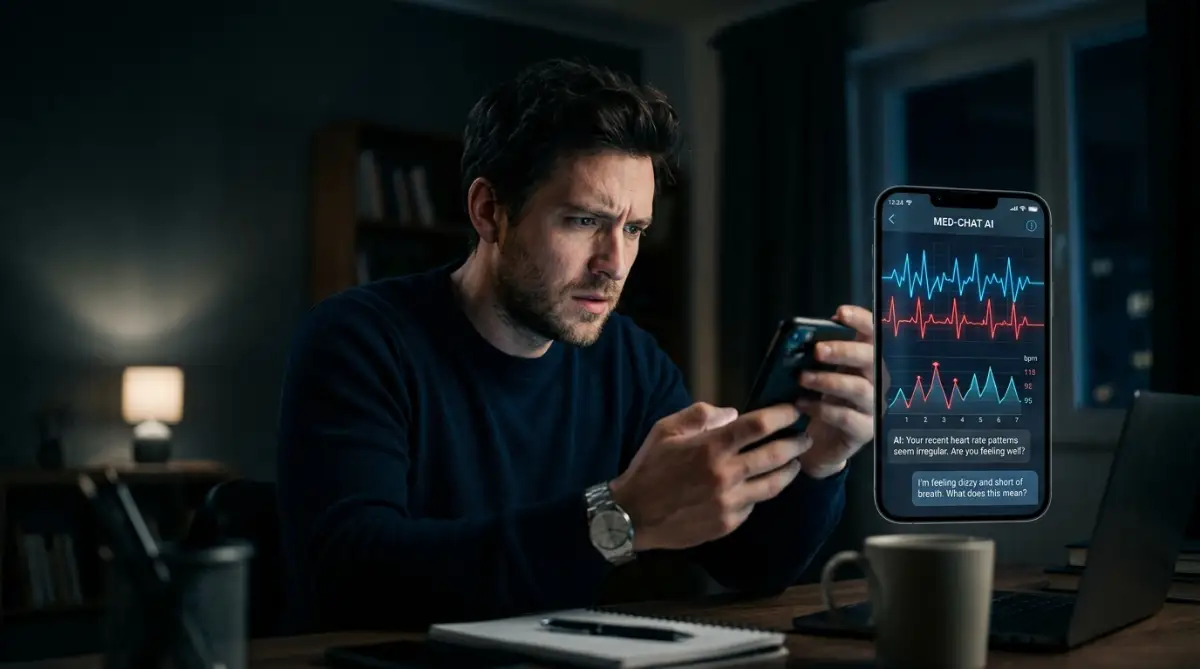
The Late-Night Web Search That Almost Broke My Mind
My heart was pounding, my palms were sweaty, and I was absolutely convinced I had a rare tropical disease. Why? Because a chatbot told me so. If you have ever ruined a perfectly good Tuesday night by typing your symptoms into a search bar, trust me, I get it. Let's talk about how to escape this digital panic room and get your peace of mind back.
Instead of reassurance, the screen lit up with terrifying medical terms and rare diseases. I instantly felt a cold sweat forming on my forehead as the anxiety took over. My mind raced toward the worst possible outcomes in mere seconds.
I was completely convinced my life was changing forever, all because a machine guessed my symptoms. That single night triggered weeks of sleeplessness, unnecessary panic, and a deep fear of my own body.
The reality is, I am not alone in this digital nightmare. Every single day, thousands of people open a chat window and casually type in their physical complaints. We treat these highly advanced text generators as if they have medical degrees and decades of clinical experience.
This creates a brand-new form of modern suffering that quietly destroys our daily lives. You might start your morning feeling perfectly fine, notice a small bump on your arm, and ask an app what it could be. Within five minutes, your entire day is ruined by the fear of a severe illness.
Quick Takeaways for Your Peace of Mind:
-
Stop letting text generators guess your health issues; they totally lack human context.
-
Wait exactly 24 hours before searching for any new, non-emergency body ache online.
-
Write your worries down on real paper instead of typing them into a digital search box.
-
Keep your phone away from your bed to easily block late-night panic scrolling.
Understanding the Illusion of the Digital Doctor
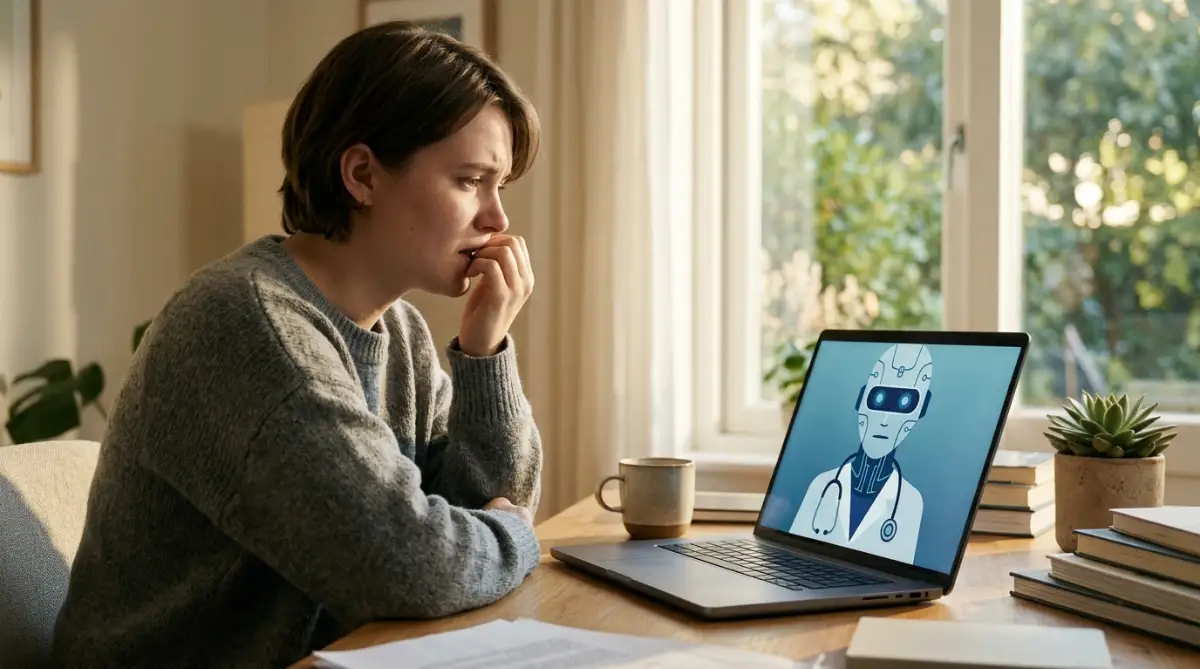
We need to understand exactly why these tools are so incredibly convincing. When an app talks to you in perfect, confident English, your brain automatically assumes it knows the truth. It feels like you are chatting with a caring expert who has read every medical textbook in the world.
But behind that smooth interface, there is absolutely no understanding of human biology. These programs are simply predicting the next most logical word based on massive amounts of internet data. They do not know you, they cannot see you, and they cannot run a simple blood test.
Think about it like this: I once had a sharp pain in my side, and the AI confidently suggested appendicitis. My real doctor took one look, asked if I had moved any heavy furniture recently, and diagnosed a pulled muscle from lifting a couch. The chatbot completely missed the human context that a real expert caught in exactly five seconds.
The Danger of Confident Guessing
When a human doctor does not know something, they will honestly tell you they need to run more tests. An artificial intelligence program, on the other hand, is designed to always give you an answer. It will confidently combine mismatched symptoms and present a terrifying conclusion as an absolute fact.
This leads to what experts call "hallucinations," where the machine literally makes things up to sound helpful. If you have a simple headache from drinking too little water, the app might connect it to a rare brain condition it read about in a medical journal. You read this confident guess, and your nervous system instantly goes into fight-or-flight mode.
How To Break The Cycle Of Digital Health Anxiety
If you are tired of letting a screen dictate your mental well-being, it is time to take back control. We are going to explore some highly practical, science-backed changes you can apply to your life right now. These steps are designed to build a healthy wall between your physical symptoms and your digital habits.
Step 1: Recognize the Anxiety Trigger Loop
The very first thing you must do is observe your own behavior without judging yourself. Notice the exact moment when you feel the urge to grab your phone and type in a symptom. Is it when you are sitting alone at night, or perhaps when you feel stressed about work?
Usually, the urge to search for medical answers comes from a deep need for control. We feel uncertain about our bodies, and we want a quick fix to make that uncertainty go away. Once you recognize that your search is actually driven by emotional fear rather than physical logic, you gain the power to stop it.
Next time you feel a strange ache, simply say out loud, "I am feeling anxious, and I want a quick answer." This simple verbal acknowledgment creates a tiny pause in your brain. That small pause is often enough to stop you from opening the browser and falling down the rabbit hole.
Step 2: Implement the 24-Hour Observation Rule
This is one of the most effective strategies you can use to protect your mental health. When you notice a new, non-emergency symptom, make a strict promise to wait 24 hours before researching it. You are not ignoring your health; you are simply giving your body time to naturally heal.
A bold truth we often forget is that the human body is incredibly noisy. Muscles twitch, stomachs rumble, and heads ache simply because we slept in a weird position or skipped a meal. If you try to analyze every single noise your body makes, you will spend your entire life in a state of panic.
During this 24-hour waiting period, try to focus heavily on basic self-care. Drink plenty of water, get a good night of sleep, and gently stretch your body. You will be amazed to discover that over 90% of these weird symptoms completely disappear by the next morning.

The 24-Hour Reality Check Table:
The Pro Tip Box
Here is a small trick I personally use when the urge to search becomes overwhelming. I take out a physical piece of paper and write down the symptom, the date, and the time. By putting the worry on paper, I give my brain permission to stop holding onto the fear, knowing I can discuss it with a real doctor later if it persists.
Why Human Context Matters More Than Data
Let me share a simple analogy to show why machines fail at personal healthcare. Imagine asking a friend to bake a cake, but they have only ever read recipes and have never actually stepped inside a kitchen. They might know the exact chemical reaction of baking powder, but they will still burn the cake.
Medical care requires a deeply human element called clinical context. A real doctor looks at your skin color, listens to the tone of your voice, and watches how you walk into the room. They ask about your family history, your recent stress levels, and what you ate for dinner last night.
An app cannot see the dark circles under your eyes or hear the slight tremor in your breathing. It treats a 20-year-old athlete and a 70-year-old smoker with the exact same mathematical logic. This severe lack of context is exactly why self-diagnosing online is a guaranteed recipe for disaster.
Watch This Expert Breakdown
If you want to deeply understand why our brains panic when we read medical information online, you absolutely must watch this short video.
Step 3: Create Digital Friction on Your Devices
Willpower alone is rarely enough to break a deeply ingrained digital habit. You need to make it physically difficult for yourself to access these tools when you feel vulnerable. Creating "friction" means adding extra steps between you and the bad habit.
Start by logging out of all AI applications on your smartphone every single evening. If you use a specific app, move it off your home screen and bury it inside a folder named "Do Not Search." When you have to actively search for the app and type in your password, you give your logical brain time to catch up and stop you.
You can also use website blockers on your phone to restrict access to symptom-checking sites after 8 PM. Late-night searches are historically the most dangerous because our minds are naturally more anxious when we are tired. By locking these tools away at night, you protect your most vulnerable hours.
Myth vs. Reality of AI Health Advice
The Hidden Financial Cost of Health Panic
Beyond the heavy mental burden, there is a very real financial cost to this modern habit. When people convince themselves they have a serious illness, they naturally want to prove it. This leads to booking expensive, unnecessary appointments with multiple specialists.
People end up demanding completely useless MRI scans, blood panels, and X-rays to calm their artificially created fears. Doctors are increasingly frustrated because they spend half their day explaining why a chatbot is wrong. You are literally wasting your hard-earned money to disprove a rumor started by a computer program.
Instead of spending money on unnecessary tests, invest that time and energy into actual healthy habits. Go for a long walk in nature, buy high-quality fresh food, or join a local fitness class. True health is built through daily positive actions, not by constantly searching for imaginary diseases.
Step 4: Rebuilding Trust in Your Own Body
The most tragic result of cyberchondria is that it destroys the trust you have in yourself. You stop believing in your body's amazing natural ability to heal and recover from minor issues. Every small sneeze or random muscle pain is suddenly viewed as a dangerous enemy attacking you.
We have to actively rebuild this broken relationship with our physical selves. Start by practicing simple mindfulness exercises where you just sit and feel your breathing without analyzing it. Learn to accept that being a living, breathing human means experiencing random discomfort from time to time.
When you feel a strange sensation, try greeting it with curiosity instead of instant terror. Say to yourself, "That is an interesting feeling in my shoulder," and then immediately go back to whatever you were doing. The less attention you give to harmless symptoms, the faster they tend to fade away.
When You Actually Need to Seek Help
Of course, there is a clear difference between normal anxiety and ignoring a true medical emergency. You should absolutely seek real help if you experience severe, sudden pain, difficulty breathing, or symptoms that rapidly get worse. The key is to take those symptoms straight to a human professional, not a text box.
If you have an ongoing health issue, build a strong relationship with a local primary care physician. Having a doctor who actually knows your name and your history is incredibly comforting. When you have a trusted professional on your side, the urge to ask a machine completely disappears.
You deserve to live a life totally free from the shadows of imaginary illnesses. By stepping away from the digital doctor, you open the door to real peace of mind. Your health is way too important to be left to a random guessing game played by a machine.
Mastering Your Mind: Advanced Strategies to Beat Cyberchondria
If you want to break free from the constant fear of digital self-diagnosis, basic willpower is rarely enough. You need specific, proven strategies to retrain how your brain reacts to physical discomfort. We are going to look at some highly effective ways to build mental resilience against these intelligent algorithms.
The first step is shifting your mindset from reaction to observation. When you feel a sudden sharp pain in your stomach, your immediate emotional response is pure panic. You immediately want to open a web browser and find out if you are in danger.
Instead of reacting, try treating your body like an interesting science experiment. Observe the pain objectively and ask yourself if you just ate something strange for lunch. This simple logical step forces your brain to step away from emotional terror and focus on practical reality.
Building the Digital Wall of Delay
One of the most powerful secrets to maintaining long-term mental peace is mastering the art of the delay. Whenever you feel an overwhelming urge to consult a chatbot about your health, set a physical timer for two hours. Tell yourself that you are allowed to search the internet, but only after the timer goes off.
During this waiting period, step away from all your electronic devices completely. You can go for a quick walk outside, organize your desk, or drink a large glass of cold water. By the time that two-hour alarm rings, the intense emotional need to search usually drops by a massive margin.
This happens because the initial spike of adrenaline in your nervous system has finally settled down. You will suddenly realize that your minor headache was just a sign of dehydration, not a rare neurological condition. If you want to dive deeper into how these algorithms manipulate our fears, learning how machine learning actually works can help demystify the magic behind the screen.
Creating a Physical Symptom Journal
Keeping a physical notebook is an incredibly effective tool for long-term health management. When you experience a strange symptom, do not type it into your phone or a digital notepad. Grab a real pen and paper, and write down exactly what you are feeling and the current time.
Writing by hand forces your brain to slow down and process the information much more logically. You can bring this physical journal to your next doctor appointment to give them a highly accurate timeline of your issues. This completely removes the dangerous habit of relying on a computer program to interpret your physical feelings.

Interestingly, this method also helps you spot completely harmless patterns in your daily life. You might notice that your chest feels tight every single Tuesday, which just happens to be the day you have a stressful team meeting at work. Recognizing these patterns brings massive relief because you finally see the clear connection between stress and physical pain.
Replacing Bad Habits with Better Technology Use
We cannot simply delete technology from our lives, but we can completely change how we interact with it. Instead of using apps to guess your diseases, start using technology to promote actual wellness. You can focus on smart ways to review the latest gadgets that track your steps, monitor your sleep, or guide you through daily meditation.
When you use technology to support healthy habits, your brain stops associating your phone with medical panic. You start seeing your devices as tools for positive growth rather than terrifying warning systems. According to research on health anxiety triggers from Harvard Medical School, limiting exposure to unverified medical information is the fastest way to lower daily stress levels.
By actively choosing to consume positive content, you slowly starve your health anxiety. You stop feeding the algorithm your fears, which means your social media feeds will eventually stop showing you scary medical articles.
Image Here-----------------
The Dangerous Traps That Keep You Sick and Stressed
Even when you actively try to stop searching your symptoms, it is incredibly easy to fall back into old habits. We often make specific mistakes that quietly pull us right back into the terrible cycle of cyberchondria. Understanding these hidden traps is the only way to avoid them when you feel vulnerable.
Falling for the Confirmation Bias Trap
This is perhaps the most destructive mistake you can make when dealing with your health online. Confirmation bias happens when you already have a scary disease in mind, and you search the internet to prove yourself right. If your shoulder hurts, you might specifically type "shoulder pain heart attack signs" into the chatbot.
Because of the way these text generators are programmed, the machine will directly answer the prompt you gave it. It will happily list all the connections between shoulder pain and heart failure, completely ignoring the fact that you slept on a bad mattress last night. You read the result, and you instantly feel validated in your absolute worst fears.
You end up completely ignoring the highly likely, boring explanations because the dramatic answer feels more urgent. This creates a terrible feedback loop where the machine simply echoes your own panic right back at you. If you are curious about why software behaves this way, exploring the truth about AI code generators and software risks reveals how often these systems prioritize direct responses over factual accuracy.
Wasting Money on Imaginary Problems
Health anxiety is not just a mental burden; it is a massive financial drain that most people never talk about. When a chatbot convinces you that your slight dizziness is a severe brain issue, you naturally want medical proof. This leads to booking multiple expensive specialist appointments and demanding totally unnecessary tests.
People frequently spend thousands of dollars on private MRI scans, advanced blood panels, and X-rays just to calm their nerves. The tragic part is that a clean test result only brings temporary relief. A few days later, your brain will convince you that the machine missed something, and you will start looking for another doctor to test you again.
This endless cycle of seeking reassurance completely destroys your personal finances over time. Instead of throwing your hard-earned money at imaginary diseases, you should be focusing on building a solid cash buffer for real emergencies. Real financial security brings an incredible amount of mental peace, which naturally lowers your daily stress and physical symptoms.
Arguing with Qualified Medical Professionals
The absolute worst outcome of digital self-diagnosis is losing trust in your actual human doctor. You might walk into a clinic with a printed stack of conversations you had with a virtual assistant. When the doctor tells you that you simply have a common cold, you instantly feel angry and dismissed.
You start believing that an algorithm with zero medical training knows more about your body than a person who spent ten years in medical school. This completely breaks the essential bond of trust between a patient and a healthcare provider. According to the American Medical Association's guidelines on patient care, mutual trust is the absolute foundation of successful medical treatment.
When you refuse to listen to professional advice, you miss out on simple, effective treatments. You spend weeks suffering from worry when a real doctor could have solved your problem in a single ten-minute conversation.
Your Action Plan for a Calmer, Healthier Tomorrow
Breaking the toxic habit of digital self-diagnosis is an incredible journey toward taking your life back. You are making a powerful choice to stop letting a glowing screen dictate how you feel about your own body. Every single time you choose to ignore the urge to search your symptoms, you are actively rewiring your brain for peace.
Remember that the human body is perfectly designed to heal from most minor issues without any intervention at all. A random muscle twitch or a mild headache is just your body's way of telling you to drink some water and get some rest. You do not need a massive database to tell you how to take care of basic human needs.
If you are feeling stressed about your physical health, redirect that energy into building something positive for your future. Whether it is improving your career or launching your dream business without failing, keeping your mind busy is the best defense against anxiety. Focus on the things you can actually control, and let go of the imaginary scenarios created by machines.
Questions People Usually Ask About Digital Self-Diagnosis
Why do AI chatbots always suggest the worst possible diseases?
Chatbots are trained on millions of internet articles, and dramatic medical cases get the most attention online. When you type in a symptom, the program easily pulls up rare diseases because they are heavily discussed in medical journals and news stories. The machine does not know how common or rare a disease actually is in the real world.
Can I trust a symptom checker for minor health issues?
It is always safer to trust your own common sense and a real human doctor over any digital symptom checker. Even for minor issues, algorithms frequently misinterpret your text and give completely wrong advice. If a minor issue bothers you for more than a few days, calling a local clinic is the best choice you can make.
How do I stop the urge to search my symptoms late at night?
The best strategy is to create extreme physical distance between you and your digital devices before bed. Leave your phone or tablet in a completely different room to charge overnight. When the urge hits, the effort required to get out of bed and walk to the other room usually gives your logical brain time to stop the panic.
Are human doctors really better than advanced algorithms?
Yes, human doctors are vastly superior because they can physically examine you and understand your personal context. A doctor notices your skin color, your breathing patterns, and your emotional state during a conversation. An algorithm only reads the text you type, making it completely blind to your actual physical reality.
What is cyberchondria and how do I know if I have it?
Cyberchondria is a severe form of anxiety caused by constantly researching medical symptoms online. If searching for health information makes your heart race, ruins your daily mood, and forces you to seek constant reassurance, you might be struggling with it. The clearest sign is feeling significantly worse and more scared after looking up your symptoms than you did before.
A Personal Note Before You Go
I know exactly how terrifying it feels to be trapped in that endless cycle of late-night symptom searching. My life completely changed for the better the day I finally deleted those apps and decided to trust my own body again. I promise you, the immense relief and mental quiet you will feel on the other side is worth every single ounce of effort.
Medical Disclaimer: The information provided in this article is for educational and informational purposes only and does not constitute medical advice. Always consult a qualified healthcare professional or a licensed medical doctor for proper diagnosis and treatment of any health concerns. Never disregard professional medical advice or delay in seeking it because of something you have read online.