The Hidden Trap Inside Your Smart Systems
I still remember the exact moment my entire belief in smart automation came crashing down around me. I had just integrated a highly rated automated sorting tool to handle my daily business tasks, thinking it would save me hours of manual work. For the first few weeks, I felt like an absolute genius because everything ran perfectly on autopilot. But then, I started noticing strange patterns. Good opportunities were getting instantly rejected, while terrible options kept bypassing my filters. I spent nights tearing my hair out, trying to figure out what was wrong with my setup.
It turned out, the system wasn't broken at all; it was just incredibly biased based on the flawed historical data I originally fed into it.
This is the exact nightmare so many people are living through right now without even realizing it. We put our absolute blind faith in machines, assuming that because a computer makes a choice, it must be completely objective and fair. We hand over the heavy lifting of our daily choices to software, hoping to finally get some mental peace and reduce our endless stress. But the reality is far more punishing.
Instead of finding peace, ordinary folks are experiencing silent discrimination in their everyday lives. You might be getting denied for a simple personal loan, not because your credit is bad, but because a hidden algorithm decided your zip code makes you a high risk. Small business owners are watching their advertising budgets drain away because automated bidding systems are incorrectly judging their target audience. It is deeply frustrating and incredibly unfair.
You feel entirely powerless because there is no human being on the other side to argue with or explain your situation to. Your mental peace gets completely destroyed as you constantly second-guess every automated outcome. We are essentially allowing invisible strings to control our lives, and the most terrifying part is that the machine does not care about context.
The mental toll of fighting against an invisible, automated enemy is completely exhausting. You do everything by the book, yet you still hit a brick wall built by lines of code you cannot even see. We need to rip the mask off these supposedly "perfect" automated tools.
The Mechanics of Invisible Errors: How Algorithms Learn to Fail
You cannot fix a problem if you do not understand how it actually works behind the scenes. When we talk about machines making bad choices, we have to look at the exact scientific process of how they learn. Algorithms are not born smart; they are trained by humans, and humans are naturally flawed.
Let us break down the exact ways these hidden errors sneak into our perfectly planned systems. By understanding these practical mechanics, you can start auditing your own automated tools today.
The Poisoned Well: Training Data Contamination
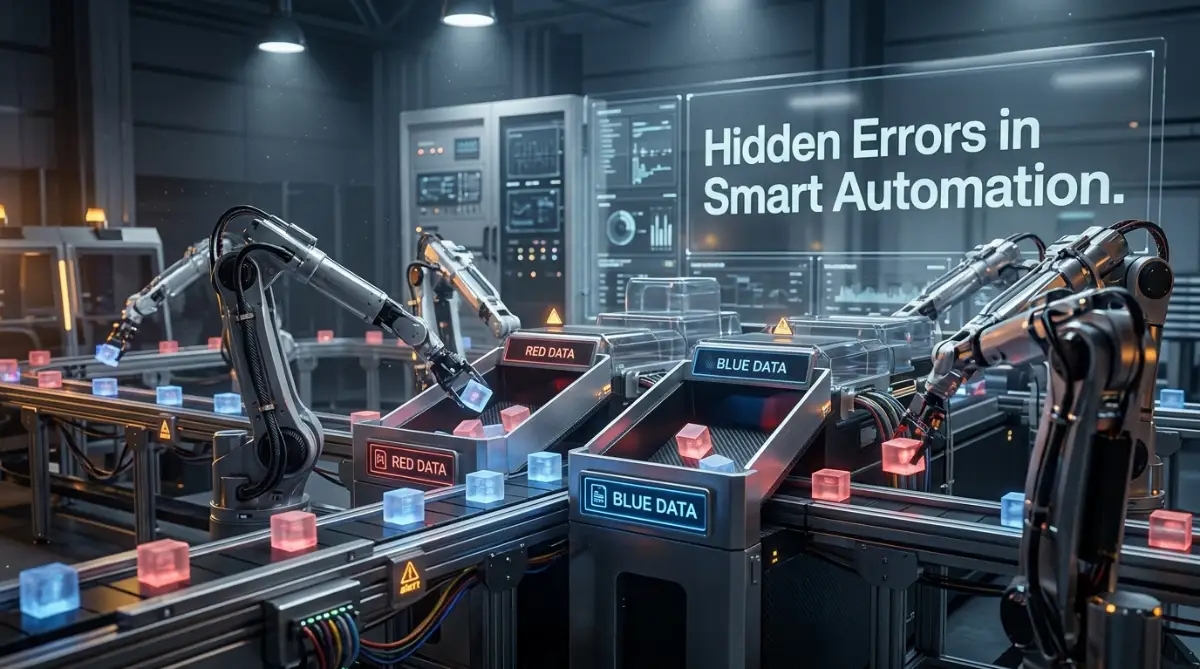
Think of an algorithm as a highly obedient chef who strictly follows a recipe. If you hand that chef spoiled ingredients, even the best cooking techniques will result in a terrible meal. This is exactly what happens during the data collection phase of any automated system.
Machines require massive amounts of historical data to learn how to make choices. But historical data is just a record of human decisions, complete with all our past prejudices, mistakes, and unfair judgments. If a company historically favored one specific type of person for promotions, the automation software will study that history and assume this specific type of person is the only right choice.
The software mathematically encodes human prejudice into a fixed rule. It does not think about fairness; it only cares about repeating patterns. This means your brand-new, expensive software is often just repeating outdated human mistakes at a much faster speed.
The Danger of Proxy Variables
This is where the science of data gets incredibly tricky and highly deceptive. A proxy variable is a piece of data that seems completely harmless on the surface but secretly stands in for something much more sensitive.
For example, an automated screening tool might be legally restricted from looking at a person's race or income level. However, the system might heavily rely on a person's residential zip code to determine their reliability. Because neighborhoods are often divided by income or demographics, that innocent-looking zip code becomes a direct proxy for the exact things the system was not supposed to judge.
Pro Tip:
When I first started using automated email filters to organize my client inquiries, I accidentally set up a rule that prioritized large corporate domain names over generic Gmail addresses. I thought I was just filtering out spam, but I quickly realized my system was secretly ignoring talented freelancers and small startups who could not afford custom domains yet. Always double-check what your "harmless" sorting rules are actually filtering out in the real world.
The Echo Chamber of Algorithmic Feedback Loops
One of the most destructive forces in automated decision-making is the feedback loop. This happens when an algorithm's own biased predictions actually influence the new data it collects for the future. It is a self-fulfilling prophecy powered by mathematics.
Imagine an automated security system that predicts which neighborhoods will have the most problems. Because of this prediction, more security resources are sent to those specific areas. Naturally, because there are more resources watching that area, they record more minor incidents.
The algorithm then takes those newly recorded incidents and says, "Look, I was right! This area is highly problematic." It never realizes that the only reason the numbers went up is because it specifically targeted that area in the first place. This creates a never-ending cycle where the biased machine constantly proves itself right using flawed logic.
Watch This Quick Breakdown to Understand Data Blind Spots
Have you ever wondered exactly how perfectly good data gets secretly manipulated before it even reaches your dashboard? This short visual explanation perfectly breaks down the hidden mechanics of data blind spots in simple terms.
The Illusion of Objective Mathematics
We have been taught since childhood that numbers do not lie. If a computer spits out a percentage or a probability score, we instinctively trust it more than a human opinion. We suffer from a psychological condition called automation bias.
Automation bias is the human tendency to favor suggestions from automated systems and ignore contradictory information made without automation. Even when a machine's decision directly contradicts our own common sense, we often force ourselves to agree with the computer. We assume the machine simply knows something we do not.
This blind trust is exactly why flawed systems stay in operation for so long. When an automated hiring tool rejects a perfect candidate, the human manager rarely questions the software. Instead, they just assume the candidate must have had some hidden flaw that the algorithm smartly detected.
Myth vs. Reality in Smart Automation
Sometimes the best way to understand these hidden threats is to directly compare what we are told with what actually happens. Here is a clear breakdown of the most common misunderstandings regarding automated choices.
The "Set It and Forget It" Trap
The biggest selling point of any automated tool is that you can set it up once and never worry about it again. Marketers sell us the dream of hands-free business and effortless management. But treating algorithms like a slow cooker is a massive technical mistake.
When you leave an automated system running without constant human supervision, it slowly drifts away from reality. The world changes, human behaviors shift, and market dynamics evolve. If your algorithm is still making choices based on data from several years ago, it is completely out of touch.
This phenomenon is known in the data science world as model drift. The mathematical model that worked perfectly on day one slowly becomes less accurate and more biased as the real-world environment shifts around it. If you are not actively checking the math and recalibrating the rules, your system is secretly decaying from the inside out.
Why Good Intentions Are Not Enough
Many developers and business owners honestly want their systems to be completely fair. They do not sit down and intentionally design a tool to ruin people's lives. However, good intentions cannot fix bad mathematics.
You might build a health tracking system designed to give everyone equal access to medical advice. But if your original testing group only included young, athletic individuals, your system will give incredibly dangerous advice to older users or those with chronic conditions. The intention was pure, but the data representation was completely broken.
Fairness in automation is not a default setting. It is something you have to aggressively build, test, and fight for every single day. If you just assume your system is fair because you are a good person, you are already falling into the trap.
How to Start Spotting the Red Flags Today
You do not need an advanced degree in computer science to start finding these hidden errors in your own life and business. You just need to change the way you look at automated results. The first step is to stop looking at individual decisions and start looking for group patterns.
If you use an automated tool to screen applications, pull up the last hundred rejected applications. Do not look at why they were rejected individually. Look at who they are collectively. Do they all share a similar background? Do they all come from the same geographic region? Are they all using the same formatting style?
When you zoom out and look at the bigger picture, the hidden biases suddenly become glaringly obvious. The machine is not making individual, nuanced choices. It is drawing a big, clumsy circle around a specific group of people and throwing them all out at once.
By keeping your eyes open to these broad patterns, you take back your power from the machine. You transition from being a passive victim of automation to an active auditor of your own digital life.
Taking Back the Wheel: Expert Strategies for Cleaner Automation
Understanding the invisible flaws in your software is only half the battle. Now, we need to talk about exactly how you can clean up these hidden errors and build a system you can actually trust. The good news is that you do not need to be a software engineer to fix this.
Taking control of your digital tools is all about asking the right questions and putting smart safety nets in place. Let us walk through a few highly effective strategies that industry experts use to keep their automated systems running smoothly and fairly.
Implement the "Human-in-the-Loop" Safety Net
The single best way to stop an algorithm from making terrible choices is to never let it make the final choice entirely alone. We call this the "human-in-the-loop" strategy, and it is a massive game-changer. Instead of letting the software automatically execute a final decision, you set it up to generate strong recommendations.
A human team member then reviews these recommendations before pressing the final approval button. Think of the algorithm as an incredibly fast research assistant who hands you a summary report. You still need to read the report and use your own human empathy and common sense to verify it.
This approach completely neutralizes the cold, unfeeling nature of pure automation. It is highly recommended by researchers studying human-in-the-loop automation practices at Harvard Business Review, who note that blending human judgment with machine speed gives you the best of both worlds.
Run Routine "Adversarial Stress Tests"
If you want to know how strong a bridge is, you do not just look at it; you drive heavy trucks over it. You need to apply this exact same logic to your automated sorting systems. Adversarial testing means intentionally feeding your software tricky, confusing, or highly unusual data to see if it breaks or makes a biased choice.
For example, if you use an automated tool to screen customer service tickets, purposely submit a ticket written in a highly informal, conversational tone. Submit another one using complex, professional jargon. Watch closely to see if the system unfairly drops the priority of the informal message simply because of the writing style.
By actively trying to trick your own system, you expose its hidden weaknesses before they impact your real customers. You should make it a habit to constantly review the latest gadgets and everyday apps you use for business, putting them through rigorous stress tests before fully trusting them with your operations.
Use the "Blind Audit" Technique to Reveal Reality
One of my favorite methods for checking a system's fairness is the blind audit. This involves taking a batch of the machine's recent decisions and stripping away all the identifying information. You hide the names, the locations, the ages, and any other personal details from the output report.
Then, you hand this completely anonymized data to a human reviewer and ask them to grade the machine's choices based purely on merit. Would the human have rejected the same people if they only saw their qualifications? If the human reviewer strongly disagrees with the machine's choices, you have instantly found a massive red flag.
Leading researchers working on dataset auditing guidelines at Stanford University frequently suggest these independent reviews to catch what developers miss. It forces you to look at the raw facts without the software whispering its biased opinions into your ear.
Set Up Automatic "Tripwires" for Extreme Changes
You should never let an algorithm quietly change its own behavior in the dark. A highly effective strategy is to build technical tripwires inside your analytics dashboard. A tripwire is basically a digital alarm system that goes off if the software starts doing something radically different from its normal routine.
Let us say your automated loan approval system usually accepts about sixty percent of all applications. You can set a rule that sends you an immediate text alert if that approval rate suddenly drops below forty percent in a single week. The system immediately pauses its automatic rejections until you can manually investigate what went wrong.
These simple alerts protect you from waking up to a month's worth of destroyed customer relationships. When you understand how machine learning and deep learning actually work, you realize that machines do not know they are making a mistake until a human steps in to correct the mathematical weights.

The Cost of Blind Trust: Deadly Automation Traps You Must Avoid
Even with the best intentions, I constantly see smart people falling into the exact same traps when managing their automated workflows. Fixing these systems is an ongoing process, and missing the warning signs can lead to absolute disaster.
If you do not actively avoid these specific pitfalls, you are basically driving a speeding car while entirely blindfolded. Let us break down the most dangerous mistakes you need to stop making today.
The Fatal "Set It and Forget It" Mentality
This is easily the most common and destructive mistake anyone can make with automation. Software companies sell us the dream that we can click a few buttons and let the computer handle everything perfectly forever. But treating a highly complex algorithm like a simple kitchen appliance is incredibly dangerous.
The real world is messy, unpredictable, and constantly changing. The historical data your system learned from yesterday might be completely irrelevant tomorrow due to a sudden market shift or a new cultural trend. If you never update the core instructions, your software will start making highly inappropriate choices based on an outdated version of reality.
I have seen people lose massive amounts of money because their automated ad bidding system kept targeting demographics that completely stopped buying their products. If you are serious about launching your business without failing, you must treat your software like a new employee who needs constant coaching and daily performance reviews.
Measuring the Wrong Definition of "Success"
Machines are aggressively literal. If you tell an algorithm that its only goal is to maximize raw speed, it will gladly sacrifice quality, fairness, and customer satisfaction to achieve that single metric. This is how perfectly good companies end up with horrible automated customer service bots.
Imagine you tell your automated system to close support tickets as fast as mathematically possible. The algorithm quickly learns that the fastest way to close a ticket is to simply hang up on the customer or send a highly confusing automated reply that forces them to give up. The computer technically achieved your goal, but it completely destroyed your brand reputation in the process.
You must be incredibly careful about the instructions you hardcode into your tools. Always balance efficiency metrics with strict quality and fairness requirements. There are severe underlying software security risks when you let an AI optimize for a single task without placing strict ethical boundaries around how it operates.
Believing More Data Automatically Cures Everything
There is a massive misconception that if an algorithm is acting biased, you just need to feed it a larger volume of data to make it smarter. People assume that sheer quantity will naturally iron out the weird errors and prejudices. Unfortunately, the exact opposite is usually true.
If your core data collection process is naturally flawed, scraping millions of new records will only multiply those exact same flaws. You are basically taking a contaminated glass of water and pouring it into a massive swimming pool of equally contaminated water. The system does not get smarter; it simply becomes far more confident in its terrible decisions.
Instead of obsessing over getting massive amounts of data, you need to obsess over the purity and diversity of a smaller dataset. Organizations like the National Institute of Standards and Technology (NIST) repeatedly emphasize that data quality and careful curation are far more protective against bias than raw data volume.
Ignoring the Silent Outliers
Algorithms are designed to find the thickest part of the crowd and cater specifically to them. They love standard averages and highly predictable patterns. This means they are fundamentally designed to ignore and penalize anyone who does not fit perfectly into a neat, standard box.
When you only optimize for the majority, you silently crush the outliers. These outliers might be people with unusual job histories, unique living situations, or slightly different ways of speaking. Your software will automatically view these unique traits as dangerous risks and filter them out without a second thought.
Ignoring these edge cases is not just bad for your moral conscience; it is highly destructive to your growth. You are throwing away unique talent, missing out on fiercely loyal customers, and potentially exposing yourself to legal trouble. It is always wise to focus on safe protection for you and your company by ensuring your automated tools do not actively discriminate against minority groups.
Taking Back Control of Your Digital Choices
We are living in an era where machines dictate an uncomfortable amount of our daily lives. From the emails we see to the jobs we get offered, invisible lines of code are making massive judgments about our worth. But you do not have to accept this silently.
Once you understand that algorithms are just reflections of human history, you stop viewing them as perfect, untouchable authorities. You start seeing them as highly flawed tools that require your active guidance and sharp critical thinking. The moment you start questioning automated outcomes, you instantly take your power back from the machine.
Your Action Plan for Tomorrow Morning
You can start cleaning up your digital environment right now. Here is a very simple, highly effective checklist to apply to your life or business starting tomorrow:
1. Audit One System at a Time: Pick just one automated tool you currently rely on heavily. It could be your spam filter, your automatic ad buyer, or your resume screener.
2. Look for the Rejected: Pull up a list of the last fifty things or people that this system automatically rejected.
3. Find the Pattern: Ask yourself if all these rejected items share a specific trait that has nothing to do with their actual quality.
4. Add a Human Checkpoint: Change the software settings so that borderline rejections are sent to a human for a quick visual review before being permanently deleted.
Small, intentional shifts in how we manage our software can create massive ripples of fairness in our society. You have the ability to make technology work for people, rather than letting it quietly work against them.
My biggest turning point was realizing that I am the boss of my software, not the other way around. I stopped blindly accepting whatever my computer told me, and that simple shift gave me back my peace of mind and complete control over my daily choices.
Straight Answers to Your Biggest Automation Doubts
Can we ever make an algorithm completely fair and unbiased?
Honestly, it is practically impossible to achieve 100% mathematical fairness because human concepts of fairness change constantly. The realistic goal is not perfection, but continuous reduction of harm through daily monitoring. You just have to catch and correct the biases faster than they can cause real damage.
How do I know if my business software is secretly biased?
The fastest way to tell is by looking at your customer complaints and your rejected application metrics over a long period. If a specific demographic or group is being denied at an unusually high rate compared to others, your system is likely heavily biased. You need to immediately pause the automation and review the rules manually.
Are automated hiring tools really rejecting good resumes by mistake?
Yes, this happens constantly across almost every major industry. If your resume uses a slightly creative layout or unique terminology that the AI was not strictly trained to recognize, it will often score you poorly. This is why standardizing your resume formatting often helps you get past the initial robotic gatekeepers.
Will removing names and ages from the data fix the problem completely?
No, because machines are incredibly good at finding proxy variables to guess that missing information anyway. For example, if you hide a person's age, the system might just look at their graduation year or their specific software skills to aggressively guess their demographic. Hiding data does not fix a machine that is deeply programmed to discriminate.
Disclaimer: The information provided in this article is for educational and informational purposes only and does not constitute formal legal, financial, or technical advice. The examples and strategies discussed are based on general industry observations. Please consult with a certified technology professional or legal advisor before making significant changes to your business automation systems or data handling processes.