The Unseen Cost of "Free" Digital Art
I remember the exact moment I realized my massive mistake with digital tools. I was working on a personal project and desperately needed a quick, stunning graphic to make my work stand out. Instead of paying for a premium service or hiring an artist, I jumped on a random free artificial intelligence image generator I found through a quick web search.
The tool gave me a beautiful picture in seconds, and I felt incredibly smart for saving money. It seemed like pure magic at the time. I downloaded the file, uploaded it to my project, and completely forgot about the website.
But a few weeks later, I noticed strange login attempts on my primary email address and my internet browser started acting incredibly slow. I began receiving highly targeted spam emails that perfectly matched the exact prompts I had typed into that free art generator. I had unknowingly traded my personal data and device security for a single free picture.
We often think we are just typing a funny sentence and getting a cool picture in return. But behind the scenes, our digital safety is slowly fading away without us even noticing. It is incredibly frustrating when you finally realize your personal information is floating around the internet just because you wanted to create a quick graphic.
People lose their peace of mind constantly worrying about identity theft and hacked accounts. You sit there wondering if that random application you downloaded is secretly reading your private messages or tracking your daily habits. It creates a heavy, invisible burden on your mental health when you realize nothing on the internet is truly without a price tag.
How Innocent Prompts Turn Into Privacy Nightmares
When we use digital platforms, we usually ignore the complex mechanics running in the background. Generating high-quality art requires massive computing power and incredibly expensive computer servers. If a company is not charging you a single penny for this expensive service, you have to ask yourself how they are making money.
The harsh reality is that they are monetizing you. Your personal information, your internet browsing habits, and your location data become their most valuable products. They track exactly what you type, how long you stay on their page, and what other tabs you have open in your browser.
This tracking goes far beyond simple advertising. Many of these free platforms use advanced browser fingerprinting to create a detailed profile of who you are. Even if you do not create an account, they can identify your device and follow your digital footprint across the web.
The Illusion of Safe Browsing
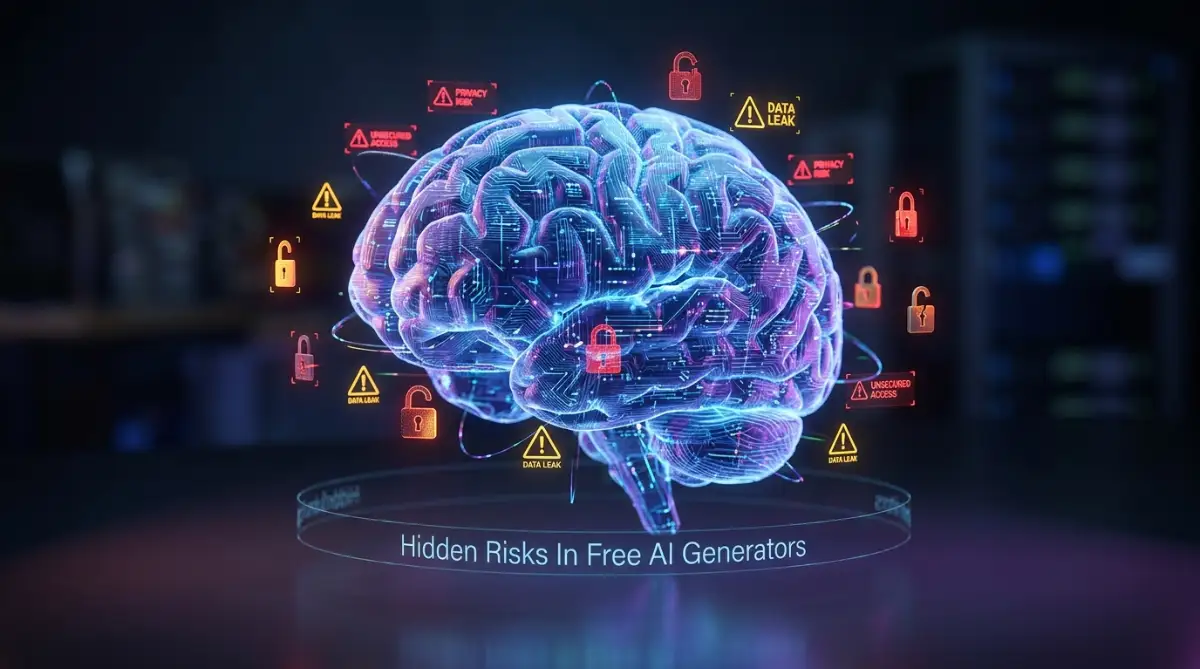
You might assume that as long as you do not enter your credit card details, you are perfectly safe. This is a very common misconception that traps thousands of regular internet users every single day. A website does not need your credit card to cause severe damage to your digital life.
When you agree to their terms of service, you often give them permission to harvest your IP address and sell it to third-party data brokers. These brokers then build a massive database of your online behavior. Suddenly, you start seeing weird advertisements on your social media feeds that feel completely invasive.
If you want to see exactly how these free platforms quietly harvest your data behind the scenes, this short breakdown will completely change how you view free apps.
The Danger of Uploading Your Face
The trend of creating magical avatars from your own selfies took the internet by storm recently. Millions of people eagerly uploaded their personal photos to unknown servers just to see themselves as an astronaut or a fantasy character. This is arguably one of the most dangerous things you can do on an unverified platform.
Facial recognition data is incredibly sensitive. Once you upload your clear, high-resolution photos to a random server, you instantly lose control over how those images are used. The platform's hidden policies often state that they hold a perpetual license to use your face for their own research or promotional needs.
I once thought using a fake email was enough to stay completely safe while testing these apps. But I soon realized these free tools track your specific device ID and internet protocol address, making a dummy email completely useless for protecting your real identity.
Myth vs. Reality: The Truth About AI Platforms
We need to clear up some major misunderstandings about how these creative algorithms actually work. The internet is full of bad advice, and following the wrong advice can land you in serious trouble. Let us break down the facts.
Myth: The images you generate are entirely yours to own and sell.
Reality: Most free platforms retain full copyright ownership of everything you create on their site. If you try to use that generated logo for your real business, you could face massive legal penalties.
Myth: Incognito mode stops these generators from tracking your personal data.
Reality: Private browsing only clears your history locally on your computer. The server hosting the artificial intelligence still sees your exact location, your network provider, and your hardware specifications.
Myth: If the website has a padlock icon in the search bar, the free tool is perfectly safe.
Reality: The padlock simply means the connection is encrypted. It does not mean the company running the website is honest, ethical, or safe from malicious software.
The Hidden Malware Disguised as Creative Tools
Not all threats are just about data collection. Some free generators are intentionally built as traps to install harmful software on your computer or mobile phone. Cybercriminals know that people are desperate to try new technology without paying for premium subscriptions.
They build websites that look identical to legitimate tech companies. When you click the button to download your beautiful new creation, you might actually be downloading a hidden script. This script quietly runs in the background of your operating system.
These silent invaders can log your keystrokes, steal your saved passwords, or even use your computer's processing power to mine cryptocurrency for the hackers. Your computer will start overheating, your battery will drain rapidly, and you will have no idea why it is happening.
The Fake App Store Epidemic
Mobile users face a completely different set of dangerous obstacles. If you search any major app store for free generation tools, you will find hundreds of colorful options. Many of these are low-quality applications designed purely to harvest permissions from your phone.
When you install them, they immediately ask for access to your camera roll, your microphone, and your contact list. Why would a simple picture generator need to read your text messages? It does not.
They use these permissions to scrape your entire digital life. Once they have your contacts, they might send spam links to your friends and family from your phone number. It is a highly coordinated attack hidden behind a friendly, colorful app icon.
The Copyright Trap Waiting to Spring
Beyond privacy and viruses, there is a massive legal threat that most casual users never think about. Artificial intelligence learns how to draw by analyzing billions of existing images on the internet. Many of these original images belong to hard-working human artists who never gave permission for their work to be used.
When you use a free generator, the system often directly copies elements from copyrighted artwork. You might generate a cute character for your personal blog, completely unaware that it looks exactly like a protected brand asset.
Real-Life Consequences for Regular People
Imagine you are a small business owner trying to save money on marketing. You use a free tool to design your new company logo. You print business cards, create a storefront sign, and launch your brand.
Six months down the line, you receive a heavy legal letter from a major corporation. The free tool you used had scraped a protected logo, and now you are being sued for intellectual property theft. You have to destroy all your marketing materials and rebrand completely, costing you thousands of dollars.
This is not a rare scenario. It happens frequently because free platforms offer absolutely no legal protection or commercial usage rights to their users. If you get sued, you are entirely on your own.
Smarter Ways to Protect Your Digital Identity
You do not have to completely abandon modern technology to stay safe. You simply need to change your approach and become a much smarter digital consumer. Awareness is always your strongest line of defense against online threats.
Whenever you find a new tool, completely ignore the shiny marketing text on their homepage. Scroll directly to the bottom of the website and look for their privacy policy. If the policy is extremely complicated or impossible to find, close the tab immediately.
Honest companies make their data policies simple and easy to read. They tell you exactly what they collect and how they plan to use it. If a company hides this information, they are hiding it for a reason.
Securing Your Personal Devices
Before experimenting with new web tools, you should take proactive steps to secure your hardware. Use a reputable virtual private network to mask your true location and IP address. This stops random websites from building an accurate profile of your physical movements.
Never download the final image files as complex file types or executable programs. A normal picture should always be a simple image format like a JPEG or PNG. If a website asks you to download a strange file extension to view your art, it is almost certainly a malicious attack.
Always generate images inside a secure, updated web browser. Modern browsers have built-in defenses that block suspicious background scripts. Keeping your software updated is the easiest way to block silent threats before they can take root in your system.
Smart Strategies to Defend Your Digital Life
Protecting yourself online does not mean you have to stop being creative completely. You just need to build a strong digital shield around your personal life before you start experimenting. I want to share some advanced, battle-tested methods that professional digital artists use to stay completely safe.
These are not your basic, everyday security tips that you hear a million times. These are proactive strategies to ensure your personal information stays firmly in your own hands. You have to treat your digital workspace just like your physical home by keeping the front door firmly locked.
The Power of Digital Quarantine
Imagine bringing a wild, muddy dog into your pristine living room. You would probably want to keep it in a small, easily washable area first, right? You need to apply this exact same logic to untested creative software.
Security experts often call this concept "sandboxing", and it is incredibly effective for everyday internet users. Instead of running a free generator on your main browser loaded with all your saved passwords, you create a completely isolated environment. You can use a secondary browser that you only open for risky creative tasks.
Better yet, you can use specialized virtual machines if you want absolute peace of mind. A virtual machine is basically a fake computer running entirely inside your real computer. If a malicious script tries to steal your data, it only gets the empty, fake information inside the virtual box.
Creating Your Disposable Digital Identity
Whenever a random website demands an email address to give you a free picture, never hand over your real one. Your primary email is connected to your bank, your social media, and your private conversations. You must protect it at all costs.
Start using temporary, masked email services that automatically forward messages to your real inbox without exposing your true address. If the platform suddenly starts sending massive amounts of spam, you simply delete the masked email. The spam stops instantly, and your main inbox remains completely clean.
This same rule applies to your phone numbers and payment methods. Even if a site offers a free trial but asks for a card on file, never use your actual debit card. Use digital privacy cards that generate temporary numbers with a hard limit of zero dollars.
Bring the Creative Power Into Your Own Home
The absolute safest way to generate digital art is to remove the internet from the equation entirely. You can actually download the open-source code for these art systems directly onto your own computer. This means the entire generation process happens offline, sitting safely on your personal hard drive.
When you run everything locally, nobody can track your prompts or secretly save the images you create. You own the complete process from start to finish. If you want to dive deeper into this concept, you should definitely learn more about understanding how machine learning and deep learning actually work behind the scenes.
Running heavy software locally does require a reasonably powerful graphics card inside your computer. However, it is a one-time hardware investment that permanently protects your privacy. You will never have to worry about a shady company selling your search history again.
The "Fine Print" Survival Trick
We all hate reading those massive walls of legal text when signing up for a new website. The companies know you will just blindly click the "I Agree" button to get your free picture faster. But skipping this step is exactly how they legally steal your rights.
Here is a brilliant workaround that I use every single day. I copy the entire terms of service text and paste it into a safe, trusted text-summarizer. I simply ask the system to highlight any weird data collection rules or hidden copyright claims.
It takes exactly ten seconds and gives me a massive advantage over predatory companies. If you want to know exactly what international laws govern these creations, you can check the international intellectual property standards to see your actual rights. Knowing the rules makes you completely immune to their legal traps.
The Fatal Errors That Will Cost You Dearly
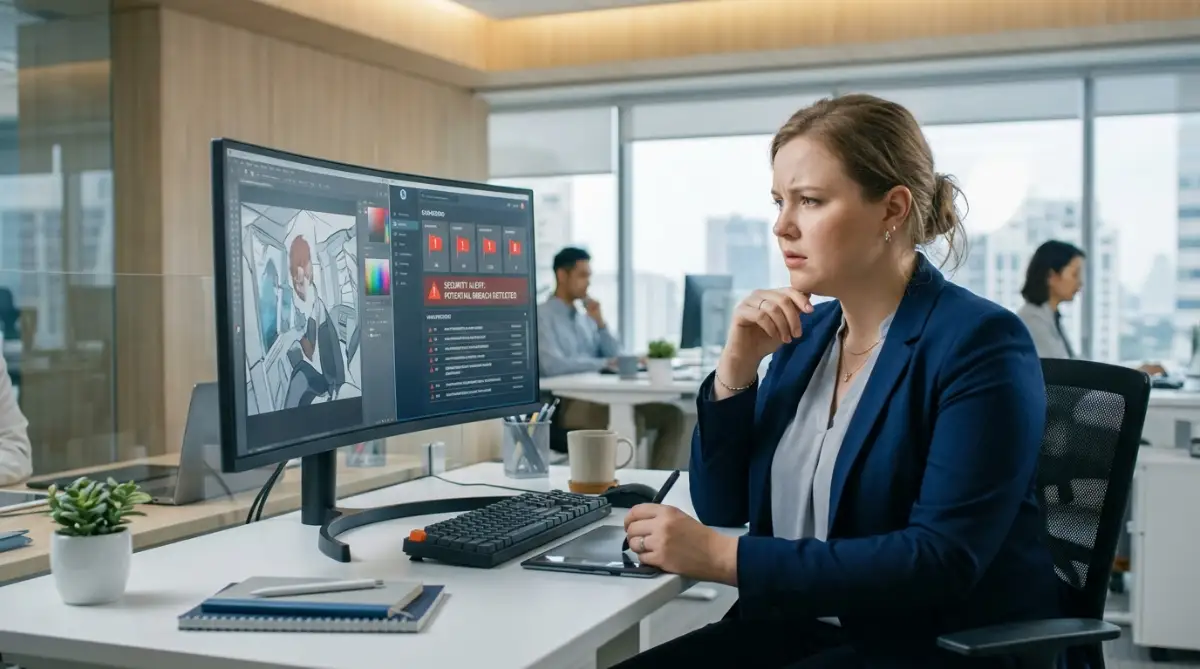
I have watched so many smart people ruin their digital lives simply because they rushed into a new tech trend blindly. They make honest mistakes that unfortunately carry incredibly harsh penalties. Let us break down the worst traps you need to actively avoid.
When you know exactly where the hidden dangers are buried, you can walk right past them without worry. These are not minor annoyances; these are major threats to your livelihood and mental peace.
The "Top Search Result" Illusion
Most people assume that if a website appears at the very top of a search engine, it must be completely safe and trusted. This is a terrifyingly dangerous mindset to have today. Cybercriminals regularly buy ad space at the top of search results specifically to trap unsuspecting users.
They build exact visual copies of famous, legitimate art platforms. You click the top link, thinking you are on the right website, and try to make your free picture. Instead, you end up handing your data straight to hackers.
You must always double-check the actual website address in your browser bar before typing anything. If you are unsure about the legitimacy of a site, reading official guidelines on defending against malvertising can save you from a massive headache. A single wrong click can compromise your entire home network.
Mixing Business With Unverified Tools
One of the most heartbreaking scenarios involves passionate people trying to start a new company on a tight budget. I recently heard a story about a woman who spent all her savings launching a beautiful online boutique. She used a random free art platform to create her main brand logo to save some cash.
Months later, her business was finally making money, and she was thrilled. Then, she received a massive lawsuit from a huge graphic design agency because her "free" logo contained exact pieces of their protected artwork. She lost her domain name, her branding, and most of her savings paying legal fees.
If you are building something real, you need professional security. You should really understand the basics of safe protection for you and your company before publishing anything online. Never trust a free, unverified machine to build the foundation of your business dream.
The Mobile App Permission Trap
We have become completely numb to those little pop-up screens asking for permissions on our phones. When you download a shiny new art application, you probably just tap "Allow" repeatedly to get it working. This specific habit is exactly how your private life gets exposed to strangers.
Think logically about what the app is actually doing on your screen. A tool designed to generate a picture from text has absolutely zero reason to read your personal text messages. It does not need to know your exact GPS location either.
If an app demands these invasive permissions to function, delete it immediately. It is not an art tool; it is a data-mining operation wearing a friendly disguise. Mobile privacy is fragile, and these companies exploit our impatience.
Trusting the "Deleted Forever" Promise
Many of these platforms proudly claim that they delete all your uploaded photos within twenty-four hours. They write this in bold letters right on their homepage to make you feel comfortable. Unfortunately, this marketing promise is very rarely the full truth.
While they might delete the raw image file, they already extracted the mathematical data of your face. They keep this biometric data permanently stored on hidden servers to train their future systems. Once your facial mapping is in their system, you can never truly get it back.
This is especially dangerous if you are experimenting with automated coding or complex workflows alongside these images. If you are curious about deeper tech vulnerabilities, you should read about the truth about software security risks hidden inside these tools. The internet never truly forgets anything you give it voluntarily.
Building a Worry-Free Creative Future
You do not have to live in fear of modern creative tools. When you understand the hidden mechanics behind these free platforms, you gain immense power over your own digital footprint. You can still enjoy creating stunning artwork, but now you can do it without looking over your shoulder.
It simply requires a small shift in how you interact with the internet every day. Treat your personal data like physical cash in your wallet. If a stranger on the street offered you a pretty picture in exchange for looking through your wallet, you would run away instantly.
Apply that exact same logic to every single website you visit. Build your security habits slowly, use isolated environments, and always read the fine print before clicking agree. You deserve to create and explore without becoming a product for someone else's profit margin.
Your Action Plan for Tomorrow
Take a few minutes tomorrow morning to audit the random creative apps sitting unused on your phone or computer. Delete anything that you haven't used in a month, especially those free photo editors that asked for too many permissions. Then, invest time in finding one or two highly trusted, transparent platforms that respect your rights.
If you want to move forward professionally, consider following a guide to generating realistic images with AI using only safe, industry-standard methods. Setting up a solid foundation now prevents disastrous legal and privacy issues later on. Doing things the right way always pays off when you are trying to succeed online.
There is an entire world of safe, ethical creation waiting for you once you step away from the shady free options. It might require a tiny bit more effort or a small monthly fee, but the peace of mind is incredibly valuable. Your privacy is worth infinitely more than a quick, free graphic.
I completely changed my entire daily workflow after my own massive data scare a few years ago. My biggest realization was that protecting my digital identity actually made me a much more confident and successful creator. I hope my struggles help you skip the pain and jump straight into creating safely today.
Questions We Always Get Asked About Digital Safety
Can these free websites still track me if I use a fake name?
Yes, they absolutely can track you regardless of the name you type. These platforms use advanced techniques to see how browser fingerprinting tracks your moves based on your device hardware, internet speed, and screen resolution. Your fake name does nothing to hide your actual physical device.
Are mobile applications safer than using regular websites?
Mobile apps are often much more dangerous than regular websites. An app can quietly request deep access to your phone's camera, microphone, and contact list in the background. A web browser at least limits how much hardware access a website can get.
What happens if I accidentally use a copyrighted logo generated by a free tool?
If the original owner finds out, you could be hit with a severe cease-and-desist letter or a heavy lawsuit. Ignorance is never a valid legal defense in intellectual property cases. If you want to build a safe brand, check out resources on launching your business without failing to learn how to source safe materials.
How do I remove my data if I already used a shady free platform?
You need to go directly to their privacy policy page and look for a "Data Deletion Request" email address. Send them a formal email demanding they wipe your information under consumer protection laws. Unfortunately, if it is a rogue company operating overseas, they might simply ignore your request completely.
Disclaimer: The information provided in this article is for educational and informational purposes only and does not constitute legal, financial, or professional cybersecurity advice. Always conduct your own research and consult with certified IT security professionals or legal counsel before making decisions regarding your digital privacy and business operatio