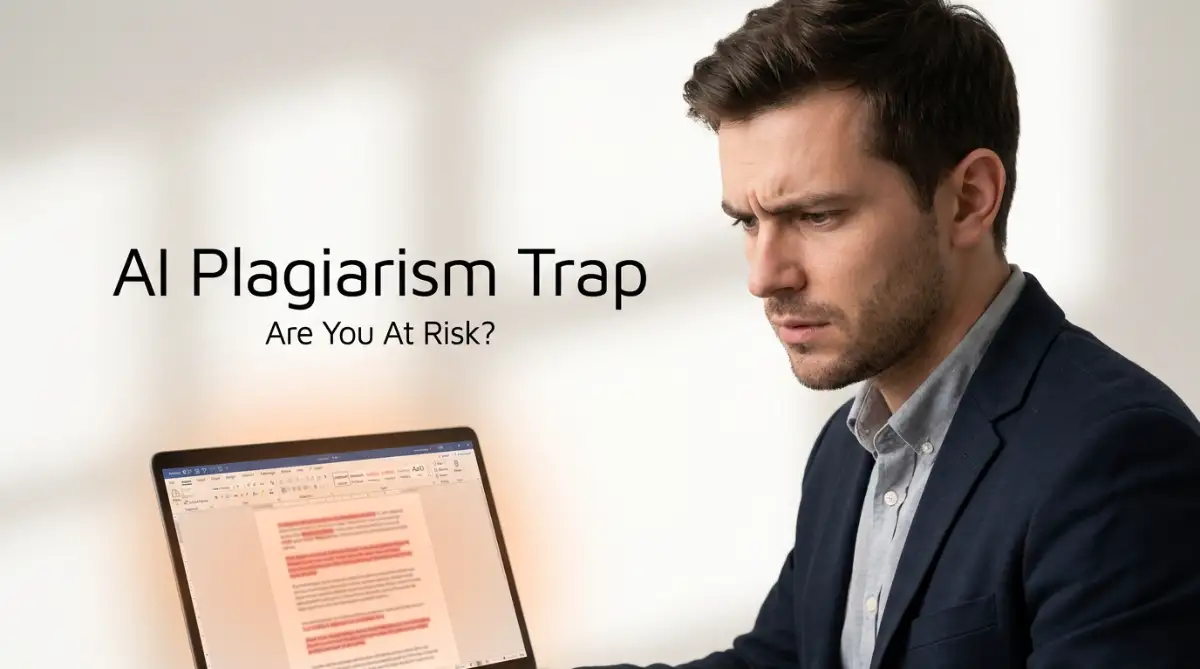
The Silent Nightmare Every Blogger Faces Today
I still remember the sudden drop in my stomach when I got that terrifying email from a loyal reader. I had just published what I thought was an absolute masterpiece with the help of a popular smart writing tool. My confidence was completely shattered when they pointed out that my exact introduction was already published on another popular website months ago.
I felt completely embarrassed, like an absolute fraud, and honestly a bit scared for my website's reputation. I had no intention of stealing anyone's work, but the tool I trusted to save me time had silently copied someone else's hard work without warning me. That single heart-stopping moment completely changed how I look at these machine-generated drafts today.
This is a quiet struggle happening behind the screens of thousands of honest creators right now. You sit down to work, hoping to speed up your process, but instead, you end up tangled in a web of borrowed phrases and stolen ideas. The mental peace of hitting "Publish" is completely gone.
Every time you generate a new paragraph, a tiny voice in your head asks if you are accidentally breaking the rules. Will Google penalize your site? Will your AdSense account get a permanent ban for scraped content?
These fears are not just random thoughts; they are real threats that can destroy years of hard work overnight. People are losing sleep, desperately running their text through multiple scanners, and still feeling completely unsure if their work is truly their own. The stress of accidental duplication is draining the joy out of writing.
Instead of focusing on sharing great ideas, creators are now stuck playing detective with their own words. It is incredibly frustrating when you want to build a genuine connection with your audience, but a machine inserts cold, copied text into your personal stories. We need a way to fix this before it ruins the trust we have built with our readers.
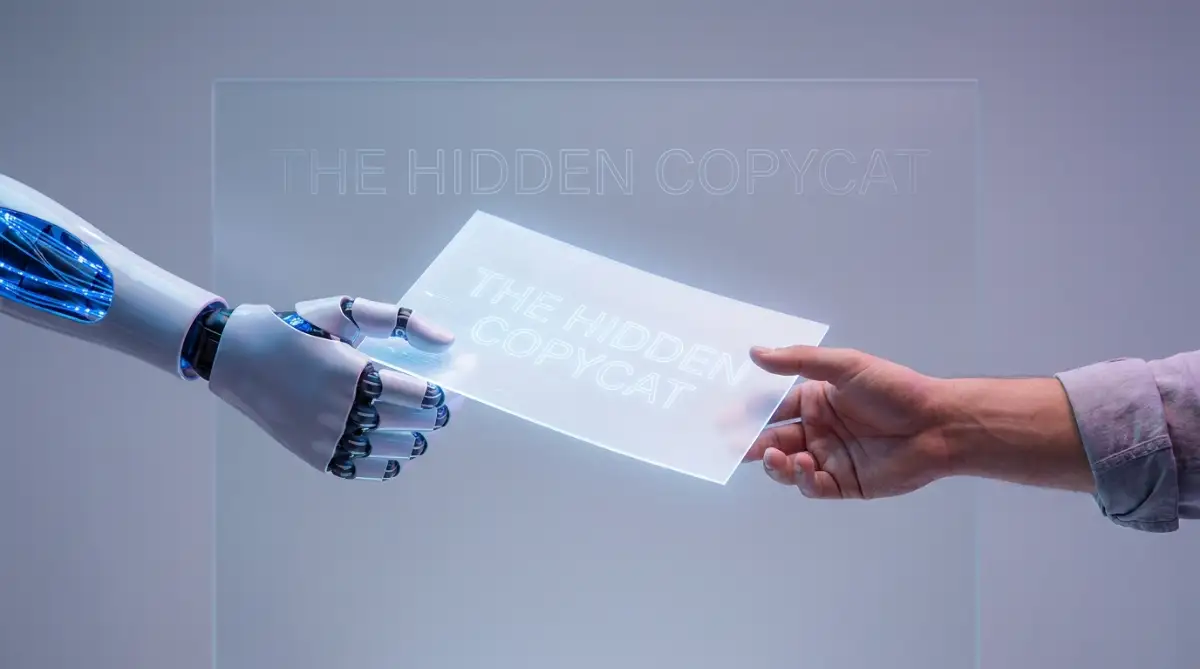
How Your Smart Assistant Actually Borrows Ideas
To fix this massive problem, we first need to understand how these text generators actually think. They do not have personal experiences, they do not feel emotions, and they certainly do not create completely fresh ideas out of thin air. Instead, they act like a massive prediction engine.
Imagine a giant digital library where a machine has read billions of pages of human writing. When you type in a prompt, the machine starts predicting the most likely words to follow, based on exactly what it has already read. The danger happens when it remembers a specific sentence structure entirely too well.
If a specific expert wrote a highly popular article on a topic, the machine might just spit out their exact phrasing. It does not know it is plagiarizing; it just thinks those are the absolute best words to satisfy your request. This is exactly how you end up with borrowed ideas hidden deeply inside your final draft.
Myth vs Reality: The Originality Illusion
Let us clear up some massive misunderstandings right now.
Myth: If I tell the software to "be highly original and unique," it will not copy anyone.
Reality: The machine does not understand originality. Adding that phrase simply forces it to use rarer synonyms, but the core structure and copied concepts often remain identical to the source material.
Myth: Premium writing software has built-in safety filters to stop stolen text.
Reality: Most popular text generators prioritize speed and readability over strict plagiarism checks. They will gladly give you duplicated text if it fits your prompt perfectly.
Step 1: The "Frankenstein" Method for Drafting
If you want to keep your AdSense account completely safe and rank high on Google, you must change how you request text. Never ask an automated tool to write an entire article from start to finish with a single prompt. This is the fastest way to generate highly copied, generic content.
Instead, you need to use the "Frankenstein" approach. Break your article down into extremely small, specific sections. Ask the tool to help you brainstorm an outline first, and then manually pick the ideas that make the most sense for your audience.
When you do need help writing a section, feed the software your own original notes first. Tell it to organize your specific bullet points rather than asking it to invent the information. By forcing the tool to work only with your provided data, you drastically cut down the chances of it scraping random text from the internet.
Stop Using Generic Prompts
The more generic your instructions are, the more generic and potentially copied your output will be. If you type "Write an introduction about healthy eating," the software will pull the same tired sentences it gives to thousands of other users.
Instead, try being hyper-specific: "Write an introduction about healthy eating based on my personal experience of struggling to find time for breakfast as a busy mother of two. Use a friendly tone and mention my love for quick oatmeal."
Do you see the difference? The second prompt forces the machine to frame the text around a unique, personal scenario that does not exist anywhere else online.
A Quick Resource for Better Prompts
If you are struggling to understand how to talk to these tools properly, there is a fantastic visual breakdown that might help you completely change your approach.
Watch this breakdown on how to craft unique instructions that prevent duplicated text.
Step 2: The Deep Audit and Rewrite Process
Even with the best prompts in the world, you cannot trust the final output right away. You must treat every generated sentence as a rough, messy first draft. Your job as a creator is to become a strict editor.
The moment you copy the text into your blog editor, start looking for robotic patterns. Does a paragraph sound a little too perfect or too academic? If you would never speak those words to a friend over coffee, you need to delete them immediately.
I call this the "Read Aloud Test." Sit in a quiet room and physically read your draft out loud. When you stumble over weird, unnatural phrasing, that is a huge red flag. Those unnatural sentences are usually the exact spots where the machine borrowed heavy text from a Wikipedia page or a formal research paper.
Injecting Your Human Messiness
Machines write in perfect, highly predictable patterns. Humans are a little messy, a bit emotional, and highly opinionated. To protect your work from being flagged as unoriginal, you need to inject your own human messiness into the text.
Add personal anecdotes right in the middle of a technical explanation. Use your own custom formatting, short punchy sentences, and direct questions to the reader.
I actually learned this the hard way during my early days of blogging. I used to trust the "rewrite this paragraph" command blindly, thinking it made my text safe. My big realization was that rewriting copied text with a machine just creates a slightly different version of the same stolen idea; you have to physically rewrite the core message using your own brain to be truly safe.
Step 3: Upgrading Your Plagiarism Checking Routine
You cannot rely on free, basic text scanners anymore. The internet is flooded with millions of new articles every single day, and the cheap tools simply cannot keep up with the volume. A free scanner might show you a 100% original score, giving you a completely false sense of security.
When you publish that "safe" article, Google’s incredibly advanced algorithms will instantly recognize the copied patterns. To protect your income and search rankings, you need to invest in a deep-search premium scanning tool.
These advanced checkers do not just look for exact word matches. They look for structural similarities, meaning they can catch text that has been lightly spun or slightly altered.
How to Handle a Flagged Draft
So, what do you do when your premium scanner highlights a massive block of red text? Do not panic. Simply deleting the paragraph will ruin the flow of your article.
Instead, read the highlighted section carefully and extract the core fact or idea. Close the tab, open a blank document, and explain that fact as if you are teaching it to a beginner.
By separating yourself from the copied words and focusing only on the educational value, your brain will naturally create a completely original explanation. This is exactly how you build high-quality, deeply helpful content that ad networks love to support.
Building a Safe System for the Future
We cannot ignore that smart writing technology is here to stay. It is incredibly helpful for brainstorming, beating writer's block, and organizing messy thoughts. The secret is knowing where to draw the boundary between digital assistance and your own creative voice.
Make it a strict rule to never let a machine write your personal stories, your opinions, or
Taking Full Control: Expert Habits to Keep Your Writing Safe
When you spend hours working on a new post, the last thing you want is a sudden penalty from search engines. To truly protect your website, you need to go beyond basic plagiarism scanners and change your entire drafting system. The smartest creators do not just check for stolen words; they actively prevent the machine from generating them in the first place.
I learned this strategy after managing multiple successful blogs and seeing how easily a site can lose its traffic overnight. You have to treat smart writing software like a highly capable but completely unguided intern. If you give this intern too much freedom, they will simply copy from the most popular books in the library.
To maintain a completely clean and original website, you must feed the software your own specific guidelines. When you take the time to understand how machine learning models actually process data, you quickly realize they only know what they have been trained on. By giving them fresh, personal data, you force them to create something entirely new.
The "Delay and Decay" Editing Method
One of the most effective tricks I use to catch hidden machine-generated patterns is the delay method. When you generate a block of text, your brain is completely focused on the immediate result. If you try to edit that text right away, you will naturally overlook strange phrasing because you are just happy the software gave you an answer.
Instead, generate your rough ideas today and do not look at them again until tomorrow morning. When you read the draft with a fresh pair of eyes, the robotic, repetitive sentences will stand out immediately. You will instantly notice when the text sounds like a cold encyclopedia rather than a friendly conversation.
This simple delay allows you to inject your own personality much more naturally. You can easily replace the generic adjectives with your own unique voice, making the piece completely unrecognizable from its original machine-generated state.
Feeding the Machine Your Unique Voice
Never start a writing session with a completely blank prompt. If you want the output to be safe, you need to provide the raw materials first. I always type out a messy list of my own thoughts, personal opinions, and unique angles before asking for any help.
I will tell the software, "Here are my rough notes and personal opinions on this topic. Organize these exact thoughts into a readable paragraph, but do not add any outside information." This strict boundary stops the software from searching its vast database for someone else's ideas.
By limiting its resources to your own brain dump, you drastically reduce the chances of accidental duplication. This is exactly how you start protecting your digital business from failing due to silly, avoidable content mistakes.
Using Voice Notes for Maximum Originality
If you struggle to write down your raw thoughts, try using a simple voice recorder on your phone. Talk about your blog topic out loud for three minutes exactly as if you were explaining it to a close friend. You will naturally use conversational words, unique metaphors, and personal stories.
Transcribe that audio file and paste it into your smart writing tool. Ask the assistant to clean up the grammar and format it into professional blog sections. Because the core foundation came directly from your spoken voice, the final output will never match an existing article online.
According to a deep analysis by researchers at Stanford University on detecting machine-generated text patterns, highly predictable sentence structures are the biggest giveaway of automated writing. Speaking your thoughts out loud completely breaks those predictable, robotic patterns.

Dangerous Traps That Will Get Your Blog Banned
There is a very dark side to using modern text generators, and many beginners fall straight into these hidden traps. The internet is filled with sad stories of creators who woke up to find their entire ad revenue completely wiped out. These disasters usually happen because people get a little too comfortable and stop paying attention to the details.
We all want to save time, but cutting the wrong corners will destroy the trust you have built with search engines. When a platform detects heavily duplicated or scraped text, they do not give you a polite warning. They simply remove your pages from the search results, leaving you wondering where all your hard-earned traffic went.
If you are trying to build a stable income online, you must treat your website like a highly protected asset. This means understanding exactly what actions trigger these devastating penalties. Let us walk through the most destructive mistakes people make when working with automated text.
The "One-Click Publish" Fantasy
The absolute biggest mistake you can make is copying text straight from the software and pasting it directly into your website editor. It is incredibly tempting to publish a three-thousand-word article in ten minutes, but this is a guaranteed path to a permanent site penalty.
Search engines have incredibly advanced systems designed to catch mass-produced, low-effort pages. Google's official documentation on spam policies regarding scraped content makes it very clear that publishing unoriginal, automated text violates their core guidelines. They want to reward real humans who share genuine expertise.
When you publish raw, unedited drafts, you are practically begging the search algorithms to ignore your website. Always take the time to deeply rewrite, reformat, and review every single line before hitting that publish button.
Trusting Cheap or Built-In Paraphrasers
Many people think they can outsmart the system by running their copied text through a free paraphrasing tool. They assume that if they swap a few words for fancy synonyms, the text magically becomes original. This is a massive illusion that will eventually get you caught.
Advanced detection systems do not just look for exact word matches anymore. They analyze the underlying structure, the flow of ideas, and the overall rhythm of the sentences. If the core skeleton of the article is stolen, simply changing "happy" to "joyful" will not protect you.
Instead of relying on cheap spinners, you need to physically restructure the ideas yourself. This extra step is non-negotiable if you are serious about building a steady income stream through ad networks that demand high quality.
Ignoring the "Sudden Professor" Tone Shift
Have you ever read a casual blog post that suddenly sounds like a highly academic research paper in the middle? This jarring shift in tone is a massive red flag for both your readers and search engine bots. It happens when a machine pulls a complex explanation from a formal source and drops it into your casual writing.
When your readers notice this sudden change, they instantly lose trust in you. They feel like they are being tricked, and they will likely click away from your site immediately. High bounce rates send a very negative signal to search algorithms about your overall page quality.
Always read your final draft specifically looking for these weird tone shifts. If a paragraph sounds completely different from the way you normally speak, you must rewrite it entirely in your own friendly voice.
Relying on "Rewrite This" Prompts
Another massive trap is asking the software to "rewrite this existing article" to make it unique. This is a very lazy approach that almost always results in borderline plagiarism. The machine simply takes someone else's hard work and scrambles the sentence order.
According to ethical guidelines from the Office of Research Integrity, taking another person's core ideas and simply changing the phrasing without proper attribution is still considered stealing. You are not creating value; you are just recycling old information into a slightly different shape.
To truly stand out, you must combine ideas from multiple different sources, add your own personal commentary, and draw your own unique conclusions. Do not just rewrite the internet; aim to actually add something valuable to it.
Your Blueprint for Original, Money-Making Content
Building a safe, profitable website with the help of smart tools is absolutely possible, but it requires a major mindset shift. You have to stop viewing these tools as magical content machines that do all the hard work for you. Instead, look at them as highly efficient research assistants that help organize your own brilliant ideas.
The creators who will win in the future are the ones who combine extreme efficiency with a deeply human touch. They use software to outline their thoughts, brainstorm creative angles, and check their grammar. However, they never let the machine dictate the final message or the emotional tone of the article.
By setting strict boundaries, running deep originality scans, and manually injecting personal stories, you completely remove the risk of accidental copying. You ensure that every single post you publish is a completely safe, highly valuable asset for your business.
A Workflow That Guarantees Safety
Start by creating a simple checklist that you follow for every single article you write. Your first step should always be generating a completely custom outline based on your own brain dump. Never let the software decide the structure of your post without your direct guidance.
Next, draft the content section by section, providing hyper-specific instructions for each small part. If you are ever discussing technical systems, be highly aware of the software security risks of automated generation and always verify the facts yourself. Fact-checking is entirely your responsibility as the publisher.
Finally, dedicate at least thirty percent of your total writing time to the editing phase. Strip out the robotic words, add your personal flair, and run the final piece through a premium originality scanner. This strict routine guarantees that your website remains completely safe from penalties.
Adding Authentic Visuals to Your Safe Text
Original text is only half the battle when it comes to keeping your readers highly engaged. You also need to pair your safe writing with stunning, completely unique visuals. Relying on the same boring stock photos that everyone else uses can make your site feel cheap and unoriginal.
Just as you learned to control text generators, you can also learn the art of creating highly original AI media to make your blog visually pop. Custom images hold the reader's attention longer, which signals to search engines that your page is extremely helpful.
When you combine a highly authentic, original voice with beautiful, custom graphics, you create an unbeatable user experience. This is the exact formula for keeping ad networks happy and building a loyal audience that trusts everything you say.
Final Thoughts on Staying Authentic
Navigating this new digital era does not have to be a scary experience if you are armed with the right knowledge. You now have the exact strategies needed to spot robotic text, avoid the most dangerous publishing traps, and protect your hard-earned digital income.
I know exactly how overwhelming it feels to stare at a screen, terrified that a machine mistake might ruin your blog. My biggest piece of advice is to simply trust your own voice more than you trust the software. I promise you, your readers are completely desperate for your messy, honest, and uniquely human perspective today.
Common Questions About Automated Writing Traps
Will Google penalize my site if I use smart writing software?
Google does not penalize the use of helpful tools directly, but they aggressively punish low-quality, unoriginal, or scraped content. If your automated text sounds robotic or copies existing articles, your site will absolutely lose its search rankings.
How accurate are free plagiarism checkers today?
Free checkers are terribly inaccurate because they only scan for exact, word-for-word matches. They completely miss structurally copied ideas and heavily paraphrased text, leaving your website extremely vulnerable to hidden penalties.
Can AdSense ban my account for using machine-generated posts?
Yes, if your website is filled with unoriginal, low-value automated text, you are violating their strict publisher policies. Ad networks want to place ads on unique, helpful pages, and they will disable accounts that spam the internet with copied drafts.
What is the easiest way to make automated text sound human?
The absolute best trick is to read the output entirely out loud and rewrite anything that causes you to stumble. Adding short personal stories, direct questions to the reader, and varying your sentence length will instantly kill that boring, robotic tone.
Is it legally safe to publish text generated from a basic prompt?
It can be highly risky because the software might spit out an exact paragraph from a copyrighted source without you knowing. To ensure safe legal protection for your digital assets, you must heavily edit the text and verify that all concepts are originally expressed by you.
Disclaimer: The information provided in this article is for educational and informational purposes only. Search engine algorithms and ad network policies frequently update their guidelines regarding automated content. Always refer to the official documentation of Google AdSense and Google Search Central to ensure your publishing practices remain fully compliant with their current terms of service.