The Hidden Threat Inside Your Favorite AI Tools
I still remember the sudden drop in my stomach when I opened a highly threatening email on a random Tuesday morning. I had just launched a massive digital marketing campaign for a client, using a beautiful batch of AI-generated images. Everything looked completely perfect until a well-known digital artist sent a legal demand letter.
The artist claimed that my AI-generated image was a direct, unauthorized copy of their original painting. I was completely shocked and confused. I honestly thought that typing a unique text prompt into a machine meant I owned the final result. I had no idea how the software actually created the image behind the scenes.
The threat of a massive financial penalty hung over my head for weeks, ruining my sleep and my mental peace. I spent countless hours speaking to expensive lawyers just to figure out what I had done wrong. My business bank account took a massive hit, and the stress almost made me quit digital content creation entirely.
Millions of normal people and small business owners are walking into this exact same trap every single day. We are blinded by the magic of typing a few words and getting a stunning piece of art in seconds. We rarely stop to think about where that art actually comes from or who really owns it.
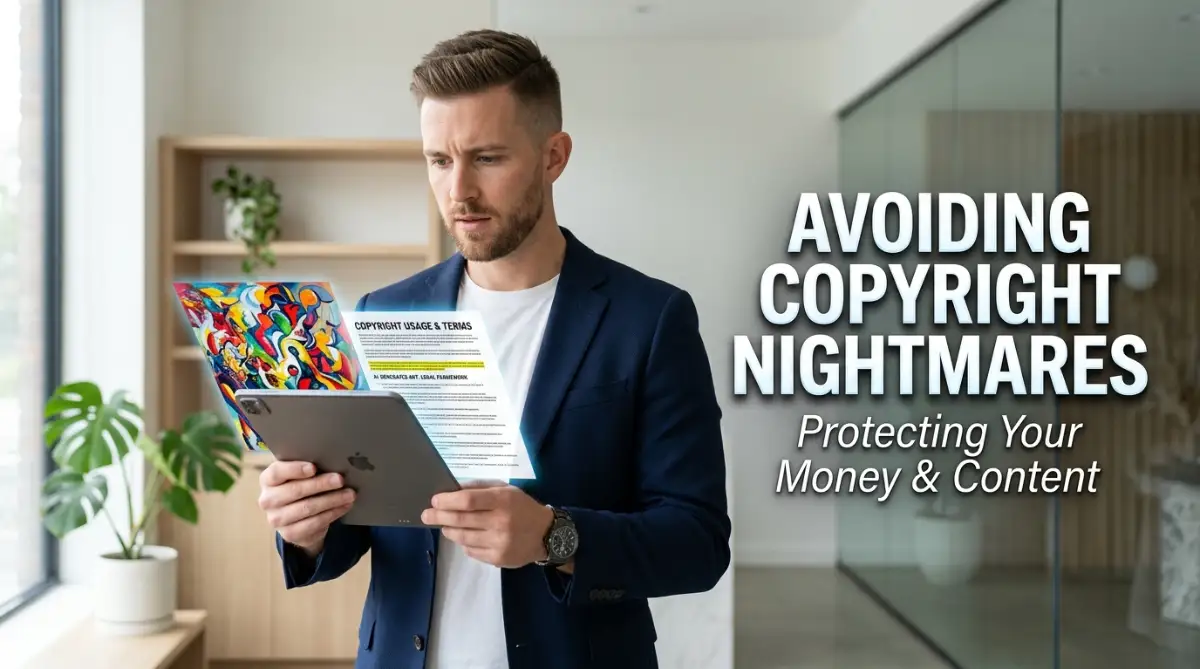
This lack of understanding is creating a massive financial danger for anyone creating content online. A single copyright lawsuit can easily wipe out your entire life savings and force your business to close down. You go to work trying to build a better future, but you end up fighting aggressive lawyers over an image you thought was free to use.
The anxiety of not knowing if your website, blog, or social media page is legally safe is exhausting. You constantly worry that a hidden algorithm will flag your work and send you a massive bill. The system feels completely broken for average creators who just want to use modern tools without going bankrupt.
How the AI Image Machine Actually Operates
To protect your money and your hard work, you have to understand exactly what happens when you press the "generate" button. AI image tools do not just magically imagine things out of thin air. They are trained on billions of existing photographs, paintings, and digital designs created by real human beings.
These massive tech companies scraped the internet, grabbing almost every image they could find. They took professional stock photos, private art portfolios, and movie stills without asking for permission. When you ask the AI to draw a cute cat, it looks back at millions of cat pictures it already studied.
Sometimes, the AI blends these influences together perfectly, creating something completely new. However, sometimes the machine gets lazy or confused. It might accidentally recreate an existing copyrighted image almost exactly. If you publish that lazy AI image on your business website, you are the one who takes the blame.
The Illusion of Text Prompts and Ownership
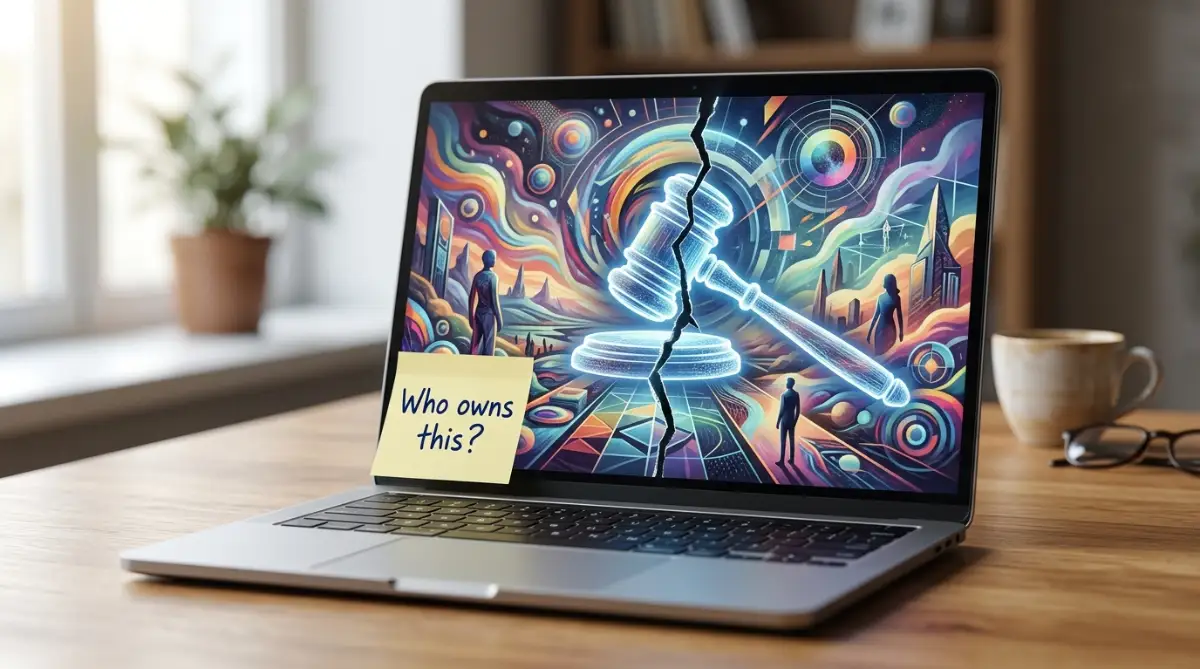
Many people wrongly assume that writing a highly detailed prompt makes them the legal author of the image. You might spend an hour crafting the perfect sentence to describe the lighting, the mood, and the colors. It feels like you did a lot of hard work.
However, current legal rules state that an idea alone cannot be protected. Your text prompt is just an idea, while the AI is the machine executing that idea. Because a machine is not a human, the output it generates often belongs to absolutely no one.
Watch this simple breakdown to see exactly how copyright law currently applies to AI tools and how you can protect your business from massive fines.
This creates a highly dangerous gray area for content creators and business owners. If nobody legally owns the AI image, anyone else can come along and steal it from your website. You cannot sue them, and you cannot stop them from using the image you spent hours generating.
Why Commercial Use Changes the Entire Game
Playing around with AI art for your personal background or a private school project is usually completely safe. The real danger begins the second you use that image to make money. This includes putting the image on a monetized blog, a YouTube thumbnail, or a product label.
When money is involved, artists and large stock photo companies become extremely aggressive about protecting their property. They use automated software to scan the internet every single day looking for stolen work. If their scanner finds a match on your website, you will automatically receive a demand for cash.I used to think that paying a monthly subscription fee for a premium AI tool automatically gave me full legal protection. I quickly learned that paying the software company only gives you their permission to use the platform, not a legal guarantee against outside lawsuits.
These automated legal demands often ask for thousands of dollars for a single image violation. If you are living on an average income or running a small blog, a $5,000 legal bill is a complete disaster. You must build a strong safety system before you publish anything.
Building a Legal Safety Wall Around Your Content
You do not have to stop using AI entirely to stay safe. You just need to change how you select and modify your images before showing them to the world. A few simple adjustments to your workflow can eliminate almost all of your financial risk.
We are going to walk through the exact steps you need to take every single time you generate a picture. These steps act like a filter, catching dangerous images before they can harm your business.
Step One: Choosing the Right Training Ground
Not all AI image generators are built the same way. Tools like Midjourney and Stable Diffusion are famous for their incredible artistic quality. However, they were trained on massive amounts of unverified, copyrighted data from the open internet.
This makes them highly risky for serious commercial projects, especially if you ask them to mimic a specific artist's style. If you type "in the style of Disney" or "like a Marvel comic", you are asking for serious legal trouble. You are intentionally telling the machine to copy protected work.
On the other hand, some tools are built specifically for business safety. Adobe Firefly, for example, was trained entirely on open-source content and Adobe's own licensed stock images. When you use a tool with a clean training background, your risk drops significantly.
Step Two: The Reverse Image Search Test
Even if you use a safe prompt, the AI might accidentally create something that looks exactly like a famous photograph. You should never trust the machine blindly. You have to verify the originality of the image yourself.
Before you upload any AI art to your blog, run it through a reverse image search engine. Google Images and TinEye are completely free and take only ten seconds to use. You simply upload your AI picture and let the search engine scan the internet.
If the search results show hundreds of identical images owned by a major news network or a famous artist, delete your AI image immediately. That means the machine copied too closely, and it is totally unsafe to use. If the search returns no direct matches, you are in a much safer position.
Step Three: Adding the Human Touch
One of the most effective ways to protect yourself is to stop using AI images straight out of the machine. Legal experts often look for the amount of "human authorship" in a project. If a human did a significant amount of creative work, the final piece gets more legal protection.
Take your generated image into a basic photo editing software. Do not just crop it; actually change its fundamental structure. You can combine two different AI images together, add your own custom vector graphics, or heavily modify the colors and layout.
By adding your own unique elements, you transform the raw AI output into a new piece of creative work. You are no longer just relying on the machine. You are using the AI as a base layer for your own human creativity.
Myth vs Reality: The AI Art Debate
Let us clear up some of the most common misunderstandings about this technology. A lot of bad advice is floating around on social media, leading average people straight into financial traps.
Myth: If I change the image by 10%, I am completely safe from copyright laws.
Reality: The "10% rule" is a complete legal myth. If the core recognizable part of an original artwork is visible, you can still be successfully sued for infringement.
Myth: AI companies will pay my legal fees if I get sued for using their tool.
Reality: Read the fine print of your user agreement. Almost all popular AI tools specifically state that the user takes on all legal liability for the images they generate and publish.
Myth: I can copyright a comic book if I use AI to draw all the characters.
Reality: The US Copyright Office has repeatedly ruled that images generated purely by machines cannot receive copyright protection. Only the human-written text and the human-designed layout of the comic book can be protected.
Understanding Fair Use in the Digital Age
Sometimes, you might want to use a recognizable image for a specific, educational purpose. This brings us to a legal concept called "fair use". Fair use allows people to use small parts of copyrighted material for things like news reporting, teaching, or writing reviews.
However, fair use is incredibly complicated and is not a magic shield against lawsuits. Just because you think your blog post is educational does not mean a judge will agree. If your use of the image hurts the original creator's ability to make money, fair use usually will not protect you.
For example, generating an AI image of Mickey Mouse to sell on a t-shirt is a direct violation of Disney's rights. However, generating a generic cartoon mouse to use in an educational article about digital art might be considered safe. You must always ask yourself if your image is competing with the original owner.
When you are trying to make money from a blog or a YouTube channel, it is always best to play it safe. Do not test the limits of fair use unless you have the financial budget to defend yourself in court. Keep your prompts generic, modify your outputs heavily, and always respect the original creators who make this technology possible.
Mastering the Business Side of Machine Learning Graphics
To build long-term success with your digital content, you have to treat every single image like a formal business asset. Amateurs just type a prompt, download the picture, and instantly upload it to their main website. Professionals, on the other hand, build a strict safety system that protects their bank account from surprise lawsuits.
One of the smartest habits you can develop today is creating a permanent "paper trail" for your digital art. If an angry artist or a large corporation ever challenges your content, having proof of your workflow is your best defense. You need to document exactly how you created the image from start to finish.
I highly recommend keeping a simple spreadsheet or a private document where you paste every single prompt you use. Next to the prompt, write down the exact software version you used and the date you generated it. This organized approach is a massive part of navigating the legal system with safe protection for you and your company effectively.
If you ever receive a threatening legal email, you will not have to panic or rely on your memory. You can simply open your document, show the exact text you typed, and prove that you did not intentionally steal anything. A documented workflow instantly shows aggressive lawyers that you are a serious professional, not an easy target.
The Power of Commercially Safe Platforms
If you are running a serious blog, a marketing agency, or an online store, you need to upgrade your tools immediately. Stop using random, free image bots you found on social media platforms or public messaging servers. These free generators are almost always trained on stolen internet data, making them a ticking time bomb for your business.
Instead, you must invest in enterprise-level software that offers explicit legal protection for its users. Companies like Adobe and Getty Images have built specific AI generators trained entirely on licensed, legally cleared photographs. When you use their platforms, they actually provide financial indemnification, meaning they will pay your legal fees if you ever get sued.
This level of protection gives you total peace of mind when learning the ultimate guide to generating realistic images with AI for your marketing campaigns. You can confidently place these graphics on your sales pages, product packaging, and paid advertisements. The small monthly fee for a professional tool is basically cheap insurance against a massive copyright lawsuit.
To understand the global impact of these changing rules, you can review the official guidelines from the World Intellectual Property Organization on AI policies. They clearly explain how different countries are currently treating machine-made art in the commercial market.
Real-Life Scenario: The Freelancer's Safety Net
Let us look at a real-life example of a freelance web designer named Sarah who handles client projects every week. A client asked her to build a massive e-commerce store filled with hundreds of lifestyle pictures. Instead of hiring an expensive photography team, Sarah decided to use machine learning to create the visuals.
However, Sarah knew that if a copyrighted image accidentally slipped through, her client could be sued, and she would lose her job. She decided to use a strictly licensed AI tool and heavily edited every single picture in Photoshop. She added custom text layers, changed the background colors, and applied unique brand filters to every file.
By taking these extra steps, Sarah transformed the raw, unowned machine output into highly protected, original human designs. This is exactly how you safely review and use modern software in your daily life. If you want more ideas on testing new software safely, check out these smart ways to review the latest gadgets and everyday apps without taking unnecessary risks.
Essential Do's and Don'ts for Digital Creators
To keep your daily workflow completely stress-free, you need to memorize a few hard rules. These are not just casual suggestions; these are the exact boundaries that will keep your business out of court.
Do: Always read the full Terms of Service (TOS) before you type your very first prompt into a new website.
Don't: Never use a living artist's name, a famous movie title, or a registered brand name in your text descriptions.
Do: Combine multiple different generated pictures together to create a completely unique composition that nobody else has.
Don't: Never try to trademark or formally copyright a raw picture that came straight out of a software program.
The Financial Traps Destroying Small Creators
When people try to take shortcuts with their content creation, they usually end up paying a massive price later on. The internet is filled with terrible advice from fake marketing gurus who promise you can get rich quickly by selling computer art. They tell you to generate thousands of pictures and upload them to print-on-demand websites for easy cash.
They completely fail to mention the dark reality of automated copyright strikes and aggressive legal teams. If you accidentally generate a character that looks slightly similar to a famous comic book hero, you are in immediate danger. Major entertainment studios employ massive legal teams whose only job is to hunt down and destroy small online sellers.
Receiving a formal "Cease and Desist" letter is an incredibly terrifying and emotionally draining experience. You open your mailbox to find a heavy envelope demanding $10,000 in damages for a picture you generated for free. The stress immediately takes over your life, making it impossible to focus on your family or your regular job.
The Danger of Ignoring Training Data Realities
Many beginners falsely believe that because a machine made the picture, it is completely free from all human ownership. This ignores the basic reality of how these complex algorithms actually function behind the scenes. If you are interested in the technical side, reading about demystifying how machine learning and deep learning actually work will completely change your perspective.
The software literally memorizes the brush strokes, color palettes, and specific lighting techniques of real, hardworking artists. If you prompt the machine to heavily rely on one specific artist's style, the output is essentially a high-tech forgery. Selling a forgery is illegal, regardless of whether a human or a computer painted it.
Legal scholars are currently fighting massive battles over this exact issue in federal courts. You can read detailed academic breakdowns from the Stanford Law School Center for Internet and Society regarding how fair use applies to generative models. Until the courts make a final decision, assuming you are safe is a highly reckless way to run your business.
The Hidden Software Security Pitfalls
Another major mistake is downloading suspicious, open-source generation tools directly onto your personal computer. People do this to avoid paying monthly subscription fees, completely ignoring the massive security risks involved. You are giving an unverified piece of code direct access to your hard drive and your private files.
Some of these free tools contain hidden malware that quietly steals your personal data while you are busy making art. If you are running a business, this could lead to a massive customer data leak and total financial ruin. You must always educate yourself on the truth about AI code generators and software security risks before installing anything new.
Saving twenty dollars a month is never worth risking your entire digital identity and your business reputation. Stick to well-known, browser-based tools run by massive, publicly traded companies who actually care about user security.
The "Public Domain" Misunderstanding
A lot of creators try to avoid trouble by asking the software to only use images from the public domain. The public domain includes very old artwork and historical photographs that no longer have any active copyright protection. While this sounds like a brilliant and safe strategy, it is actually full of hidden traps.
The machine might grab an image of a famous historical painting, but it might use a specific photograph of that painting taken by a modern museum. That modern photograph is heavily copyrighted, meaning your final generated image is instantly violating the law. You can explore the official Creative Commons guide on public domain marks to see just how complicated these licenses can be.
You cannot blindly trust a chat window to understand complex international property laws. You are the publisher, which means you hold 100% of the legal responsibility for whatever appears on your website. Taking just five extra minutes to verify your sources can save you months of agonizing legal battles.
Your Action Plan for Complete Content Safety
Building a profitable digital business is already hard enough without constantly looking over your shoulder for lawyers. You deserve to use these incredible new tools to grow your brand, save time, and express your creativity. The goal is not to be terrified of technology, but to become a highly educated and responsible user.
You now understand exactly how the machine thinks, where the hidden dangers lie, and how to protect your assets. You have learned how to document your workflow, choose the safest enterprise tools, and heavily edit your final outputs. These simple habits are what separate successful digital entrepreneurs from those who lose everything to avoidable mistakes.
If you apply these safety rules today, you can confidently build a massive content library without any underlying fear. You will never have to panic when you check your email, because you know your foundation is completely solid. For anyone looking to expand their ventures safely, following the ultimate guide to launching your business without failing is a fantastic next step.
Common Questions About AI Image Ownership
Can I legally trademark a logo created entirely by an AI generator?
Under current laws in most countries, you cannot trademark or copyright an image that was purely generated by a machine. To get legal protection, you must significantly modify the design yourself using professional editing software. The more human effort you put into the final logo, the better your chances of securing full ownership.
What should I do if someone steals my AI-generated artwork?
Because raw machine output usually lacks copyright protection, it is extremely difficult to stop others from copying it. If you simply prompted the image and posted it online, anyone can likely use it without asking you. This is exactly why you must add your own creative human elements to the picture before publishing it.
Do I need to credit the AI software when I post an image?
Most major platforms do not legally require you to mention their name when you use their paid commercial tools. However, being transparent with your audience about how you make your content is always a great practice for building trust. Always double-check the specific user agreement of the website you are using just to be completely safe.
Are free AI image generators safe to use for my small business?
Free tools are almost always the most dangerous option for commercial projects because they offer zero legal protection. They are usually trained on scraped, copyrighted data, leaving you entirely responsible for any legal issues that happen. If you want to make money from the art, you should always pay for a safe, commercially licensed enterprise tool.
I spent months feeling totally paralyzed, terrified that a single wrong image upload would completely destroy my small business. When I finally stopped using random free tools and built a strict, documented workflow, my creative confidence fully returned. You have the exact same power to protect your hard work and your bank account, so start upgrading your safety habits today.
Disclaimer: The information provided in this article is for educational and informational purposes only and does not constitute formal legal advice. Copyright laws regarding machine learning are constantly changing. Always consult with a qualified intellectual property attorney regarding your specific business and content generation practices.